U.S. stocks closed lower. Chipmakers had their worst week in more than a year.

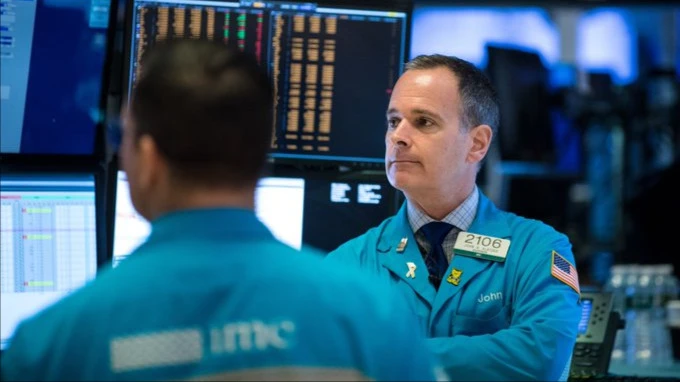
A sell-off in chipmaker stocks caused the S&P 500 and the Nasdaq Composite to close lower for the week / Photo: X / NYSE
The S&P 500 and Nasdaq Composite indices ended their two-week winning streak, while the Dow fell for the second week in a row. The market was affected by a sell-off in software and semiconductor stocks. The Philadelphia Semiconductor Index lost more than 20% from its June high, entering a technical “bear” market, and posted its worst weekly performance since April 2025, when Donald Trump announced the imposition of “reciprocal” trade tariffs, according to the Financial Times. In addition, market sentiment was affected by the launch of a new powerful neural network in China.
Details
— The S&P 500 broad-market indexfell 1.01% on July 17 and closed at 7,457.69 points. For the week, it fell 1.6%.
— The Dow Jones Industrial Average , a "blue-chip" index,fell 0.77% on Friday and closed at 52,146.42 points. For the week, it declined 0.9%.
— The Nasdaq Composite technology index fell 1.4% over the course of the day, to 25,520.24 points. Over the week, it declined by 2.9%.
— The Russell 2000 Small- and Mid-Cap Indexfell 0.4% over the course of the day, to 2,962.2 points. Over the week, it lost 0.67%.
— Brent crude oil futures rose 4% on Friday to about $88 per barrel, while WTI crude oil futures rose 4.3% to $82.3 per barrel.
What's Happening in the Technology Sector
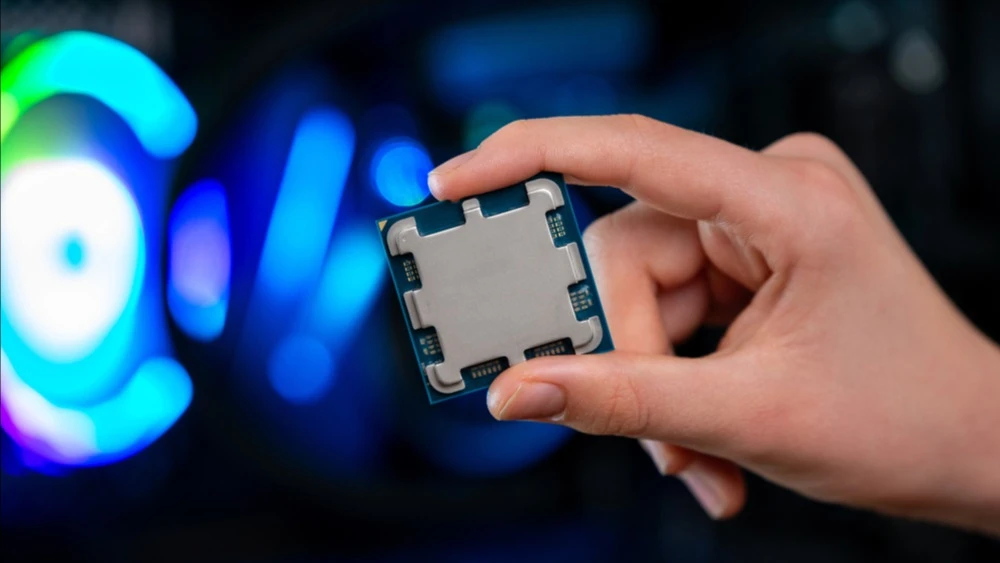
The semiconductor sector continued its decline last week after a brief respite. The VanEck Semiconductor ETF fell for the third consecutive week, dropping nearly 9% over five days. The Philadelphia Semiconductor Index, which comprises 30 semiconductor stocks, lost 10% over the week and 20.2% from its June record high, thereby entering a “bear” trend —a decline of more than 20% from a recent high.
On Friday, pressure on semiconductor companies intensified after the Chinese AI startup Moonshot announced a breakthrough: its new Kimi K3 model, according to its developers, is capable of competing with the most powerful models from OpenAI and Anthropic. Investors compared this reaction to the shock that DeepSeek’s release caused in the market last year, Bloomberg notes.

Software developers’ stocks also came under pressure after IBM reported weak preliminary second-quarter results, in which it warned that its customers are redirecting capital expenditures toward purchases of servers, data storage systems, and memory in order to secure scarce AI infrastructure before an expected price increase. The company’s stock lost 26% over the course of the week.

Investors fear that the shift in budgets from “software” to “hardware” could be a global trend and not limited to problems at IBM alone. Meanwhile, the iShares Expanded Tech-Software Sector ETF, which tracks software developers’ stocks, rose 0.5% over the week.
Outside the tech sector, the market is watching SpaceX’s stock price decline; this week, it fell below its IPO price for the first time. The market capitalization of Elon Musk’s space company has dropped by $1 trillion from its June 16 high, according to Bloomberg. On the list of the most valuable public companies, SpaceX dropped from seventh to tenth place this week, falling behind Broadcom, Saudi Aramco, and Meta Platforms.
Another focus was the decline in Netflix shares, which fell 7.3% on Friday following the release of its earnings report. The streaming service’s outlook failed to allay investors’ concerns about slowing revenue growth, according to CNBC.
War with Iran
The conflict in the Persian Gulf remained the focus of investors' attention all week, with the latest escalation leading to a rise in oil prices.
On July 17, Kuwait reported that Iran had attacked a power plant and a desalination facility. U.S. Central Command stated overnight that it had completed its sixth consecutive night of strikes against Iran, hitting dozens of military targets, including logistical infrastructure and naval forces.

Iranian officials announced on Friday that they had carried out strikes against U.S. military forces in Syria and Bahrain, further expanding the geographic scope of their attacks in the Middle East, according to CNBC. The fragile ceasefire reached last month has effectively collapsed, once again disrupting energy shipments through the strategically important Strait of Hormuz, the network reports.
What Analysts Are Saying
— Stocks of companies involved in artificial intelligence have become more volatile as investors question both the pace of investment and its returns, however, corporate earnings reports do not yet indicate a slowdown in demand, notes Angelo Kurkafas, senior investment strategist at Edward Jones, in a Bloomberg report. “Most likely, the AI theme is entering a more mature phase rather than collapsing, which is a normal part of the development of transformational investment cycles,” Kurkafas asserts. “Investors should maintain their positions in AI-related companies but supplement them with more diversified and distinct sources of returns, including cyclical sectors, value stocks, and international equities.”
— “The market has begun to pin its hopes on the long-awaited broadening of growth [beyond the technology sector],” said Beata Mantei, head of European equity strategy at Citi Research, on Bloomberg Television. — “But that requires a rotation of capital, and it can sometimes be quite brutal.”
— “This week’s spike in oil prices will scare people, but we’re still roughly within the average range,” said David Wagner, head of equities at Aptus Capital Advisors, as quoted by CNBC. Wagner added that he remains optimistic about the broader market despite high oil prices: “I’m still bullish, but there could be more volatility ahead.”
This article was AI-translated and verified by a human editor