BofA and Standard Chartered raise Brent price forecast for 2026 because of war
Protracted US-Iran conflict could push Brent price to a "dizzying" $130 a barrel, says BofA

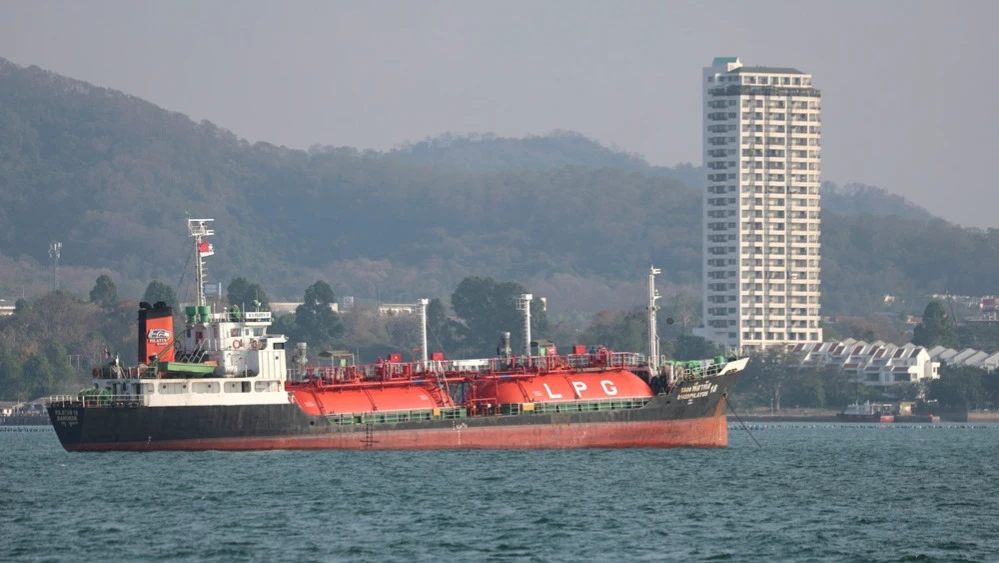
Gulf oil and liquefied natural gas shipments more than halved in a week / Photo: somkanae sawatdinak / Shutterstock.com
Bank of America and Standard Chartered have raised their forecasts for oil prices for 2026, Reuters reports. The banks cited the prolonged supply shock due to the closure of the Strait of Hormuz and the likelihood of lasting effects on global energy markets as the reason for the revision.
What the BofA is saying
Bank of America raised its forecast for the average price of Brent crude oil in 2026 by 27% - from $61 to $77.5 per barrel.
The updated forecast is based on two roughly equally likely scenarios. In the first scenario, a quick resolution of the conflict will lead to the restoration of oil supplies from the Persian Gulf by April and push the Brent price down to $70 per barrel. In the other scenario, prolonged supply disruptions, which persisted in the second quarter, would push prices to $85.
The bank estimates that nearly 200 million barrels of oil have already fallen out of circulation in the market, causing inventories to decline much faster than expected.
A protracted conflict in the second half of the year could raise the price of Brent to a "dizzying" $130 per barrel, analysts at Bank of America have warned, although they consider such a scenario unlikely. In their view, after the war ends, the oil market is likely to move back to a surplus of crude, which could bring the Brent price down to around $65 a barrel in 2027.
Amid higher oil price expectations, Bank of America also raised its valuation of upstream oil producers by about 17%, Reuters noted.
What Standard Chartered is saying
Standard Chartered increased its oil price forecast by 22 - from $70 to $85.5.
The bank estimates that now 7.4-8.2 million bpd produced in Iraq, Saudi Arabia, UAE, Qatar and Kuwait are not reaching the market. Iranian production has also declined by about 1 million bpd.
"Even if the military phase of the conflict subsides or a ceasefire is declared, the effects on energy markets will be felt for a long time to come," Standard Chartered said in a commentary quoted by Reuters.
Standard Chartered has also raised its quarterly forecasts: the bank now expects the Brent price in the first quarter of 2026 at $78 a barrel (previously $74), $98 in the second quarter (previously $67), and the forecast for 2027 has been raised to $77.50.
Context
The U.S.-Israeli war with Iran has disrupted shipping through the Strait of Hormuz, a key route connecting the Persian Gulf to the Arabian Sea. The waterway is critical to global energy supplies: about a fifth of the world's oil and liquefied natural gas shipments passed through it before the war, Reuters recalls.
Oil prices have risen more than 41% since the conflict began this month. On Monday, Brent futures fell 3.1% to below $100 a barrel, while U.S. West Texas Intermediate (WTI) crude fell 6% to $92.93 a barrel.
Daily crude oil exports from Middle Eastern countries through the Persian Gulf, for the week through March 15, were down at least 60 percent from February, shipping data and Reuters calculations show. Exports of crude oil, condensate and refined products from Saudi Arabia, Kuwait, Iran, Iraq, Oman, Qatar, Bahrain and the United Arab Emirates averaged 9.71 million bpd last week, data from analyst firm Kpler showed. This is 61% less than in February, when supplies reached 25.13 million bpd.
This article was AI-translated and verified by a human editor