Burry has hung on to Build-A-Bear after the stock tanked. What did the 10-Q reveal?

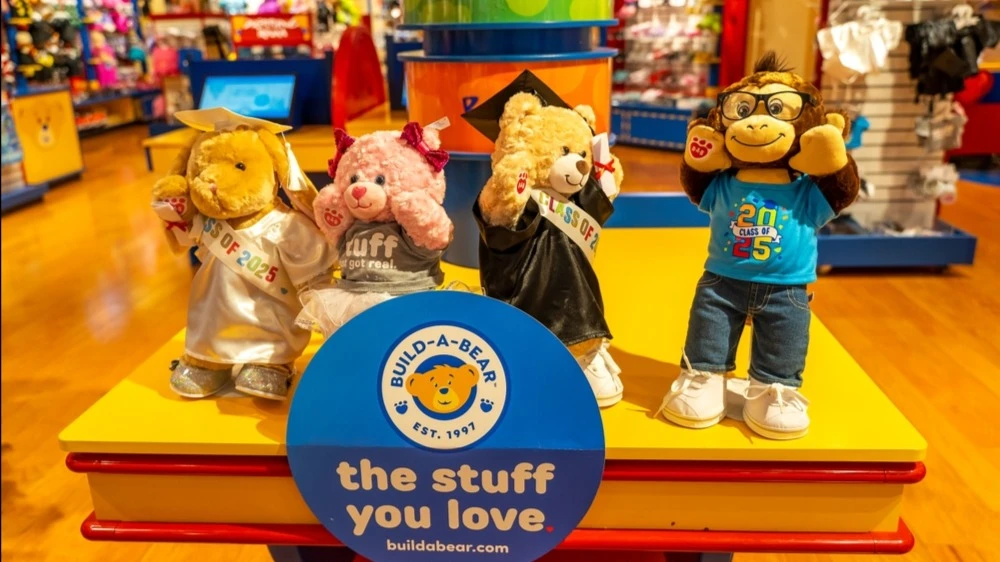
Year to date, Build-A-Bear stock is down well over 50% / Photo: Iv-olga / Shutterstock.com
Michael Burry bought Build-A-Bear stock in August, shortly before the company released its second-quarter earnings – and, as it turned out, took a loss on the position. Following the weak results, the stock plunged 27.3% in a single day, while Burry described Build-A-Bear shares as a “hot potato.” However, he decided not to sell until the company’s 10-Q quarterly financial report, submitted to the SEC, which provides a detailed picture of the fundamentals. Below, Oninvest analyst Aldiyar Anuarbekov takes a closer look at what the filing revealed and whether Burry’s investment thesis has changed.
Buying before the dip
Burry bought shares of Build-A-Bear, a small company that offers workshops where customers create their own stuffed animals from scratch, between August 18 and August 20, before its quarterly report was due. On August 27, the company reported that revenue for its fiscal second quarter had fallen 7.2% year over year to $115.3 million, while pretax income declined 24% to $11.6 million. The management also lowered its revenue guidance for the second time this year. That same day, the stock plunged a record 27.3% to $28.44 per share.
The drop prompted Burry to reconsider his idea, but he did not abandon it. On August 27, he wrote on his Substack blog that he would wait for the 10-Q before reassessing the investment and making a final decision.
He was looking for signs of a so-called "kitchen-sink quarter," where a company takes all of its bad news, write-downs, and losses at once to clear the slate for future recovery. The theory appeared plausible: Christopher Hurt took over as CEO on June 11, making the second-quarter report the first under his leadership.
Burry wrote that the quarter had something of a kitchen-sink feel, but the numbers did not bear that out: he saw neither impairment charges nor inventory write-downs. If the weakness had been caused by one-off charges, the stock’s collapse might have been excessive. But if sales and margins had deteriorated without any one-time charges, the company would need to improve its core business to recover.
No 'kitchen sink', just weak sales
The full financial statements largely confirmed the latter scenario. Build-A-Bear reported that it had not recognized any impairment of operating lease right-of-use assets. Inventory as of August 1 stood at $81.1 million, down 0.8% year over year, while the management said it was comfortable with both its level and composition.
The operating performance did deteriorate. Sales at existing locations reduced quarterly revenue by $10.9 million, while digital sales subtracted another $1.1 million. New locations offset only $4.1 million of the decline. The retail gross margin narrowed 3.6 percentage points to 54% due to the high share of fixed occupancy costs amid declining sales and increased promotional activity.
A $5 million reduction in selling, general, and administrative expenses to $51.4 million helped prevent an even steeper decline in profit. The improvement was driven primarily by lower incentive compensation expense. Within that line item, stock-based compensation expense was negative $800,000 versus a positive $700,000 a year earlier. The year-over-year change therefore improved quarterly pretax income by around $1.5 million.
The 10-Q also stated that 70,549 performance shares – stock that the management would have received if the company had met revenue and EBITDA targets – for the 2024-2026 period had been canceled, while the estimated number of shares tied to results already achieved was reduced by another 40,494. However, the filing does not directly link the negative compensation expense to a specific group of these awards or characterize it as a failure to meet the 2024-2026 plan. Nevertheless, lower variable compensation helped boost profit, but that should not be viewed as a sustainable source of growth.
Another one-time factor emerged in the first quarter. Following a Supreme Court ruling, the company was deemed entitled to a refund of around $13.2 million in previously paid IEEPA tariffs and received the funds. Of that amount, $10.4 million was recorded as a reduction in cost of goods sold, including $7 million related to costs from the previous fiscal year. By the end of the second quarter, Build-A-Bear had substantially completed recognition of the impact.
Excluding that $7 million, first-half pretax income would have totaled $28.5 million, down 18.5% year over year. Without the adjustment, the reported figure was up 1.6%.
Chances for a rebound in the stock
The 10-Q also contains arguments supporting the view that the stock is undervalued. Build-A-Bear retains an important strength for a small company: it had no borrowings under its revolving credit facility at the end of the second quarter, while it had ramped up its share buybacks. During the first half, the company spent $17.1 million to repurchase 403,236 shares at an average price of around $42.50 apiece. From August 2 through September 8, it bought back another 129,194 shares for $4.2 million, at an average price of around $32.50 per share.
However, cash fell 64.2% year over year to $14 million. The company attributed this primarily to the share buybacks and the timing of capex. First-half capex increased to $15.4 million from $6.3 million, with the management planning to spend around $25 million for the full year. In other words, the lack of borrowings reduces financial risk, but the company now has less room for aggressive buybacks.
The number of shares outstanding declined from 13.16 million as of August 2, 2025, to 12.32 million as of September 8, 2026, a reduction of around 6.4%. At Thursday’s closing price of $25.47 per share, that corresponds to a market cap of around $308 million. During Thursday’s session, the stock fell to a 12-month low, bringing its year-to-date decline to 58.43%.
In the wake of the earnings, Wall Street firms sharply reduced their valuations but left their recommendations unchanged. D.A. Davidson cut its target price to $37 from $60 per share with its “buy” rating maintained. Northland Capital Markets analyst Greg Gibas lowered his TP to $40 from $60 per share and maintained his “outperform” rating. He values the company at six times forecast 2027 EBITDA versus 9.4 times for peers (as outlined in the note, seen by Oninvest). The average target price among four coverage analysts is $43 per share, though such a small sample makes the consensus less representative.
Burry said on September 9 that he had reduced all his position and increased the allocation to cash in his portfolio. Build-A-Bear ranked 13th among the 17 long positions he listed. He did not disclose the size of the reduction. Burry later sold his entire position in Flutter Entertainment and directed most of the proceeds into Lululemon, while also increasing his investment in Zoetis. He has not publicly reported fully exiting Build-A-Bear.
The financial statements therefore did not give Burry a simple answer. They showed no large-scale cleanup that could allow results to improve automatically off a low base. Instead, they revealed several supports for profit, like a tariff refund and lower variable compensation. Investors should now watch whether Build-A-Bear can bring customers back without relying on constant discounts and increase sales through new stores. The third-quarter report will provide the first indication.
This text is for informational purposes only and does not constitute personalized investment advice.