"The whole 'Terminator' thing is nonsense": An investor from *The Short Game* on the threat of AI
Steve Eisman sees the warnings from AI developers as an attempt to secure regulations that benefit them and continues to cut back on investments in the sector

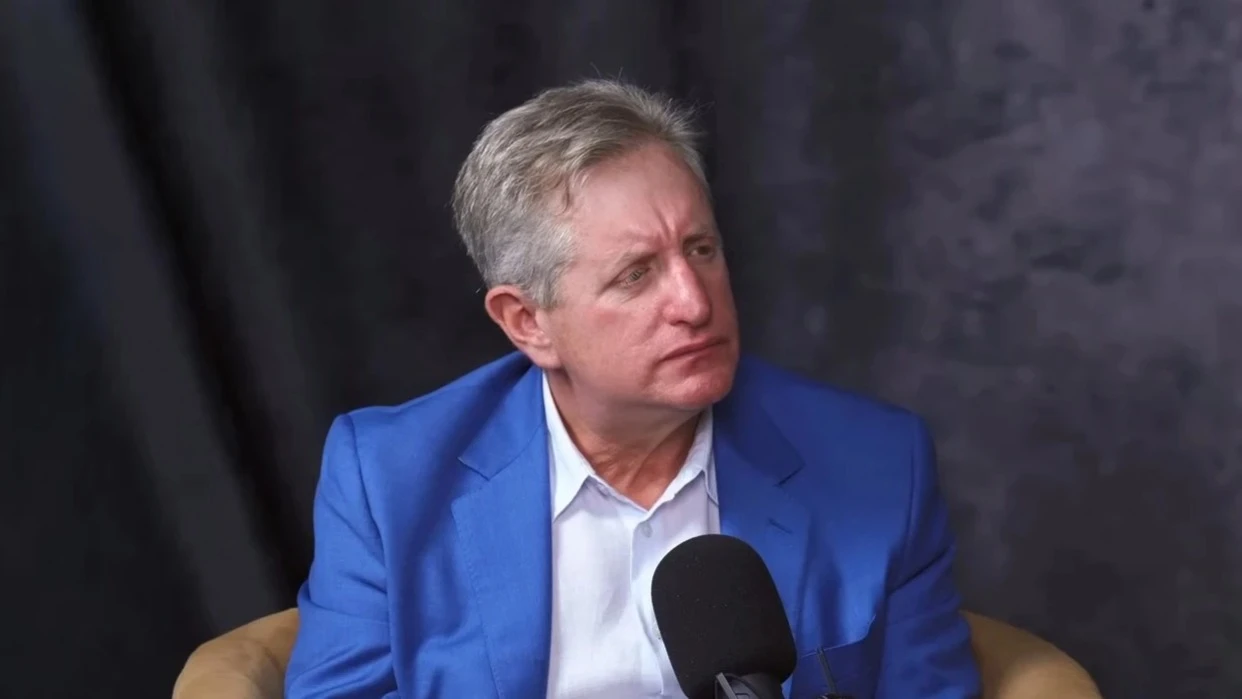
Investor Steve Eisman, one of the first to predict the 2008 global financial crisis, has reduced his stake in AI-sector stocks / Photo: youtube.com/@RealEismanPlaybook
Investor Steve Eisman, known for the movie *The Big Short* and for successfully predicting the 2008 housing crisis, called the claims by AI companies—that they themselves don’t know what to expect from their own developments—nonsense. “This whole ‘Terminator’ story is nonsense,” he said on CNBC.
According to Aizman, there is “something entirely different” behind the developers’ statements. He himself continues to reduce his position in the AI sector: “And I sold some more.”
Details
— According to Aizman, the race for maximum token consumption (“tokenmaxing”) is over, and open models are taking over the market. That is why AI companies that warn of threats are, in his view, “very nervous”: “They realize that their business has absolutely no protective barriers, and they are trying to fabricate a crisis that will lead to regulation.” The investor believes that companies hope to manipulate this regulation to fend off competitors and secure “the duopoly they want.”
— The entire AI supply chain—from chipmaker Nvidia to hyperscalers (the largest cloud providers)—ultimately depends on the future success of the two leading developers, Anthropic and OpenAI, says Aizman. These companies account for a huge portion of this ecosystem. “If something happens to one of these two companies, the ecosystem will collapse. Of the two, OpenAI is the weaker one. I think that’s one of the reasons it postponed its IPO,” the investor asserts.
— Aizman rejects the very basis of the warnings issued by AI companies. “There is absolutely no evidence that AI has reached the level of general artificial intelligence (AI capable of solving any intellectual tasks at a human level or higher. — Oninvest). “Absolutely none,” he emphasized. According to him, “most of the data, it seems, indicates that this will never happen, and if it does, it will be many, many years from now.”
— Aizman doesn’t presume to judge the motives of AI companies, but he suggests they put their claims to the test. “When people say, ‘We need to slow down because this is dangerous,’ I reply, ‘Really? Postpone your IPO. Back up your words with money,” he said. “Is anyone talking about postponing an IPO or raising capital? I haven’t heard anything like that,” the investor added.
Context
A debate over AI safety has erupted following a proposal by Anthropic CEO Dario Amodei to intentionally slow the development of cutting-edge AI models and strengthen oversight and regulation of the industry. Amodei’s idea was supported by OpenAI CEO Sam Altman and Tesla and SpaceX CEO Elon Musk. On the other hand, Jensen Huang, CEO of Nvidia (the primary beneficiary of demand for AI infrastructure), stated that existing regulations are already sufficient. U.S. President Donald Trump also did not support the idea of increased regulation.
OpenAI CEO Sam Altman said in an interview with Fortune published on September 12 that the company will not go public until at least 2027, as it will focus on addressing the technology’s safety concerns. Meanwhile, as early as June 25, The New York Times reported that OpenAI was leaning toward postponing the offering.
According to sources cited by the NYT, the consultants warned OpenAI at the time that its shares might not generate much interest among retail investors. They offered the company a choice: wait until 2027 and go public with a $1 trillion valuation, or settle for a lower valuation in exchange for a faster listing. Altman, according to the newspaper, considered any deviation from the $1 trillion mark unacceptable.
According to Reuters, preparations for Anthropic’s IPO have also been delayed: the marketing campaign for the offering will not begin until mid-October at the earliest, and the company is expected to go public a few days before the November U.S. midterm elections. The agency’s sources warn that the timeline is subject to change.
This article was AI-translated and verified by a human editor