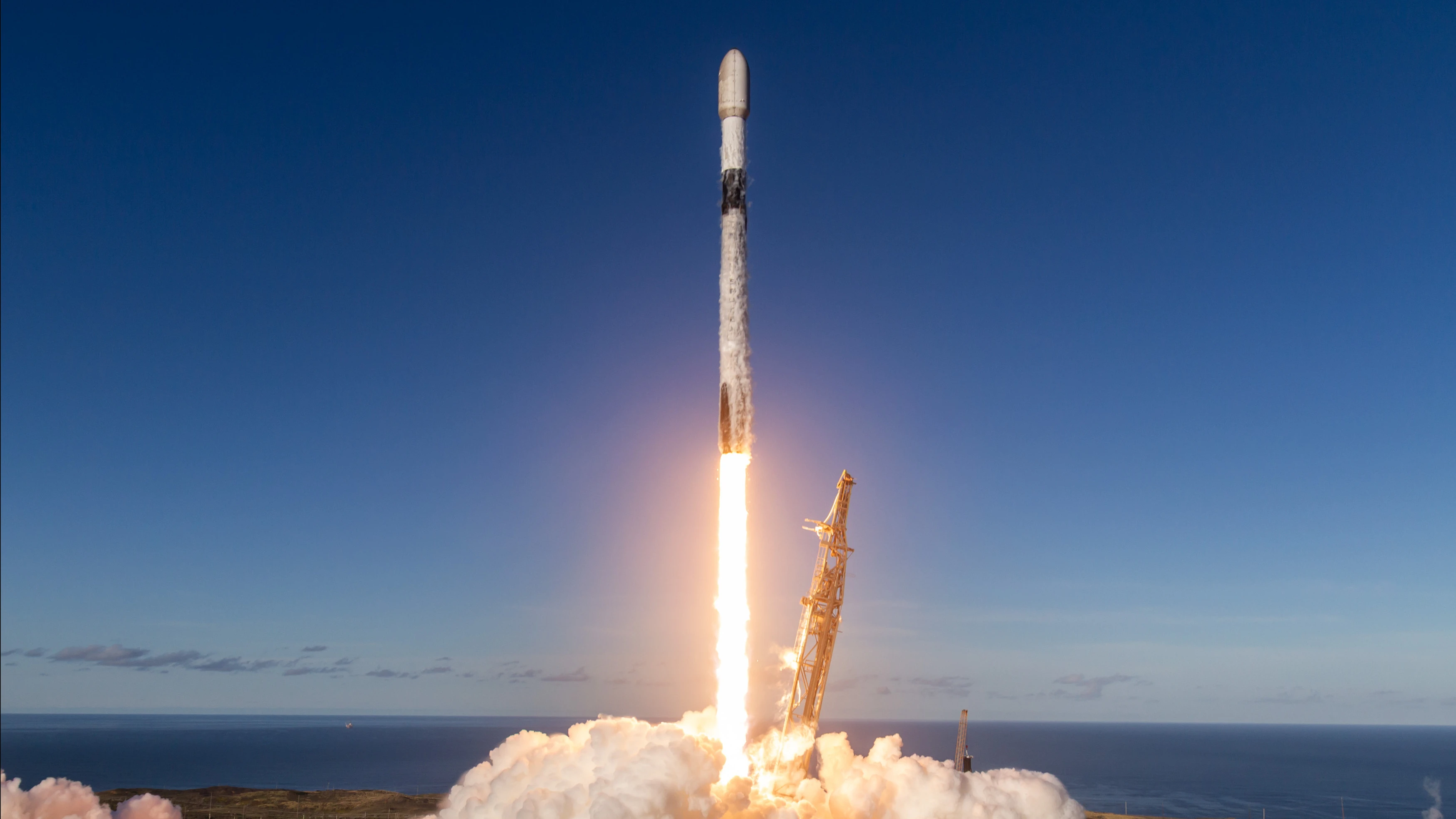
Canada's Maritime Launch offers a bet on scarce spaceports


Maritime signed a 10-year agreement with German rocket developer Isar Aerospace in July / Photo: www.maritimelaunch.com
Satellite operators, military and civilian space programs, and scientific and test missions all need more places to launch. Maritime Launch Services is betting it can make money by providing a solution to that problem. The company is building Spaceport Nova Scotia on Canada’s east coast to operate like an airport for rockets, leasing launchpads to customers and providing launch support services.
Maritime Launch offers investors a pure play on spaceport operations. Most competitors are either government-owned and unlisted or part of larger, more diversified businesses.
About the Nova Scotia spaceport
Spaceport Nova Scotia’s biggest advantage is its location at 45 degrees north latitude in Nova Scotia. Stephen Matier, the engineer who founded Maritime Launch and serves as its CEO, selected the site after evaluating 14 locations. He previously worked as a NASA contractor at White Sands Missile Range and as a consultant to rocket and spaceport developers.
The geography gives the spaceport three advantages. First, rockets launch away from densely populated areas and out over the Atlantic Ocean, making it easier to select flight paths and use fuel efficiently. Second, the site offers access to a wide range of orbits, making it suitable for a variety of missions. Third, it is easy to reach, with a deepwater port nearby and an international airport 300 kilometers away.
By October, the spaceport had built a pad for suborbital rockets, which do not enter Earth orbit. Three launches had taken place from the pad, in July 2023, November 2025, and June 2026. The spaceport has yet to host an orbital launch. Maritime is building several launchpads for different tenants.
With construction still underway, Maritime Launch secured two major customers and signed long-term contracts with both in 2026. The first was the Canadian government.
In March, Canada’s Department of National Defense signed a 10-year agreement with Maritime Launch worth around $142.9 million. (Canadian-dollar figures from Maritime’s filings and official documents are converted here using the exchange rate on the relevant event or market quote date, or the average rate for the reporting period.) The Canadian government expects domestic launch infrastructure to help it deploy communications, navigation, surveillance, and intelligence satellites more quickly and securely, while reducing its reliance on foreign providers.
Under the agreement, Maritime will receive around $14.3 million a year from the government. The first payment came in the first quarter of 2026, with quarterly payments of $3.6 million scheduled thereafter. Maritime Launch is to have the pad and related services ready for initial operations by the end of this year.
Maritime Launch also stated that Spaceport Nova Scotia had been selected as Canada’s site for NATO’s STARLIFT program as part of its work with the federal government. Canada has joined the initiative.
The second major customer is a commercial one. In July, Maritime signed a 10-year agreement with German rocket developer Isar Aerospace, one of the key customers of Maritime’s competitor Norway’s Andøya Space. Isar already uses Andøya’s Norwegian spaceport and will gain a second launch base for its Spectrum rocket in North America. Isar has the option to renew the Maritime agreement for two additional five-year terms.
In September, the companies agreed on key project milestones. In October, the Guysborough Journal reported, citing Maritime Launch representatives, that the handover of the launchpad site to Isar was scheduled for November 1. Isar is targeting its first orbital launches from the site in 2028. The companies expect launch activity to ramp up, with the potential for up to 40 launches a year by 2029.
According to Maritime Launch's press office, the company is targeting 2028 for the first orbital launch from Spaceport Nova Scotia, which would also be Canada’s first orbital launch. The company is building out the infrastructure in phases and expanding the spaceport’s capabilities so it can serve more customers and accommodate different launch vehicles.
Maritime Launch will receive $3.75 million a quarter from Isar, plus a separate fee for services provided with each launch. Quarterly payments are due in the first year, followed by a 30-month fee waiver while the complex is built and prepared for operations. Payments will then resume.
Maritime also has several preliminary agreements with customers. South Korean launch operator Innospace, for example, is assessing the technical, regulatory, and commercial feasibility of launching its HANBIT family of rockets from Canada. Maritime is preparing for an initial orbital test launch for Canadian rocket developer Reaction Dynamics, targeted for 2028.
Maritime also signed an agreement to work with U.S.-based Impulso.Space for up to five years. Maritime will provide payload capacity for satellites on rockets launched from Spaceport Nova Scotia. Impulso.Space will prepare the satellites for launch at its Florida facility. In the summer of 2024, Maritime signed a memorandum of understanding with an unnamed international rocket developer.
Hosting satellite infrastructure at the spaceport gives Maritime another source of revenue. In September, Italy’s Leaf Space announced that it had completed a satellite communications ground station at the spaceport. According to Maritime Launch’s filings, the company will receive $100,000 a year from Leaf Space for 10 years, having started in the fourth quarter of last year.

First operating profit posted in 2Q26
The Canadian government agreement shook up Maritime’s financials. In the second quarter, the company posted its first quarterly operating profit, at $2.4 million. It also earned a quarterly net profit for the second time, at $2.3 million. A year earlier, it had reported an operating loss of $441,000 and a net loss of $1 million.
At Thursday’s close, Maritime Launch Services had a market capitalization of around $216 million. After subtracting net cash, its enterprise value was around $196 million, or 23 times revenue for the last 12 months. The shares closed on the Toronto Stock Exchange at the equivalent of $0.28 apiece, 116% above their 52-week low in U.S. dollar terms. The average 12-month target price from five analysts was $0.82 per share, implying 192.5% upside from the close.
Maritime had also posted a net profit in the first quarter of 2025, driven by a gain on the revaluation of convertible debentures. Its latest profit came from recognizing revenue under the Canadian Defense Department agreement. The contract accounted for around 99% of second-quarter revenue.
Operating cash flow reached $15.2 million in the first half of this year, including an increase of almost $13.5 million in deferred revenue from advance payments. The company will recognize the deferred revenue over subsequent periods.
ThinkEquity believes the agreement with Canada's Defense Department could help Maritime secure government support and win new commercial contracts. It estimates that Maritime will need at least two more long-term agreements to diversify its revenue.
Ventum Capital Markets sees the spaceport’s airport-style model and long-term leases as a basis for predictable revenue. If Maritime wins new contracts and demonstrates it can sustain a steady launch schedule, Ventum believes there is room for a higher valuation.
Maritime has yet to post a full-year profit, reflecting a major change in its business model. The project was founded in 2016 around a specific rocket that was already close to completion, Ukraine’s Cyclone-4M. Ukrainian design bureau Yuzhnoye had asked Matier’s team to find a launch site in North America. Maritime intended to launch satellites aboard the Cyclone-4M. The Russia-Ukraine war derailed those plans, however, prompting the company to shift to leasing launchpads and providing launch services to other rocket operators.
In the spring of 2021, Maritime Launch raised around $8.7 million to develop the project. It went public through a reverse takeover in April 2022. In 2024, it adopted the airport-style model. That removed the need to develop or buy its own rockets, but required substantial spending on construction. The spaceport went years without bringing in revenue. Maritime Launch still had no revenue in 2024 and posted an operating loss of $2.5 million.
That began to change in autumn 2025, when MDA Space, one of Canada’s largest space companies, invested $7.1 million and became a shareholder and strategic partner. Maritime also secured a $7.1 million credit line from Export Development Canada, the country’s export credit agency, to continue construction.
Investment thesis
There were 325 orbital launch attempts worldwide in 2025, up around 25% from a year earlier, according to BryceTech. A total of 4,544 spacecraft were deployed in orbit, up 54% from 2024. U.S. providers accounted for almost 60% of launches.
The U.S. aims to expand capacity to support more than 1,000 launches and reentries a year by 2030. The U.S. accounted for just over 200 launches in 2025, and its spaceports are already starting to get backed up. Three sites in Florida and California handle most orbital launches. They serve military, civilian, and commercial missions, leaving operators to compete for launch windows, infrastructure, and personnel. The EU also wants to increase the number of launches and faces a shortage of launch capacity.
Maritime could help meet rising demand from the Canadian government and neighboring markets, especially if it can lease and build its launchpads before competitors expand capacity.
According to the Maritime Launch's press office, the business model centers on providing launch infrastructure and related spaceport services, including access to launch facilities and shared infrastructure, range coordination, and operational support. It combines dedicated launch infrastructure with shared facilities, allowing Maritime to serve multiple launch vehicle providers and earn recurring revenue from access to the spaceport.
For investors, the central question is whether Maritime has enough money to finish construction. Ventum Capital Markets puts the capex required to complete the initial launchpads by the end of 2027 at around $49.3 million. It estimates that annual capex could drop below $720,000 after that. If Maritime keeps spending within those limits and receives the payments called for in its contracts, Ventum believes its cash on hand, payments from the Canadian Defense Department and Isar, and credit line should cover the costs.
The main risks for investors are construction delays, budget overruns, and the need for additional financing that could dilute shareholders. Each new long-term contract, however, would reduce Maritime Launch’s dependence on the government and improve its chances of realizing the spaceport’s commercial potential.
What investors should watch
The start of operations at the Canadian Defense Department’s launchpad
Capital spending and financing
Isar’s progress under the agreement and its payments
A contract with Innospace and the signing of new anchor tenants
The number of launches that take place