Currency Trap: What lessons can be learned from the monetary policies of Iran and Venezuela

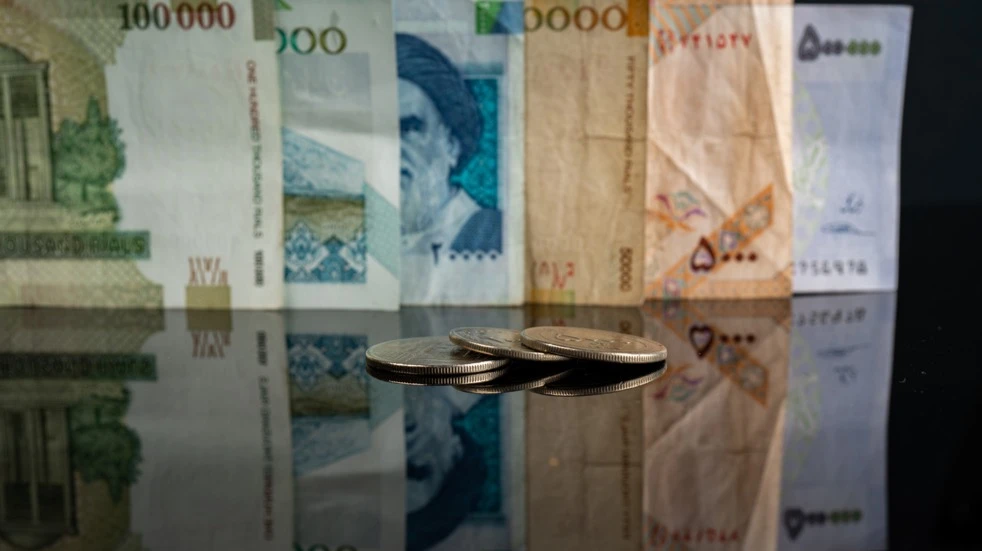
The sharp depreciation of the local currency was one of the reasons for the protests in Iran. Photo: erdalislakphotography / Shutterstock.com
How can strengthening the exchange rate of the national currency by non-market methods, for example, by limiting currency trading and increasing the Central Bank rate, lead to the emergence of a black currency market and then to political and economic problems? Analyst of Arbat Capital Advisory Services Limited (UK) Alexey Golubovich analyzed this on the example of countries with tight monetary policy and currency control.
How does artificial appreciation lead to future problems?
Against the background of what is happening in Iran and Venezuela, it is important to analyze the consequences of national currency control. Especially in terms of monetary policy errors (MPE), which stimulated crises in these countries. The collapse of the Iranian rial against the U.S. dollar was one of the reasons for the mass protests that swept the country. And the deterioration of the economic situation in Venezuela was one of the key factors that led to a multi-year political crisis.
When a central bank or government artificially holds the exchange rate of a national currency stronger than it should be according to market fundamentals (through restricted access to the currency, severe currency restrictions, an inflated key rate, direct intervention, multiple exchange rates, and so on), it creates an accumulation of imbalances that are almost always resolved painfully.
Here's how it goes:
- Overvaluation of the official exchange rate makes imports "cheap" and inflation formally lower. But exports become low-profitable. This leads to a fall in foreign exchange earnings in the country and depletion of "hard currency" reserves. The result (usually in a few years) is a rapid devaluation.
- Tight currency restrictions and the need to obtain government authorizations for currency transactions in all areas may give the government the impression of a controlled situation for a while. However, a black or gray market with a huge premium (in Asian or Latin American countries it is sometimes 100 to 1000%) immediately appears.
This illegal or partially legal market becomes the main market. The multiplicity of rates formed through 5-10 different "windows" (from banking and fintech services to cash exchange in hotels, banks, "independent" money exchangers and on the street) generates super profits for corrupt regulators and bankers. This "rent" can be distributed to close groups in the state apparatus. The result is large-scale corruption, super-profitable currency arbitrage, loss of control over the money supply, loss of confidence of the population and business in the currency and the Central Bank.
- The ultra-high real interest rate of the Central Bank generates an inflow of speculative capital. And temporary strengthening of the national currency with a simultaneous growth of the cost of crediting causes a sharp slowdown of the economy and a decrease in investment. GDP growth stops, which in 2-3 years leads to recession and subsequent devaluation of the national currency.
- A ban or severe restrictions on the export of capital, provided that there is simply no possibility to invest it safely inside the country, leads to the fact that investors, especially foreign ones, leave "forever" - for many years. Capital outflow and stagnation are always not immediately clear to the authorities, as reserves do not leave quickly, and for some time the situation in the country seems "stable" to them.
The classic crisis trajectory observed over the past 50 years in various countries with rigid DCPs can usually be divided into four phases.
The first is the "success" period. It lasts from a year to five years. During this time, the national currency exchange rate is mostly stable and inflation is artificially restrained by regulators. But during this time a huge "overhang" of economic reasons for devaluation accumulates. The premium of the exchange rate on the black market can reach 1000%.
At the second stage, the exchange rate collapses sharply, often by 2-10 times in a few months. This leads to a sharp loss of foreign exchange reserves - the government sells currency to contain the fall in the exchange rate. The country faces a hyperinflationary or stagflationary shock.
All this inevitably leads to the third stage - political and social crisis.
The fourth stage is a long period of restoring confidence in the public financial system. It usually takes from three years (in the most optimistic scenario) to 12 years.
Where does that happen?
Venezuela can be considered a vivid and relevant example as of the beginning of 2026. In this country, the black market exchange rate is many times higher than the official rate. In Venezuela, for several years now, there are no separate special rates at which exporters are obliged to sell foreign currency, as was the case until 2019. The country has a single official rate of Banco Central de Venezuela (BCV), which is the "weighted average result" of the operations of bank "exchange tables" (mesas de cambio). At this rate, exporters (including PDVSA and private companies) sell most of their foreign exchange earnings to banks, and banks sell them to importers, households, and other customers.
However, hyperinflation (due to sanctions, falling exports and shutdown of most industrial enterprises) leads to a gap between the official and real (parallel) currency market.
Exporters are forced to sell the currency at the official exchange rate (or close to it), incurring losses in bolivars compared to if they could sell it at the "parallel" exchange rate. For comparison, the official bolivar/US dollar exchange rate from the BCV as of mid-January 2026 was 330-339 bolivars. In banks, the average selling rate was almost equal to the BCV rate, 336-340 bolivars to the dollar.
"Parallel" exchange rates via cryptocurrency, which has become the most massive, were significantly higher than the official one. In January, it averaged 440-490 bolivars, which is 1.35-1.45 times higher than the official one if we focus on Binance P2P, and 550-590 bolivars for USDT, the most popular instrument, which is 1.65-1.8 times higher than the official one.
The exchange rate "on the street" (efectivo) was 560-620 bolivars per dollar.
Extremely tight currency restrictions and inflation ( approaching 270% in 2025) led to a 480% devaluation of the official exchange rate in 2025.
Iran: Iran has a very complex exchange rate system (different rates for different purposes) and a high key rate (23% in 2025, compared to an average rate of just over 18% over the last 50 years). Iran has severe currency restrictions. Annual inflation in December 2025 was 42.2%, and the government sees no other way to combat it than through a high rate and multiple exchange rates.
The exchange rate of the national currency in late 2025 and early 2026 fell to historic lows in the unofficial ("free") market. In January 2026, the dollar was worth about 1.4 million rials, almost five times the official (subsidized) "exchange" rate of 285,000 rials. This rate had been set for a number of categories of importers in previous years, and was used despite the continuous depreciation of the market exchange rate.
What are Iran's main currency buying and selling rates for the end of 2025-January 2026? The country has a "negotiated" exchange rate of the Foreign Exchange and Gold Exchange Center (ICE), which is the main rate at which exporters mandatorily sell currency. It was 1,075,000 to 1,270,000 rials per dollar (depending on the type of transaction). In December 2025, the Iranian authorities announced a benchmark of 1,075,050 rials per dollar for certain types of transactions. Now, the buy/sell rate in the ICE system already fluctuates between 1,240,000 and 1,268,000 rials per dollar (according to TGJU data as of mid-January 2026).
The old "official" exchange rate of 285 thousand rials per dollar was maintained in 2025 and early 2026 for a narrow range of importers of critical goods (medicines, some food), but not for buying foreign exchange from exporters.
The exchange rate in the "unregulated" market in January 2026 ranged between 1,440,000 and 1,470,000 rials per dollar.
Thus, at the end of 2025, the Central Bank of Iran was already forced to buy dollars from exporters (or rather, obliged to sell them) at the negotiated rate of the ICE foreign exchange trading platform, which averaged approximately 1,050,000 to 1,270,000 rials per dollar (with an upward trend by January 2026). This effectively meant a sharp devaluation of the rial, leading to a fall in the market exchange rate of the local currency, higher import prices and inflation.
Another example is Egypt, which can be called in some sense positive here. A few years ago, the premium on the parallel currency market to the official exchange rate in this country was from 30 to 80%. But it started to decline after the partial easing of the MPC. In 2024, the Egyptian central bank switched to a flexible exchange rate policy, and banks began to provide importers with foreign currency. Last year, the authorities eased currency restrictions for the population as well. For example, the country's Central Bank canceled the requirement for banks to verify that a person was abroad after activating currency limits on cards. In addition, Egypt's Central Bank cut interest rates five times in 2025. All these measures have reduced inflation from 24% at the beginning of last year to 12.3% as of December 2025.
Six Mistakes: How to be on the edge of the abyss
What do the example countries have in common in terms of monetary policy and economic model?
First of all, fiscal dominance over monetary policy. The government constantly requires the Central Bank to finance huge deficits (directly or indirectly), and the regulator cannot pursue an independent tight policy.
Second, we are talking about a rent-based commodity economy, where the main source of foreign exchange is the export of a few raw materials (oil, gas, phosphates) and sometimes gold. When the price of raw materials falls or the volume of exports decreases, a shortage of currency is inevitable. In Russia, this happened in 1998-1999 under other incomparably more favorable conditions, but with a similar policy framework in terms of rate regulation, exchange rate and government bond issuance.
The third reason, in descending order of importance, is the government's prolonged reluctance to undertake painful macroeconomic adjustment. It is sometimes believed that it is politically easier to keep the exchange rate artificially "strong" by giving import subsidies and privileges to "its own" than to carry out devaluation and fiscal consolidation.
The fourth reason is weak institutions and high level of corruption. When a country has many courses for different purposes, it becomes the main mechanism for distributing "rent" among political and business "elites" integrated among themselves.
Hence the fifth reason - distrust of the population and business in the national currency. The high level of "dollarization" and "euroization" of the economy in a number of countries has reached a level where 70-90% of real settlements are made not in the national currency, but in "hard" currencies and their crypto-substitutes.
And lastly, long-term isolation from the main international capital markets. This includes not only the markets of the US, EU and Britain, but also Hong Kong and the UAE, for example, given the traditional economic ties and sanctions. In this case, with the actual loss ("freezing") of the sovereign rating and growing political risks, the country has almost no possibility to finance the current account deficit with international borrowings.
Thus, the unwillingness or inability to finance government expenditures under the rent-seeking nature of the economy and "fiscal dominance" leads to the fact that the use of the exchange rate as the main instrument for the distribution of "rent" becomes at some point the main macroeconomic problem of the country. This combination of factors creates a classic "non-market exchange rate trap" from which it is difficult to escape without a major economic crisis.
This article was AI-translated and verified by a human editor