Doubts about the AI boom have made Kioxia's stock the cheapest among Japan's "blue-chip" companies
18 out of 20 analysts recommend buying Kioxia stock following the plunge

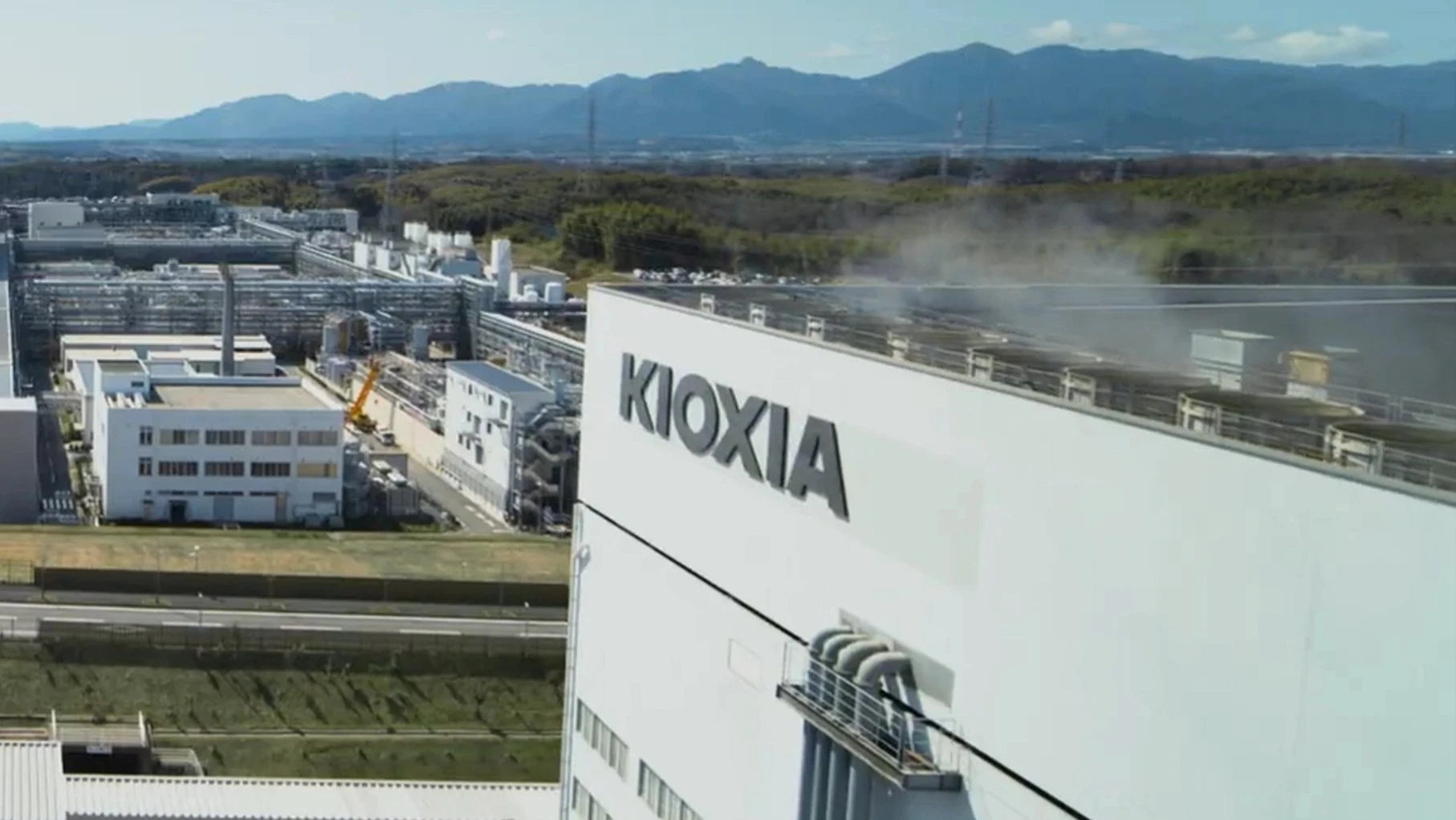
Kioxia has benefited less from the AI boom than other memory chip manufacturers / Photo: YouTube/Kioxia-JP
Shares of Japanese flash memory manufacturer Kioxia, despite a sharp rise over the past two trading sessions, are trading at nearly 40% below their late-October levels. As a result, Kioxia’s forward P/E ratio—the ratio of the stock price to expected earnings per share—has fallen to 1.7. This is the lowest valuation among both companies in Japan’s Nikkei 225 blue-chip index and among comparable memory manufacturers, including SK Hynix, a key supplier to Nvidia, according to Bloomberg.
On November 26, Kioxia’s stock rose 12.6% on the Tokyo Stock Exchange. The rise was driven by speculation that dividends from a subsidiary would help Kioxia fund a share buyback, according to Bloomberg. Hopes for increased shareholder payouts are adding to the stock’s appeal: the company promises to allocate all excess cash to shareholders in the medium and long term, the agency notes. On November 27, the stock price rose another 9.5%.
Of the 20 analysts who cover Kioxia, 18 recommend buying its stock, while one each recommends holding and selling, according to Bloomberg. The “bulls” argue that Kioxia is exceptionally undervalued even compared to other memory manufacturers, which typically have low price-to-earnings ratios due to the cyclical nature of their profits. “I’ve never seen a company with such high profits valued so low,” Bloomberg quotes Kazuyoshi Saito, a senior analyst at Iwai Cosmo Securities, as saying. He expects the stock price to eventually begin reflecting Kioxia’s financial performance.
Barriers to Growth
Kioxia’s stock price is increasingly fluctuating by more than 10% in a single day. Bloomberg attributes this to retail investors closing out positions opened with high leverage, while news about the prospects for AI emerges every day. Due to these fluctuations, even with historically low valuations, some market participants are in no hurry to buy the chipmaker’s stock. “Unless there are clear signs that cloud providers will continue to invest heavily, the stock will have a hard time recovering,” Bloomberg quotes Takumi Nishida, a fund manager at Asset Management One who holds Kioxia shares.
Kioxia’s sales of flash memory for data centers are modest, so the company has benefited less from the AI boom than other companies, Nikkei notes. On November 26, Kioxia announced tests with Nvidia: in an Nvidia server rack, Kioxia’s solid-state drives can partially take over the functions of high-bandwidth memory (HBM). Such memory is primarily produced by South Korean manufacturers, including SK Hynix, and there is a severe shortage of it.
This article was AI-translated and verified by a human editor