'Emotions are running really high': Tech stocks have worst day since June



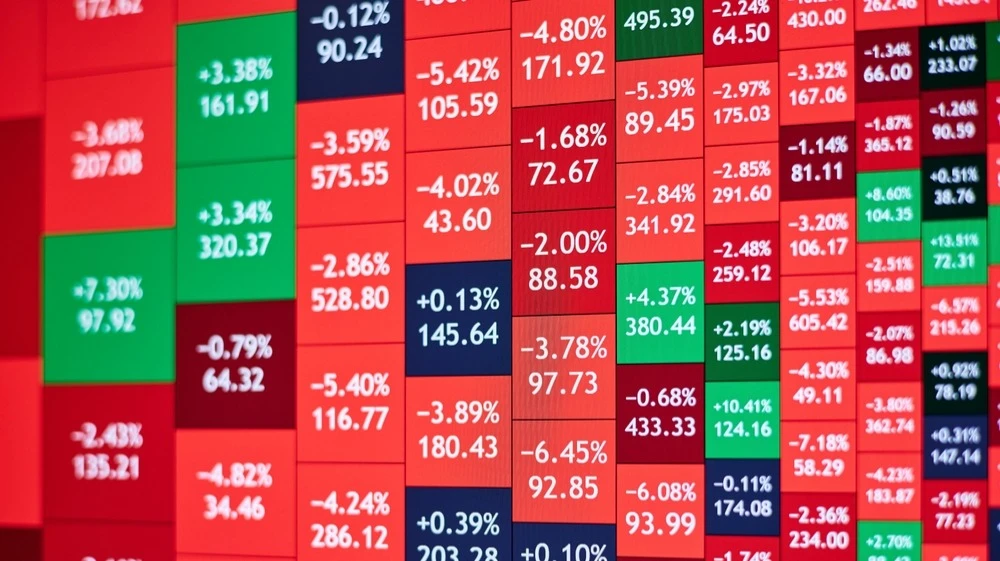
The selloff followed quarterly earnings from major tech companies, with investors most disappointed with Alphabet and Amazon, two heavyweights at the forefront of AI investment / Photo: Shutterstock.com
The stock market closed out October with the sharpest selloff in AI stocks in several months.
The tech-heavy Nasdaq Composite fell 2.8% on Friday, its biggest decline since June.
The Nasdaq 100, which tracks the 100 largest nonfinancial companies listed on the Nasdaq, closed around 9% below its recent high. It briefly entered technical correction territory in intraday trading, falling 10% from that peak.
Intel shares plunged more than 28%, their steepest drop in more than 40 years, after the chipmaker’s management issued disappointing top-line guidance. Amazon retreated 1.4% after it reported higher-than-expected capital expenditures and slowing e-commerce revenue growth on Thursday. Nvidia fell 4.2%, losing its position as the world’s most valuable company to Apple, whose stock declined 1.2% on the day.
The tech selloff dragged down the broader market, with the S&P 500 falling 1.8%. Even the blue-chip Dow Jones Industrial Average, which has substantial exposure to cyclical sectors, lost more than 1%.
The Cboe Volatility Index, or VIX, commonly referred to as "Wall Street’s fear gauge," jumped 18% to cross the psychologically significant 20 point mark, a sign of heightened market volatility.
What Wall Street is saying
The VIX is climbing in “an uncomfortable way,” Fairlead Strategies founder Katie Stockton said. “It’s not a big extreme, but it’s getting into that territory where you feel like it’s a shift,” Stockton told MarketWatch. “Emotions are running really high,” although most of the selling remains relatively “localized” around tech and the AI trade, she added. Stockton noted that some stock market sectors remained higher on Friday afternoon.
“The market is on edge about monetizing AI,” LPL Financial Chief Equity Strategist Jeff Buchbinder told MarketWatch. Concerns about AI investment extend beyond tech to industrial companies involved in building AI data centers, he noted.
“The tone has changed a bit, and whether that changes the sustainability of the rotation is still yet to be determined,” Globalt senior portfolio manager Keith Buchanan told CNBC. He described the market as “scrutinizing” and “discerning.”
“Last year was hope. This year is: At the end of day, how does this all work in real world terms, like how to finance [it] and who gets the economics. Those questions are much more difficult to answer,” he said. “There are real economy risks, and the market’s picking up on that,” Buchanan added.
What triggered the flight from risk
The selloff followed a string of quarterly earnings reports from major tech companies that fell short of expectations. Investors were particularly disappointed by Alphabet and Amazon, two heavyweights at the forefront of AI investment. Intel’s earnings report also triggered a sharp drop in stock prices. The results renewed investor concerns about the outlook for AI spending.
Where investors sought shelter
Gold and Treasuries failed to provide a safe haven for investors on Friday. Gold settled at $3,885.70 per ounce, its lowest mark in more than a year. The yield on 10-year U.S. Treasuries was virtually unchanged.
Investors appeared to be seeking shelter in defensive stock market sectors, Barron’s writes. Consumer staples (XLP) rose 1.4%, while healthcare (XLV) and utilities (XLU) gained 0.5% and 0.7%, respectively.
“The bigger question that still remains is will the weakness in tech spillover to the broad market, or can the game of musical chairs continue?” BTIG Chief Market Technician Jonathan Krinsky wrote in a note cited by Bloomberg. “A correlation-one style selloff continues to be elusive, but the set-up for it into November is now more likely, in our view.”