'An incredible shift': where two weeks of war in Iran has taken the world economy
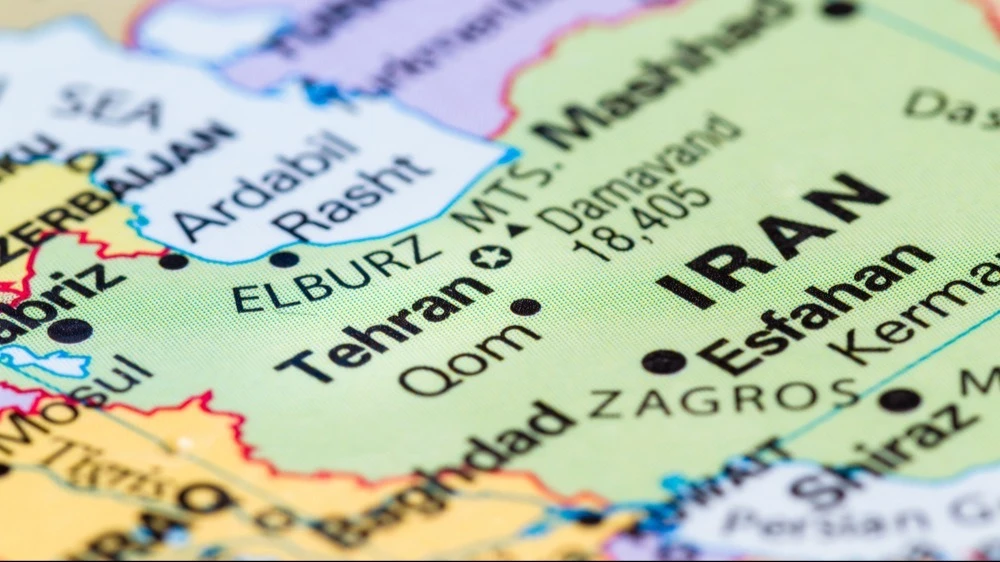
The war in the Middle East is changing market and economists' expectations about global inflation, economic growth and the prospects for the DKP. Photo: Nature's Charm / Shutterstock.com
The war in the Middle East, which has deprived the world of about 20% of the global supply of oil and liquefied natural gas, is changing expectations about global inflation, economic growth and the outlook for monetary policy. An average oil price of $150 or even $200 a barrel no longer seems impossible to analysts, and such a rise could reignite inflation.
Energy inflation shock
Hopes for a quick operation in Iran have not materialized, and the situation is worsening: Iraq, Kuwait, the UAE, Saudi Arabia and Bahrain have already begun cutting oil production because of the inability to export the crude, and Iran's new supreme leader, Mojtaba Khamenei, said Thursday that it was necessary to continue keeping the Strait of Hormuz closed and "other fronts" in the war should be opened "if necessary.
The price of Brent crude oil, which soared to nearly $119 a barrel on Monday, March 9, fell below $100 on Tuesday on U.S. President Donald Trump's promise to end the war "very quickly." But with no signs of its imminent end since then, the price was back above $100 a barrel by the end of the week.
The International Energy Agency called the current oil shock "unprecedented in scale" and gave an "unprecedented in size" response: its 32 member countries decided to withdraw 400 million barrels from strategic reserves to the market. In Europe, which is heavily dependent on energy imports, the shock could accelerate inflation and bring the economy to the brink of recession. In the U.S., the benefit of increased energy exports could compensate the economy for the slump in consumer activity, but the Fed would be in a difficult position: accelerating inflation would require it to raise interest rates and the president to lower them.
China and India, the world's largest oil importers, have lost the ability to buy crude from Russia and Iran at deep discounts. If the crisis continues, the two countries "will fight over Russian oil," Sergey Vakulenko, a fellow at the Carnegie Center for Russia and Eurasia Studies in Berlin, told the Financial Times. Already, Indian companies are paying about $5 a barrel more for it than Brent, according to Kpler, while it was as high as $30 (at shipping ports) when the war in the Middle East began.
India has raised government-regulated prices of bottled gas, the most common energy resource for cooking, for the first time in almost a year: by 7% for middle-class families and 11% for the poorest.
About 20% of the world's oil supply (about 20 million barrels per day) was exported from the Persian Gulf countries through the Strait of Hormuz, which was effectively closed by Iran. According to Bloomberg Economics calculations based on academic research and data on past supply disruptions, a 1% reduction in global oil supply leads to a 4% increase in its price.
Thus, the prolonged closure of the Strait of Hormuz will ensure the growth of oil prices by 80% from pre-war levels, i.e. approximately up to $108 per barrel. In an unfavorable scenario, they will remain at this level until the fourth quarter of this year.
In the US, this will add 0.8 percentage points to inflation by the end of the year, and it will exceed 3% (with the Fed's target of 2%), according to Bloomberg Economics calculations. A similar inflationary gain is expected in China. This could even be seen as a positive factor, given that the PRC is in danger of falling into a deflationary spiral. But the economy will also suffer: the energy shock will undermine the already weak consumer demand and will have an additional negative impact in a situation when the country cannot get out of the crisis in the real estate market for the sixth year and is trying to cope with the consequences of U.S. trade duties.
According to the Bloomberg Economics model, the eurozone and the UK will add about 1.1pc to inflation and deduct 0.6% and 0.5% from GDP, respectively.
Oil at $150 a barrel
Analysts have started to revise oil price forecasts. In the new base scenario of Goldman Sachs (the second for the week!) the average price of Brent in March-April is $98 per barrel, the forecast of a week ago assumed growth to $80 in March, reports The Wall Street Journal.
But in the worst scenario, it may reach $145 per barrel. The investment bank now expects the disruption in supplies through the Strait of Hormuz to last 21 days (earlier they expected 10 days).
If the strait is closed for a few more weeks, the price could exceed $150 a barrel, analysts at Macquarie Bank said.
"In our view, a price of $200 a barrel in 2026 cannot be considered impossible," said Simon Flowers, chairman and chief analyst at Wood Mackenzie. - When the conflict ends, supply chains will not recover quickly."
Everyone knows that oil and gas are exported from the Gulf, but countries in the region are also exporting fertilizer in large quantities, reminds Jon Treacy, publisher of investment newsletter Fuller Treacy Money: "You can think of agriculture as the process of turning natural gas and phosphate into food."
About 50% of the world's urea, 30% of ammonia, 41% of sulphur and a range of other fertilizers are exported from the region, Tricey cites. None of this is now being exported. Consequently, a shortage of fertilizers could also lead to higher prices for agricultural products, he says.
Another sector where military actions have already led to a sharp rise in prices is air transportation. According to Cirium, as of March 12, more than 46,000 flights have been canceled in the Gulf since the conflict began. Global air transportation has collapsed by 10%, which is the most serious shock for the sector since the coronavirus pandemic, Bloomberg writes.
According to the agency's analysis of Google Flights data as of March 12, the cost of a round-trip economy class ticket from Sydney to London from April 3 to April 10 has risen by more than 80 percent, while a business class ticket has increased by about 40 percent. And to fly from Singapore to London and back in economy class, you will have to pay three times more than before the war.
Rate revision
If price growth is accompanied by an increase in inflation expectations, central banks will have to at least refuse to support the economy by lowering interest rates, if not raise them at all.
The market is already revising rate expectations. Gennady Goldberg, director of US interest rate market strategy at TD Securities, described the revision as "wild" in a conversation with the FT.
The market has completely lost its mind and decided to eliminate a lot of declines from prices. This is an incredible shift. The market now believes it will be difficult for the Fed to cut rates as long as oil prices remain high.
The yield on two-year U.S. Treasuries, the most rate-sensitive bond, has risen to nearly 3.8% from 3.4% before the war. The market is trying to factor in the "negative implications for [economic] growth from higher inflation and probably less stimulative monetary policy," says John Stopford of management firm Ninety One.
Trump is creating additional stress for both Fed Chairman Jerome Powell, who is wrapping up his tenure, and Kevin Warsh, who is coming in May. On Thursday, he wrote on his Truth Social network, "Where is Federal Reserve Chairman Jerome 'Too Late' Powell today? He should be lowering interest rates, IMMEDIATELY, not waiting for the next meeting!".
The yield on 2-year German government bonds rose from pre-war 2% to 2.37%, 10-year - 2.64% to 2.94%, also indicating the expectation of an ECB rate hike. The market is now pricing in a near 100 percent chance of a 0.25 p.p. rate hike to 2.25 percent by July and a near 70 percent chance of a rate hike to 2.5 percent by the end of the year, Bloomberg points out.
Economists surveyed by the agency on March 6-11, however, disagreed with market participants: only 7% expect the ECB to tighten monetary policy by the end of this year and less than a third - by the end of next year. The difference is explained by estimates of the duration of the conflict, Bloomberg notes: economists expect it to be short-term.
However, Bill Diviney, Senior Eurozone Economist at ABN Amro admitted: "It is clearly too early to draw confident conclusions about the impact [of the crisis on monetary policy]. The ECB will demonstrate its vigilance on the impact on inflation and its willingness to take action if necessary."
A rate cut at the next meeting is "obviously not even being considered" and a rate hike is "probably closer than many people think," Peter Casimir, a member of the ECB's governing council, said in an interview with Bloomberg.
"A potential stagflationary shock in the global economy presents central banks with a new dilemma," states Carsten Brzeski, global director of macroeconomic analysis at ING.
The shock, though, will not be as severe as in 2022, he suggests: labor markets in many countries were booming then, thanks largely to fiscal support during the pandemic, quickly joined by fiscal measures to reduce the energy burden on households and companies.
"In 2022, the shock from soaring energy prices more easily spiraled into an inflationary spiral as governments added fuel to the fire by creating a classic spiral in the form of rising prices and wages," Brzeski writes.
In the current environment, he believes that at least European governments are less willing to offset rising energy costs due to extremely limited budgetary options.
"In any case, the global economy is once again at a turning point that not only has serious short-term implications, but could also further exacerbate radical changes in the broader geopolitical context," he concludes.
This article was AI-translated and verified by a human editor