From Palantir to Nvidia: what "sand castles" Burry has found in AI rallying
The investor in "The Downgrade Game" is betting against stocks and funds tied to artificial intelligence, and is looking for opportunities in companies left out of the hype

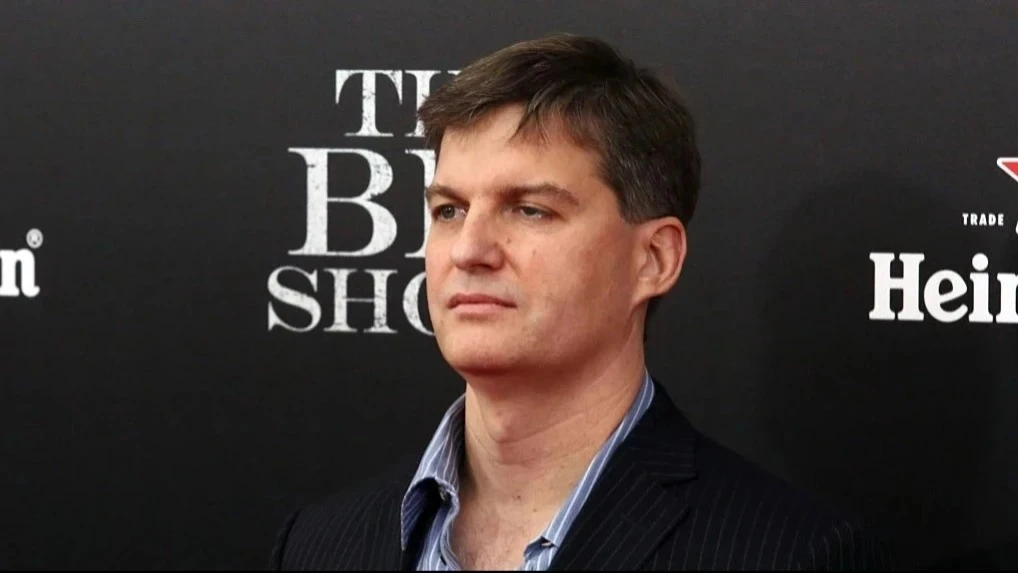
Celebrity Investor shorts Nvidia, Palantir and a fund tracking the Nasdaq 100 index, comparing the current euphoria to the dot-com peak of 2000 / Photo: Photo by Astrid Stawiarz/Getty Images
The AI boom has already become too big a bet for the market, says Michael Burry. AI-linked stocks are appreciating faster than others, and capital is crowding into a narrow circle of beneficiaries. For the investor who became the prototypical hero for the book and movie "The Downgrade," this is a sign of an overheated system: too much capital, market valuations and future production commitments are tied to the assumption that demand for AI applications, chips, memory and data centers will grow for years.
A bet against Palantir
In his blog post on Substack, Burry shared that he maintains a negative view on military and civilian AI developer Palantir and keeps a short position in both the stock and put options. The company is trading at about 16 times earnings, at which he estimates the stock could yield 15% annually over a horizon of 15 years or more.
Burry also sees signs of a turnaround in Palantir's stock: it's up 2616% in 30 months, but low trading volumes near its peak in early November 2025 were a red flag for Burry: after such a rally, the stock could be left without enough demand for new growth.
"It's a sand castle that is still being kept afloat by the story around AI applications - in my mind it's a classic short candidate. I continue to hold a short position in both common stock and put options."
Infrastructure with commitments
Burry sees the same risk of inflated expectations in the infrastructure part of the AI boom. For Nvidia, the risk is that the company has tied itself up in irrevocable contracts worth hundreds of billions of dollars against future demand for AI chips. If customers start cutting back on data center spending and buying chips more cautiously, Nvidia's revenue and margins could plummet, Burry estimates.
The market picture, according to Burry, confirms this risk. Since the start of 2023, Nvidia stock is up 1542%, but trading volume has gradually declined - a sign of a less sustained rally than the share price indicates. Investor retains put options on Nvidia.
Oracle, according to Burry, shows another risk: the formerly steady software business has turned into a capital-intensive bet on data centers for artificial intelligence. The more a company invests in AI infrastructure and the higher its debt load, the investor writes, the more the company's valuation depends on the market's belief in long term demand for computing power. Burry maintains put options on Oracle: in the last position update, he extended the expiration of those options and raised the strike price from $85 to $135. Even after that, the strike remains about 41% below Oracle's last closing price of $230.51 per share. Burry also allows for an outright short position in the company's stock.
An index that holds up to AI
Burry also sees the NASDAQ 100 tech index as a symptom of overheating: the market is increasingly dividing stocks based on one characteristic - whether or not a company has ties to AI.
"The last two months for the NASDAQ 100 index have been outstandingly charged almost to the point of dreaming. Stocks regularly soar 30-50% if their strong performance is in any way tied to the AI theme or if Nvidia CEO Jensen Huang simply mentions the company. Stocks that have been left out of the AI hype are either experiencing sharp collapses or slowly bleeding out as everyone is now buying up NASDAQ stocks with the AI nimbus shining over them.
This rise in the index coincides with the movement before the dot-com peak: 33.4% versus 37.3% in two months. The investor holds put options on QQQQ, a fund that tracks the Nasdaq 100.
Betting against memory
Another Burry bet against the AI boom is put options on SOXX, an exchange-traded fund that tracks the NYSE Semiconductor Index. It includes U.S. semiconductor companies, including chip makers and related supply chain participants. AI demand has already overheated the memory market, with chip prices and manufacturers' margins rising to levels that look dangerous, in the investor's estimation. Micron, Burry cited as an example, has gross margins as high as 74% and Samsung's at nearly 80% - the market is accepting memory chip shortages as the long-term norm, the investor states.
"Multi-year contracts are an advantage that will become a problem: commitments to build more and more AI capacity can outpace any real need. That's how any whiplash effect starts - with absolute certainty of new long-term demand."
If the upward cycle reverses, the industry could quickly move from shortage to surplus, with memory manufacturers' prices and margins coming under pressure.
The other side of the portfolio
Burry's short bets are used against areas of the market where the AI frenzy has driven up prices the most, but the bulk of Burry's portfolio, he said, remains in long positions.
"When markets get expensive, I accumulate cache - just don't invest new additions and perhaps sell some or all of the overheated positions. When the market gets so fixated on one theme that unrelated stocks get crushed time after time, I start directing some of that cache into the few companies that, from my analysis, have suffered from these all-out sell-offs completely undeservedly."
Among the long positions, Burry has ramped up investments outside of securities affected by the AI frenzy: in mortgage servicer Freddie Mac, pharmaceutical company Zoetis, supermarket chain Sprouts Farmers Market, payment service PayPal and premium clothing brand Lululemon.
This article was AI-translated and verified by a human editor