No Alternatives: How the Halt in Oil Exports via the CPC Will Affect Kazakhstan

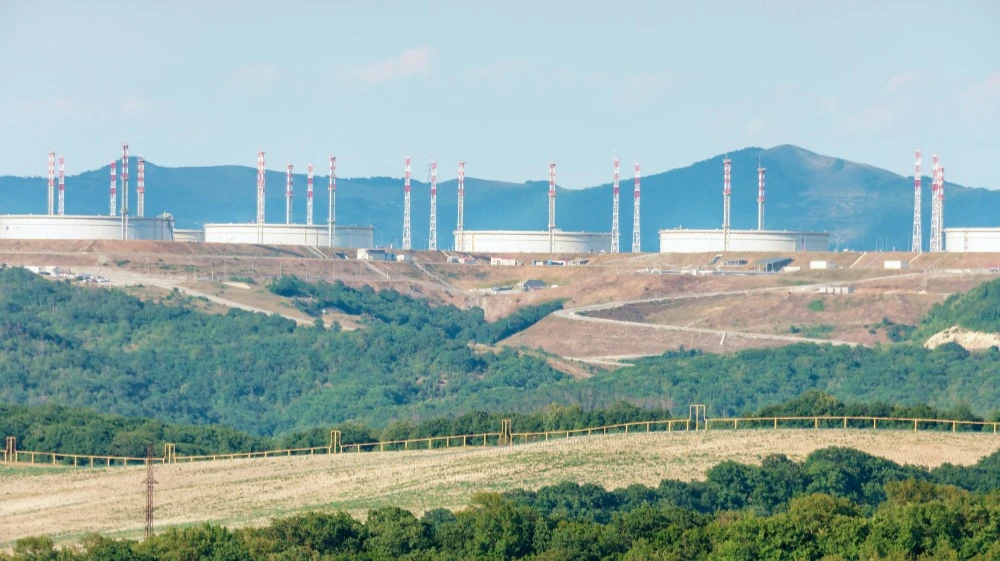
The Caspian Pipeline Consortium is the main route for exporting Kazakhstani oil to global markets. Photo: WR studio / Shutterstock.com
The Caspian Pipeline Consortium (CPC) has stopped receiving oil from Kazakhstan following the suspension of shipments at the Black Sea terminal, Reuters reported. Two sources at the agency said that the oil storage tanks at the terminal are full.
The decision to suspend operations is linked to recent attacks in the Black Sea, following which tanker companies are reluctant to send their vessels to this terminal, sources told Bloomberg. A number of sources, citing Kazakhstan’s Ministry of Energy, report that the terminals in Novorossiysk were not damaged as a result of the latest attack, but there is no official statement
on the ministry’s website.
Over the past month, five tankers have been targeted by drone attacks. Ukraine has not claimed direct responsibility for these attacks, but in recent days, Ukrainian military officials have mentioned several attacks on unnamed oil tankers in the Black Sea, according to Bloomberg. On Tuesday evening, Ukraine’s ambassador to Kazakhstan, Viktor Maiko, rejected accusations of attacks on the tankers, noting that Ukraine considers Kazakhstan a friendly nation.
The CPC press office declined to comment. Kazakhstan’s largest oil producer, Tengizchevroil, which is operated by the American corporation Chevron, responded to the agency’s inquiry by stating that production volumes and deliveries to the CPC system “may be adjusted from time to time depending on operating conditions.”
Nurlan Zhumagulov, director and analyst at the Kazakhstani industry resource Energy Monitor, reported that the loading schedule at the CPC has already been disrupted and that ten tankers are reluctant to approach the offshore loading facilities (VPU) at the offshore terminal near Novorossiysk. All oil arriving at the CPC is currently being transferred to the tank farm, but even that will soon be full, Zhumagulov notes.
Limited capabilities
The CPC is a 1,511-km-long main pipeline that runs through Kazakhstan and Russia. The main sources of oil are the largest fields in Western Kazakhstan (Tengiz, Kashagan, Karachaganak), which are developed by international corporations such as Chevron, ExxonMobil, Shell, and Eni. In addition to the major oil companies, CPC’s shareholders include Russia’s Transneft and Lukoil, Kazakhstan’s KazMunayGas, and others. The consortium transports not only Kazakhstani oil but also some Russian oil; however, its facilities are not subject to international energy sanctions, and vessels associated with the CPC are not considered part of Russia’s “shadow fleet.”
The Yuzhnaya Ozeryevka Marine Terminal in Novorossiysk is the only marine terminal along the CPC route. Here, oil arriving via the CPC is loaded onto ocean-going tankers for delivery to global markets.
Kazakhstan’s Ministry of Energy has described the country’s dependence on the CPC as critical. The consortium transports approximately 2% of the world’s oil, and it is the main route for Kazakhstani oil exports, accounting for more than 80% of shipments. According to Kazakhstan’s Ministry of Energy, in 2025, 64.8 million metric tons of oil were shipped via the CPC out of a total of 78.7 million metric tons of exports, with the volume increasing by 18% over the year—and there are virtually no alternatives to it, as all other routes handle much smaller volumes.
For example, in 2025, approximately 11 million metric tons of oil were shippedvia the Atyrau-Samara pipeline. Through the port of Aktau, 3.2 million metric tons were shipped, of which only 40% went via the Baku-Tbilisi-Ceyhan (BTC) pipeline, while the rest went through Makhachkala to Novorossiysk. It was reported that Azerbaijan was prepared to increase the route’s throughput capacity by 600,000 metric tons—that is, within 1% of the CPC’s capacity.
In addition, the “Atasu–Alashankou” oil pipeline, with a capacity of up to 20 million metric tons per year, runs from Kazakhstan to China. By the end of 2025, 11 million metric tons had passed through it, but Kazakhstan accounted for only about 10% of the volume, while the rest of the oil was transiting from Russia—and Russia has already agreed to increase its volumes.
If shipments via the CPC do not resume by the end of the week, Kazakhstan will be forced to cut oil production, according to sources who spoke with Bloomberg. Indeed, storage capacity is severely limited: in particular, KazTransOil’s tank farm has a total capacity of just over 1.4 million cubic meters, which is roughly equivalent to 1.2 million metric tons—or slightly more than a week’s worth of shipments via the CPC.
In 2025, the terminal had already suspended operations: one of the offshore loading arms used to load oil onto tankers was damaged in a drone attack. At that time, the consortium managed to reroute only about 362,000 metric tons, compared to an average of 5.4 million metric tons shipped via the CPC during the same period.
The CPC is also the most cost-effective route for transportation. According to analyst Nurlan Zhumagulov, the cost of transportation via the CPC is about $38 per metric ton, whereas, for example, pumping oil from Atyrau to the Bosphorus costs more than three times as much.
What does this mean for Kazakhstan's budget?
Revenues from oil exports are one of the main sources of Kazakhstan’s budget. According to the IMF, they account for up to 26% of Kazakhstan’s total government revenues, which include the consolidated revenues of the national and local budgets and the National Fund.
“If the situation can be resolved relatively quickly, Kazakhstan might even benefit from it due to rising prices caused by increased market jitters,” says Sergey Suverov, an investment strategist at Aricapital Asset Management.
In the baseline scenario, Kazakhstan’s budget for 2026–2028 is based on a Brent crude price of $60 per barrel. Due to the latest round of U.S.-Iranian tensions, oil prices have risen from $70 to $91.6 since the beginning of July (price as of 9:00 p.m. Almaty time on July 21, 2026). According to a Goldman Sachs forecast, if supply disruptions through the Strait of Hormuz persist, the price of a barrel of Brent could exceed $120 by the fourth quarter of 2026.
Dmitry Dolgin, ING’s Chief Economist for the CIS, notes that with sharp and frequent changes in the physical volume of exports, the sensitivity of Kazakhstan’s economy to the benefits of rising oil prices may fluctuate. “Every $10 increase in oil prices brings about $1.5 billion to Kazakhstan’s budget. A positive impact on the tenge cannot be ruled out either, but it is important to remember that the effect of higher export revenues may be partially offset by other components of the balance of payments, such as the outflow of dividends to foreign shareholders of oil and gas companies. Finally, the inflow of portfolio investments, which continues for now, is vulnerable to global headwinds,” he argues.
This article was AI-translated and verified by a human editor