GAP replaced the head of the Old Navy brand amid falling sales. The stock jumped 15%.
Old Navy accounts for 60% of the company's revenue

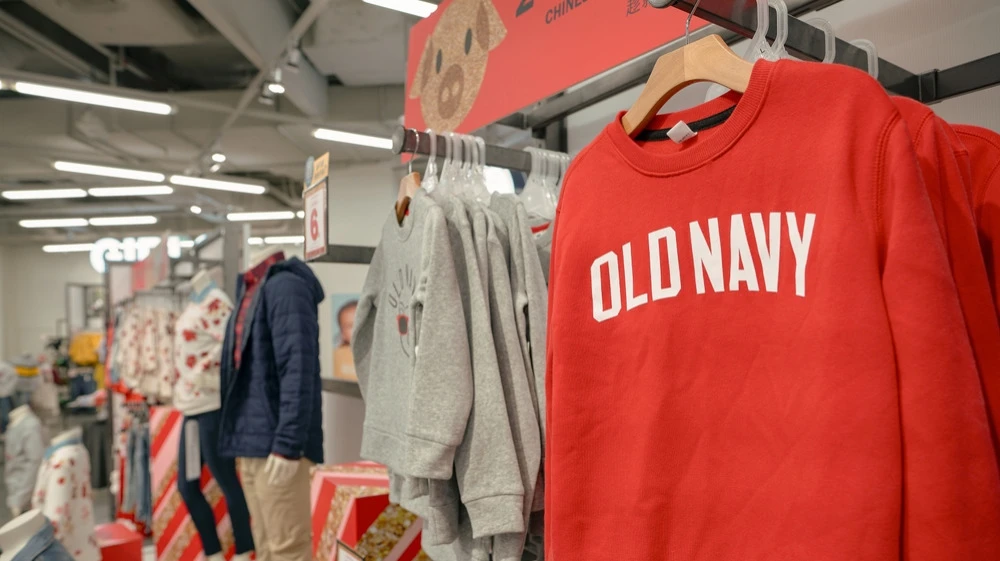
In the quarter under review, Old Navy's comparable sales fell by 4% / Photo: Sorbis / Shutterstock.com
GAP announced a change in the CEO of the Old Navy brand, which accounts for about 60% of the group’s total revenue. Sales for this brand have been declining recently, and the retailer hopes to revive them by appointing a marketing guru to lead it. Following this news, which was announced simultaneously with the release of the quarterly report, GAP’s stock jumped 12% in after-hours trading.
Details
Michael Francis, who was appointed chief customer officer at Old Navy in May, will become the company’s CEO on November 2. Current CEO Hayo Barbeito, who has held the position since 2022, will transition to an advisory role. GAP CEO Richard Dixon told CNBC that the leadership change represents a “planned and deliberate transition” intended to better prepare Old Navy for its next phase of growth.
The new CEO is a retail “veteran” who spent 26 years at Target and 10 years at Walmart, according to Bloomberg. Francis is known in the industry as a marketing expert, the agency notes. He was one of the people who helped Target popularize the concept of “affordable luxury”; under his leadership, the chain successfully launched collaborations with designers, attracted new customers, and expanded. At Walmart, he helped develop the marketing strategy, including during a period when the retailer was struggling to grow sales in the U.S.
In after-hours trading on Thursday, Gap shares jumped 12%. From the start of the year through the close of the regular trading session on August 27, the stock had lost more than 18%.
What's Happening with GAP
In recent years, GAP has faced a decline in comparable sales and revenue. The company has cut jobs, closed stores, and tried to speed up the development of new styles—it has lost ground to both global chains such as Zara and online retailers such as Shein, according to The Wall Street Journal. Analysts have begun to lose faith in GAP, primarily due to waning consumer interest in Old Navy, which accounts for nearly 60% of the group’s total revenue. In their view, the positive momentum of the flagship brand is not enough.
Old Navy’s comparable sales fell 4% last quarter, the company reported. Meanwhile, according to StreetAccount, Wall Street analysts had expected a decline of only 2.4%, CNBC reports. This marked the brand’s first decline since the second quarter of 2023. The company attributed the result in part to an “unexpected slowdown in customer traffic.”
“We realize we didn’t perform as well as we could have with the seasonal [summer] collection, but the good news is that the season is already over,” Dixon said on CNBC. “What we didn’t expect was just how ineffective our marketing would be at attracting customers,” he added during a conference call with analysts following the release of the report.
Old Navy’s weakness is particularly noticeable against the backdrop of the Gap main brand’s recovery: last quarter, its comparable sales soared 10%, exceeding market expectations. The company attributed this to “storytelling that resonates with contemporary culture” in categories such as denim, fleece, and children’s and infant apparel.
The brand managed to boost its sales thanks to high-profile collaborations and celebrity endorsements, according to Bloomberg.
The company's overall results for the quarter were mixed. Revenue fell 2% to $3.65 billion, while Wall Street had expected $3.69 billion. GAP’s comparable sales fell 1%, including a 3% decline in in-store sales. At the same time, profitability exceeded analysts’ estimates: adjusted earnings per share reached $0.52, compared with a forecast of $0.48.
The company raised its full-year adjusted earnings per share guidance to $2.35–2.45, up from the previous range of $2.30–2.40. However, due to Old Navy’s weak performance, the company had to lower its forecast for net sales growth from 1–2% to 1–1.5%.
This article was AI-translated and verified by a human editor