Highlights of the week: SpaceX IPO, oil at its highest since 2008, US labor market surprise

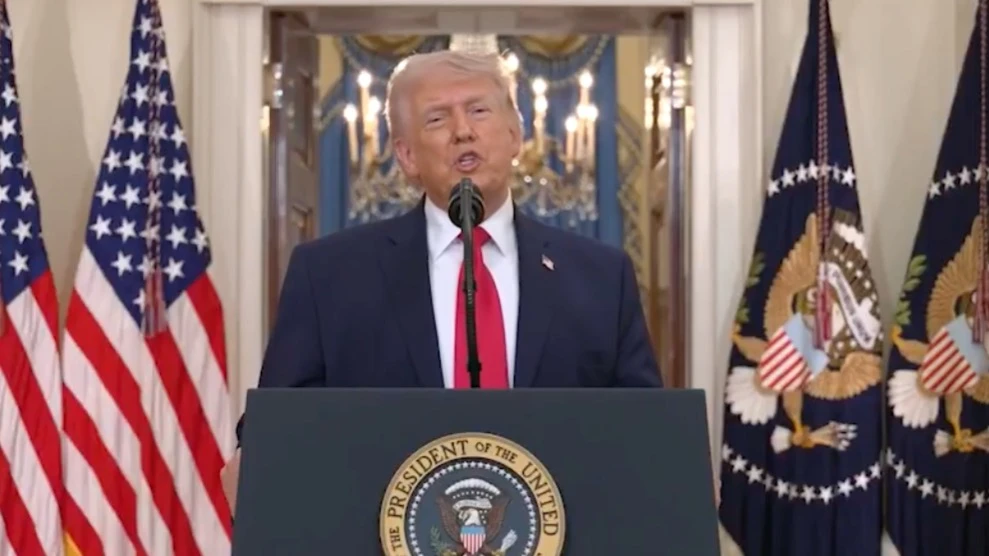
US President Donald Trump made an address to the nation on April 1, in which he said that the end of the military operation in Iran "is very close." Photo: The White House / X
US President Donald Trump said that the war with Iran is close to being over, but promised new strikes against the country in the next two to three weeks. He also shifted the responsibility for unblocking the Strait of Hormuz to other countries. SpaceX is preparing the largest IPO in history, counting on a valuation of over $2 trillion. Job growth in the U.S. in March almost three times exceeded analysts' expectations, but there are also some worrying signals in the statistics. You can read about the main events from March 30 to April 3 in our review.
Trump says war with Iran will end soon, but experts expect economy to weaken
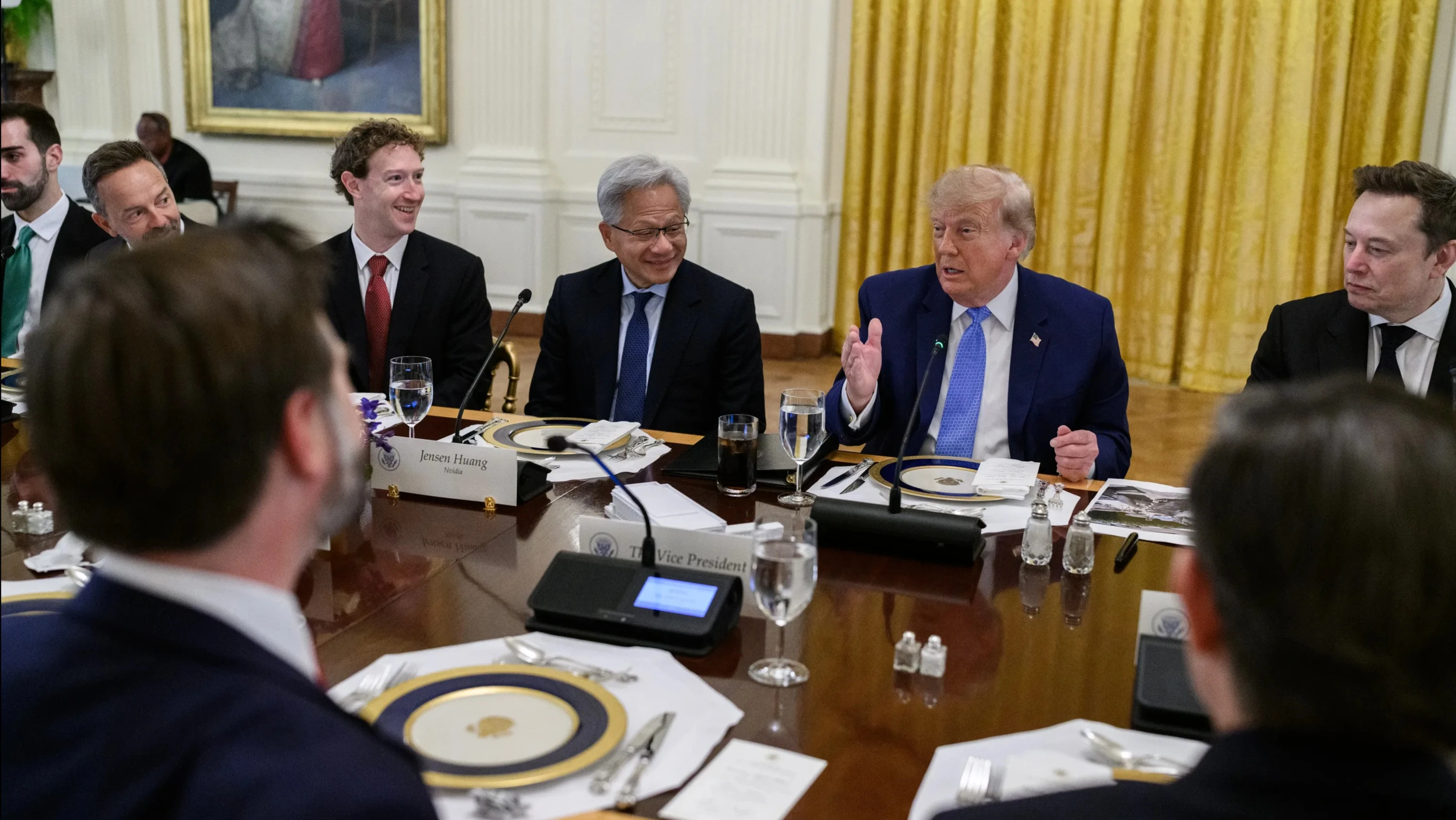
U.S. President Donald Trump delivered an address to the nation on April 1 in which he said the end of the military operation in Iran was "very near," but warned that in the next two to three weeks, the United States would launch new strikes against the Islamic Republic that would push the country "back to the Stone Age." He also shifted responsibility for unblocking the Strait of Hormuz to other countries.
Before the address, markets were rising, and the cost of Brent crude oil futures even fell below $100 - investors were expecting a rapid de-escalation in the Middle East. But after the US president's speech, investors once again staged a market sell-off, with oil futures jumping above $108 per barrel.
The Wall Street Journal reported Friday night that efforts by mediating countries led by Pakistan to achieve a ceasefire in the Middle East have "reached an impasse": Iran has officially notified the mediators that it is not ready to meet with U.S. representatives and considers the U.S. side's demands unacceptable. Now Turkey and Egypt will look for a way out of the situation and consider new proposals to overcome the deadlock.
What else is there to read about it?
Economists warn that the commodity shock from the war in the Middle East has already affected the economy, but so far neither governments nor businesses are implementing long-term solutions to adapt to the potential crisis. Read more in journalist Peter Kiryan's text "Trump hasn't said when the Iran war will end. The economy has already set itself up for a crisis."
U.S. job growth unexpectedly strong in March
The number of jobs in the U.S. outside the agricultural sector rose by 178,000 in March after falling by 133,000 in February, the U.S. Bureau of Labor Statistics reported. This is the highest figure since the end of 2024 after the February revision, Bloomberg writes. The unemployment rate fell to 4.3% from 4.4% in February.
Economists polled by the WSJ expected a gain of 59k, the Bloomberg consensus had expected a gain of 65k.
Such growth refutes fears of an impending recession, WSJ writes. But at the same time, the publication notes: on average, the U.S. economy has created 15 thousand jobs each month in the last six months. And this is much less compared to the same period last year (78 thousand jobs per month).
Economists are also keeping a close eye on wage dynamics - especially against the backdrop of renewed inflation risks. Average hourly wages rose 0.2% in March from February and 3.5% year-over-year, the lowest in nearly five years. "That could create further hardship for consumers facing a surge in energy prices due to the war," Bloomberg wrote.
What else is there to read about it?
How the statistics on the labor market will affect the Fed's further steps - in the material of Oninvest journalists "The number of jobs in the U.S. in March grew three times stronger than expected. What to expect from the Fed?"
Brent spot price rises to highest since 2008
The price of June futures for Brent crude oil exceeded $109 on April 2 (April 3 was a day off at the exchanges). But the spot price for this grade - with the obligation of delivery within 10-30 days - rose to $141.36 per barrel. That's the highest since the 2008 financial crisis, CNBC reported, citing data from S&P Global. Such growth reflects the acute shortage of physical oil supply due to the blockade of the Strait of Hormuz by Iran.
The price of futures "almost creates a false sense of stability, like the situation is not that tense," Amrita Xi, founder of Energy Aspects, told CNBC. She said the financial market is masking a real shortage of raw materials "that is showing up everywhere." For example, the price of diesel in Europe is now hitting $200 dollars a barrel.
What else is there to read on this topic?
On Friday, Bloomberg reported that the Malta-flagged container ship Kribi of the French shipping company CMA CGM was able to pass through the Strait of Hormuz. Apparently, it was fully loaded. Details - in the text of Oninvest correspondent Venera Sayfutdinova "European vessel passed through the Strait of Hormuz for the first time since the beginning of the war - Bloomberg"
SpaceX is preparing for an IPO and expects a valuation above $2 trillion
SpaceX confidentially filed documents for IPO in the U.S., sources told Bloomberg. It is a draft registration statement to the U.S. Securities and Exchange Commission. The placement could take place as early as June and become the largest in history. Billionaire Elon Musk's space company can count on a valuation above $1.75 trillion, it plans to raise up to $75 billion, Bloomberg wrote on April 1. But the agency's sources later said that SpaceX raised its target valuation to above $2 trillion.
The company is expected to have two classes of shares. Up to 30% of the securities may be received by retail investors.
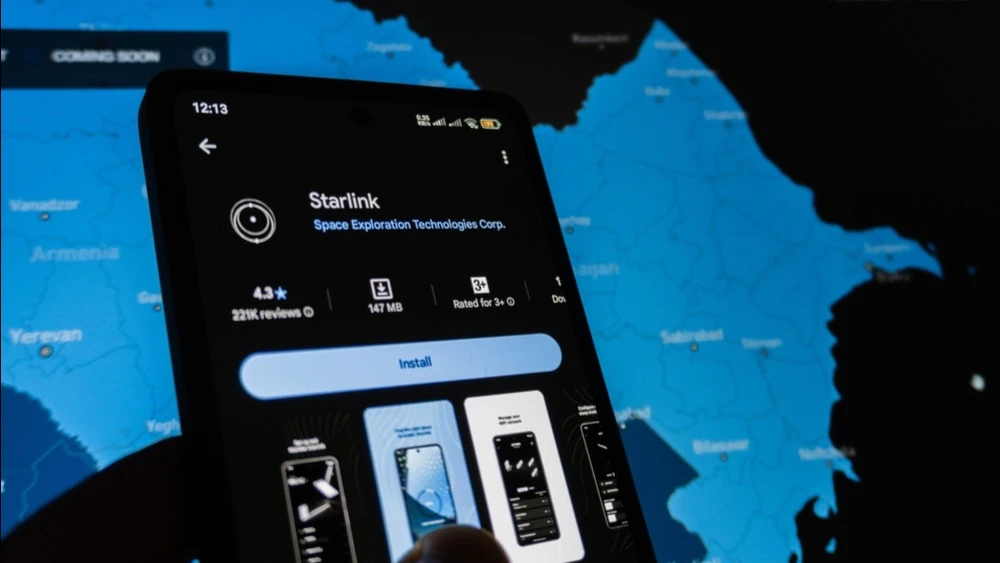
SpaceX's main business is space rocket launches and satellite internet service Starlink, with revenue approaching $20 billion by 2026, Bloomberg wrote.
Musk's only publicly traded company so far, Tesla, has a capitalization of $1.35 trillion.
McCormick buys Unilever's food business. Investors did not like the deal
McCormick is acquiring Unilever Foods, a division of Unilever Foods, the maker of Hellmann's mayonnaise and Knorr seasonings, for $44.8 billion. Unilever will receive $15.7 billion in cash and the rest in stock. Both companies announced this on March 31.
Unilever and its shareholders will gain control of the combined company - 65%.
Thus, a new major player will appear on the food market. The agreement will be the largest in the history of both companies. The deal will help Unilever to shift its focus to the production of cosmetics and care products, and McCormick - to strengthen its position in the food market, Bloomberg writes.
Unilever shares plummeted 7.3% in London on the day the deal was announced, while McCormick shares fell 6.11% in New York. The combined company will be heavily leveraged and its shares will initially be traded only in the US. As a result, it is "likely to face significant selling pressure from European investors holding Unilever shares," Bernstein analyst Callum Elliott explained the investor reaction. This will have a negative impact on investor sentiment over the next 12 months as Unilever shareholders decide whether they even want to own shares in the newly merged company, he said.
OpenAI raised $122 billion at a valuation of $852 billion
OpenAI announced the completion of a record $122 billion round at a valuation of $852 billion. The company is on track to go public in the fourth quarter of 2026.
SoftBank led the round, with Amazon, Nvidia and Microsoft also participating. The company said it expanded participation through banking channels for the first time and raised $3 billion from private investors.
The company generates about $2 billion in revenue per month, but remains unprofitable. OpenAI CEO Sam Altman will be under pressure after the new round: he will have to justify the company's high valuation, CNBC notes
The company is now redirecting computing resources and top talent to develop productivity tools that both businesses and private users can use, The Wall Street Journal wrote.
This article was AI-translated and verified by a human editor