How the spy scandal around Jensen Huang could play out for Nvidia
Three scenarios for investors, and who might succeed the embattled CEO

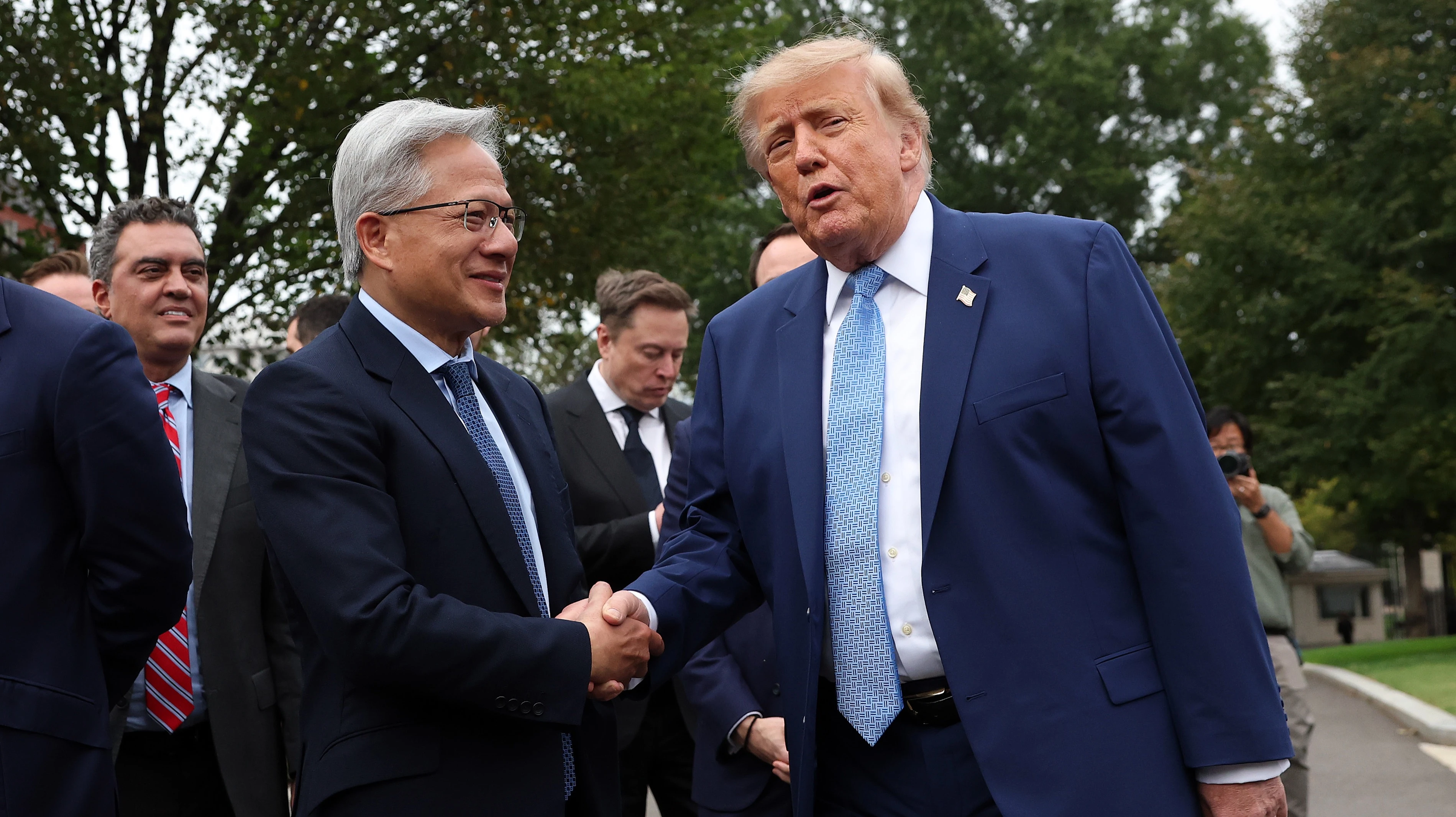
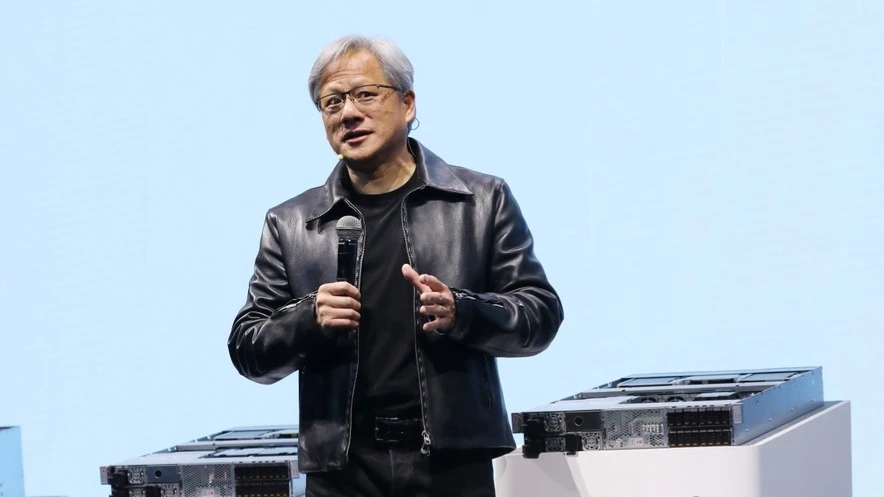
Huang has championed the company’s interests, including at the White House / Photo: Kevin Dietsch / Getty Images
The developing scandal around Nvidia CEO Jensen Huang has created new risks for the company’s stock. What should investors watch in the coming weeks, and what could the fallout ultimately be for Nvidia? Egor Tolmachev, a senior analyst at Freedom Broker, weighs in.
Three key upcoming dates
Jensen Huang is at the center of a spy scandal over an affair with Alice Huang, a former executive at Singapore-based Megaspeed, which bought Nvidia chips. U.S. authorities suspect her of having ties to Chinese intelligence. The Nvidia CEO has already acknowledged being unfaithful to his wife but, according to U.S. President Trump, claims he was unaware of the woman’s alleged intelligence ties.
The FBI is investigating the matter, and a special committee of Nvidia’s board is overseeing a separate inquiry. Members of Congress are also seeking answers from Huang.
Shareholders have also filed a proposed class action lawsuit against Nvidia and its CEO, alleging they concealed Huang’s ties to a suspected spy and thereby misled them. Tolmachev says the lawsuit will have no effect on Nvidia’s operations or financial results because it seeks neither a production halt nor restrictions and leaves demand for Nvidia’s products unchanged.
By November 11, Huang is due to respond to a request from the chairs of the House Foreign Affairs Committee, the Select Committee on China, and the Permanent Select Committee on Intelligence to attend a closed-door briefing on November 18. Lawmakers expect him to answer questions about his contacts with Alice Huang and Nvidia's security protocols for guarding against foreign espionage. Nvidia reports its fiscal-2027 third-quarter results the day before. Its earnings are always a major market event and tend to bring heightened volatility. This time, the company is also dealing with the spy scandal.
Tolmachev says the most important thing to watch is what Huang and Nvidia say and how they say it. Investors should also listen for any comments when the management speaks with analysts on November 17 on the earnings call. Tolmachev cautions that Nvidia executives may offer little of substance on such a sensitive topic. He expects the management to stick to broad, measured answers to avoid fueling further discussion.
Three scenarios for Nvidia
On Monday alone, Nvidia shares fell more than 4%, while Huang’s net worth plunged almost $6.5 billion to $148 billion, according to Bloomberg. Wells Fargo, Citigroup, and Mizuho have already cut their target prices for Nvidia while maintaining their “buy” recommendations.
Tolmachev sees little reason to sell the stock in the current situation. He argues it is already extremely cheap given Nvidia’s expected growth and profitability.
His base-case scenario assumes Nvidia’s internal investigation finds no wrongdoing and Huang answers questions from Congress and avoids charges. Nvidia shares would then gradually recover, and “the story itself will fade by early 2027,” Tolmachev explains. He added that Nvidia would probably continue to tighten its screening of cloud services partners.
His downside scenario assumes the investigation drags on, new reports or leaks surface in the media, and Megaspeed and other Asian partners of Nvidia come under scrutiny. U.S. authorities could require stricter screening of end users of Nvidia's chips and restrict Chinese companies’ access to cloud services. That would put additional pressure on sales in Southeast Asia and possibly the Middle East and limit the stock’s upside.
This would translate into Nvidia lagging other stocks in a broader AI rally, in Tolmachev's view. This scenario could also mean further losses for Nvidia, though the decline would be less severe than in the stress scenario.
In the unlikely stress scenario, investigators confirm that sensitive information was leaked, Huang steps down, and U.S. authorities impose restrictions on Nvidia itself. Depending on the circumstances, who succeeds Huang at the top of Nvidia, and how severe the restrictions are, the stock could fall 10-30%. Nvidia’s business would survive even, but investors would price in a higher risk premium.
What happens to Huang?
Jensen Huang is Nvidia’s most important intangible asset, Tolmachev said. He is the face of the company, its cofounder, and one of the world’s most influential business leaders, including in politics.
Employees describe him as open and direct. He has been known to discuss an employee's mistakes publicly. Some may find that harsh, but it helps keep the team focused on delivering exceptional results.

If Huang steps down, Nvidia’s stock would take a painful hit, but Tolmachev expects operations to carry on smoothly. He says Nvidia employs some of the best people in the world and has a strong team in place. He adds that the outcome would be the same whether Huang leaves of his own accord or is asked to step down.
Who might succeed Huang?
It remains to be seen whether Huang will exit, but the market is already discussing who could plausibly replace him. “Headhunters are probably calling around the semiconductor industry right now,” writes Martin Peers, an editor at the Information. He says they are trying to identify candidates to put before Nvidia’s board in case it decides Huang should go.
Peers cautions that the board may have yet to consider Huang’s departure, though some people close to him may be weighing contingency plans. He names two unexpected candidates for the Nvidia job. One is AMD CEO Lisa Su and the other is Rene Haas, CEO of UK chipmaker Arm.

Su runs AMD, which the Information calls “the only credible competitor to Nvidia.” Under her leadership, AMD’s revenue grew rapidly after years of stagnation. The rivalry between the two chipmakers could complicate such an appointment, as could the fact that Su and Huang are cousins. That could make Haas a better fit. He knows the industry well and spent seven years at Nvidia early in his career, the Information newsletter states.
Peers writes that the fallout could extend beyond Nvidia’s day-to-day operations. The scandal has damaged Huang’s standing as the AI industry’s leading public advocate, and Peers doubts his reputation would fully recover even if Nvidia’s board clears him of wrongdoing and keeps him in charge.
Even if the board clears Huang of wrongdoing, Peers submits, investors may still wonder whether it did so “because it lacked an obvious successor.”
Tolmachev expects Nvidia to look internally if it needs a successor. One possible candidate, he says, is CFO Colette Kress. She has held the job since 2013 and previously worked at Cisco, Microsoft, and Texas Instruments.
Yet Kress would more likely serve as interim CEO, Tolmachev thinks. She is a seasoned finance executive, but she lacks Huang’s technical background. Tolmachev names Ian Buck, Nvidia’s vice president of hyperscale and high-performance computing, as another candidate for CEO. Buck has worked at Nvidia since 2004 and is credited with creating CUDA, the company’s key software platform.