Investors are getting out: most cryptocurrency companies will bring them losses

The emergence in recent years of public companies whose primary business is acquiring and holding cryptocurrencies, and the rise of their own stocks, has been one of the highlights of enthusiasm in the digital asset market this year. But the collapse that began in October knocked the ground out from under many enthusiasts' feet. By the end of the year, the situation probably won't improve, and most publicly traded cryptocurrency companies will leave investors with losses.
"Just a lot of money."
About 70% of the 138 U.S. and Canadian publicly traded cryptocurrency companies will bring investors a year-end loss, Bloomberg calculated.
From the beginning of the year to December 5, the median price of their shares fell by 43%, while the companies included in the S&P 500 and Nasdaq 100 indices rose by 6% and 10%, respectively. At the same time, bitcoin itself fell in price by 6%, while Etherium, which is also often "pledged" to cryptocurrencies, fell by 10%.
The market of cryptocurrencies experienced a collapse on October 10, when in a few hours their capitalization collapsed by more than $19 billion. Bitcoin, whose price on October 6 rose above $126 thousand, then fell to $82.64 thousand. Together with the collapse of the crypto market and the capitalization of cryptocurrencies decreased significantly.
Avtar Sera, founder and CEO of STBL (issues gold and silver-backed stablecoin), cites the following reasons for the "largest liquidation" of positions in the history of the crypto market. On October 10, U.S. President Donald Trump announced additional 100 percent duties against China and new restrictions on its technology supply, triggering a flight from risk assets. Although Trump signed a one-year trade truce with Chinese President Xi Jinping a month later, the crypto market did not recover. The collapse triggered a domino effect, "knocking" out of the market a huge number of players who bought crypto assets with borrowed funds. And another negative factor was added for cryptocurrencies. At the same time, on October 10, the provider of MSCI indices announced a possible revision of their assessment: in case of reclassification, MSCI will consider them not companies, but funds, and will exclude them from equity indices.
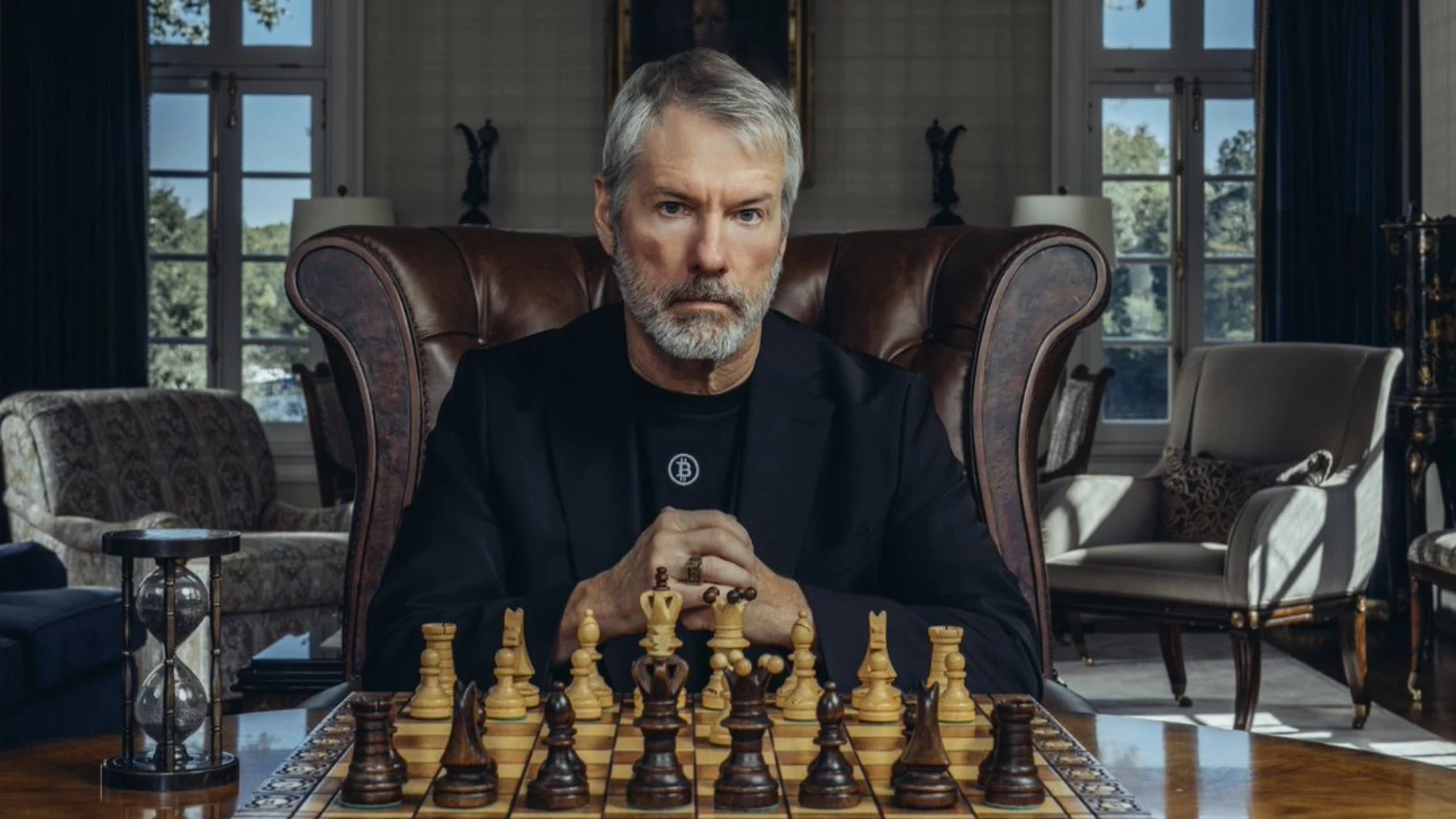
One of the brightest representatives of companies that have become a repository of digital assets is Strategy. Its CEO Michael Saylor started buying bitcoins in 2020 and as a result turned the software maker into a cryptocurrency vault. He has repeatedly promised never to sell the cryptocurrency, and in February of this year he even joked, "If you really have to, sell a kidney, but keep the bitcoins."
Strategy's stock has fallen more than 60% since its July peak. However, Saylor keeps her word, and in the first week of December, Strategy bought 10,624 tokens worth $962.7 million, which was its largest purchase since July. Bitcoin's price during this period fluctuated between $85k and $94k.
SharpLink Gaming, a company operating in the online casino and sports betting markets, was an even more striking example of the surge in cryptomania and the disappointment that followed. Its shares were worth only a few dollars at the beginning of the year. But in May, when it announced it would become an Etherium cryptocurrency exchange, they soared 2,600% in a matter of days, to nearly $80.
Since then, the price of its securities has collapsed almost eight times - on Friday, December 12, trading closed at $10.5. SharpLink's market capitalization is now about 90% of the value of the Etherium crypto coins it owns, Bloomberg writes, noting, "It's always been hard to explain why tokens should be worth more just because they belong to a public company."
SharpLink at least managed to avoid the fate of Greenlane Holdings, whose market capitalization fell 99% to $14.7 million, despite having accumulated $48 million worth of BERA cryptocurrencies.
"Investors looked at all this and realized that such assets don't generate much income and the company is just sitting on this pile of money," Fyodor Shabalin, an analyst at B. Riley Securities, told Bloomberg.
Strategy issued convertible bonds and preferred shares to raise funds to buy cryptocurrency. And all cryptocurrencies, according to Shabalin's estimate, have raised $45 billion for this purpose this year. Now the companies have to pay interest and dividends on these securities, but the cryptocurrencies stored with them don't generate income unless they appreciate in value.
"If you hold Strategy stock, you have bitcoin risk as well as any corporate risk the company takes on," says Michael Lebowitz, portfolio manager at RIA Advisors.
Trump has "lost weight" by $1 billion
A similar fate befell the cryptocurrency vault of Alt5 Sigma, a publicly traded company backed by Eric and Donald Trump Jr, the sons of the American president. It decided to buy $1 billion worth of WLFI tokens issued by World Liberty Financial, co-founded by Trump himself and his three sons.
Alt5 Sigma shares are down more than 80% from their June peak.
Other Trump-related cryptoassets also fell victim to the crushing fall. At first, they experienced a real boom: Trump himself promised to make the U.S. the crypto capital of the world, and his supporters demonstrated loyalty or could receive some benefits through the purchase of cryptoassets associated with him.
For example, in April, Trump promised to dine with holders of his memcoin issued before the inauguration. The CEO of online electric car retailer Joel Lee bought those tokens to attend the dinner but soon sold them because he didn't like the duty war with China, he told Bloomberg.
Since its January peak, Trump's memcoin has fallen 90% and his wife Melania's has fallen 99%. The WLFI token jumped when issued in September, then immediately went down and has already fallen in price by 47%.
Shares of cryptominer American Bitcoin, co-founded by Eric Trump, plummeted 51% in 26 minutes in early trading on December 2. And since their September peak, they have fallen by 80%.
The Trump's lost about $1 billion on the fall of the crypto market, although they still retained a significant part of their income. They are no longer among the 500 richest people on the planet, according to the Bloomberg Billionaires Index: from the beginning of September to the end of November, their fortune decreased from $7.7 billion to $6.7 billion. Forbes estimates that the current state of the American president is $6.2 billion, he is 598th on the list.
But many ordinary investors do not have such a financial cushion. The president's speech on the side of the crypto market gave hope that it would create support for quotations, Kevin Hu, a 22-year-old student from Vancouver, complained to the agency: "But the market reacted differently. And anything to do with memcoins has alienated a lot of people." The value of Hu's digital token portfolio had fallen 40% by mid-November.
Loss of enthusiasm
For much of the year, it was institutional investors who maintained bitcoin's "legitimacy and price" by investing in bitcoin-ETFs, Bloomberg wrote: These stable investments helped present it as a tool for portfolio diversification - protection against inflation, currency depreciation and political instability.
The world's main cryptocurrency was increasingly called digital gold, but now such a comparison is no longer so obvious. Bitcoin in the evening of December 14 cost $88.6 thousand, since the beginning of the year its price has fallen by about 5%, and from the October peak - by 30%. Meanwhile, gold has risen in price by more than 60% since the beginning of the year.
"Since the market crash on Oct. 10, the virtuous cycle of 'liquidity begets liquidity' has been disrupted," said Le Shi, managing director of Hong Kong-based crypto broker Auros. - Institutional investors want to see reliable support levels to return to the market, but the lack of them reduces the very liquidity they are looking for. Similarly, retail investors are waiting for signs of recovery [in the market] ... before getting back into the game."
But there are no signs of these yet. The outflow from bitcoin exchange-traded funds since October 10 has exceeded $5.2 billion, from Etherium funds - $2 billion, notes Bloomberg. And the attractiveness of crypto-assets has faded in comparison with other markets.
The situation may worsen towards the end of the year, Markus Thielen, CEO of 10XResearch, said in November. Alex Saunders, director of quantitative macro analysis at Citi, is of a similar opinion: "My feeling is that investors are being cautious and not rushing to invest. Perhaps they have lost their enthusiasm".
This article was AI-translated and verified by a human editor