JPMorgan, despite price collapse, expects gold to rise to $6300. Will the rally recover?

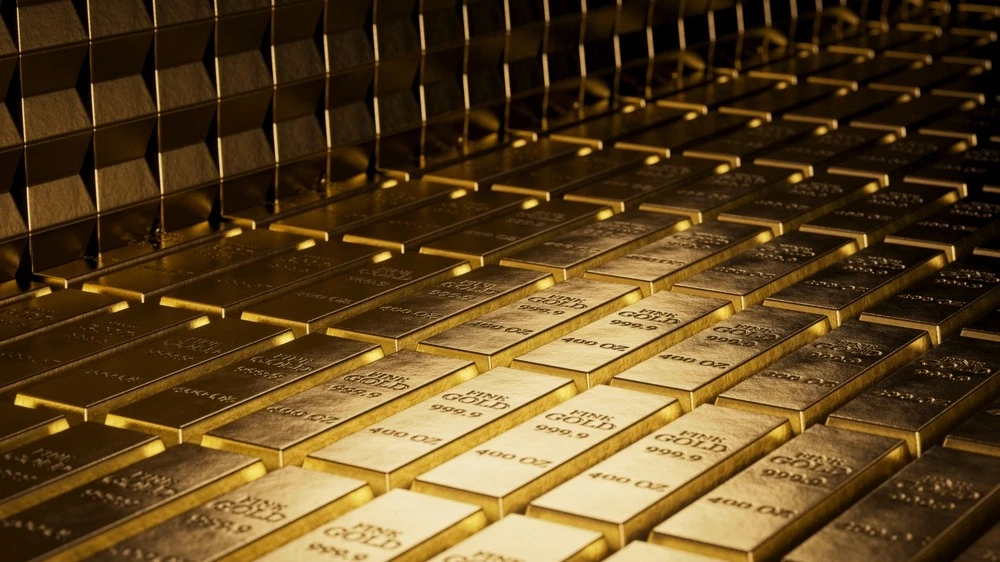
Despite the collapse in prices, JPMorgan expects further growth in the value of gold and estimates its potential at $6300 by the end of the year / Photo: S.Gvozd / Shutterstock
Despite the collapse in precious metals prices at the end of last week and the beginning of this week, JPMorgan expects gold to rise to $6300 per ounce by the end of 2026. This estimate implies a 33% increase from current levels. Deutsche Bank did not change its target for gold either, its analysts expect gold at $6000 per ounce.
Details
- Despite the collapse of the precious metals market on Friday, January 30, on Sunday, February 1, analysts at JPMorgan published a note, where they reported that they expect gold prices to rise to $6300 per ounce by the end of 2026, writes Reuters. Experts expect that such an indicator of precious metal will be achieved due to demand from central banks and investors.
"We maintain a firmly bullish view on gold over the medium term, underpinned by a clear, structural and ongoing diversification trend that is far from complete," JPMorgan said in a research note. Such a trend in the market analysts fix "against the backdrop of a still sustainable regime of superiority of real assets over 'paper' assets," the analysts pointed out.
Against this backdrop, gold purchases by central banks in 2026 will be around 800 tons, JPMorgan forecasts.
Earlier, on January 29, JPMorgan strategist Nikolaos Panigirtzoglou in an analytical note also suggested that the price of gold may increase to $8000-8500 per ounce in the coming years. He called such a scenario possible if the share of gold in the portfolios of private investors increases to 4.6% (now it is about 3%), wrote MarketWatch. According to the strategist, gold thus to some extent can replace bonds in balanced portfolios.
At that, the way to the mark of $8500 per ounce for gold may be uneven, noted Panigirtzoglu. On January 29, when gold was still at its highs (the price surpassed the $5600 per ounce mark), the analyst noted that trading advisers and traders may have significantly overbought the precious metals. "This increases the risk of profit taking or a return to average values for gold and silver in the short term," he noted.
- The target forecast for gold at the end of 2026 at $6,000 per ounce, despite the collapse on January 30 and February 2, was also maintained at Deutsche Bank - its analyst Michael Xue urged investors to exercise restraint on February 2, writes MarketWatch. "Factors affecting gold prices remain positive, and in our view, the investment logic in favor of investing in gold and other precious metals has not changed. The conditions do not look suitable for a sustainable reversal in gold prices," the analyst added. According to him, the volume of investments in Chinese gold-related ETFs could hit a record in 2026, and signals that China remains "one of the key drivers of investment flows into the precious metals sector" indicate that the grounds for a positive view on the commodity remain.
Context
On February 2, the price of gold fell to $4677 per ounce. Earlier in the session, quotes for this precious metal fell by more than 5%, falling to a minimum of more than two weeks. On January 29, the cost of gold rose to a record $5594.8. Since the beginning of the year, despite the collapse on January 30 and February 2, it has grown by 10%.
Traders continue to wind down positions in a deal that has become "overly congested and one-sided," Ole Hansen, head of commodities at Saxo Bank, wrote on social network X on Feb. 2, commenting on gold price movements.
The decline in precious metals prices is a healthy technical correction after the "irrational" rally seen in the previous days, also believes Yuxuan Tan from JPMorgan Private Bank(quoted in Wall Street Journal). According to the analyst, the latest correction has squeezed out speculative positions and brought quotations back to the levels of about two weeks ago.
What about the silver?
Speaking of silver, in a Sunday note, JPMorgan analysts noted that since silver does not have the same structural demand as gold from central banks - there is a risk of an increase in the gold-to-silver price ratio. However, despite this, JP Morgan emphasized that they "still see a higher average price 'Paul' for silver (around $75-80 per ounce) than previously expected," "Since even after silver has outperformed gold in terms of growth, it is unlikely to fully squander its gains," the analysts added.
Spot prices for silver on Monday, February 2, fell more than 6% to $78.9 per ounce, although on Thursday, January 29, the metal reached a record level and cost $121.64.
This article was AI-translated and verified by a human editor