Lenders Have Frozen Funding for Data Centers in Asia Due to U.S. Sanctions — Bloomberg
Banks and private equity firms are reassessing the risks associated with deals worth billions of dollars following the tightening of rules governing Chinese corporations' access to U.S. technology

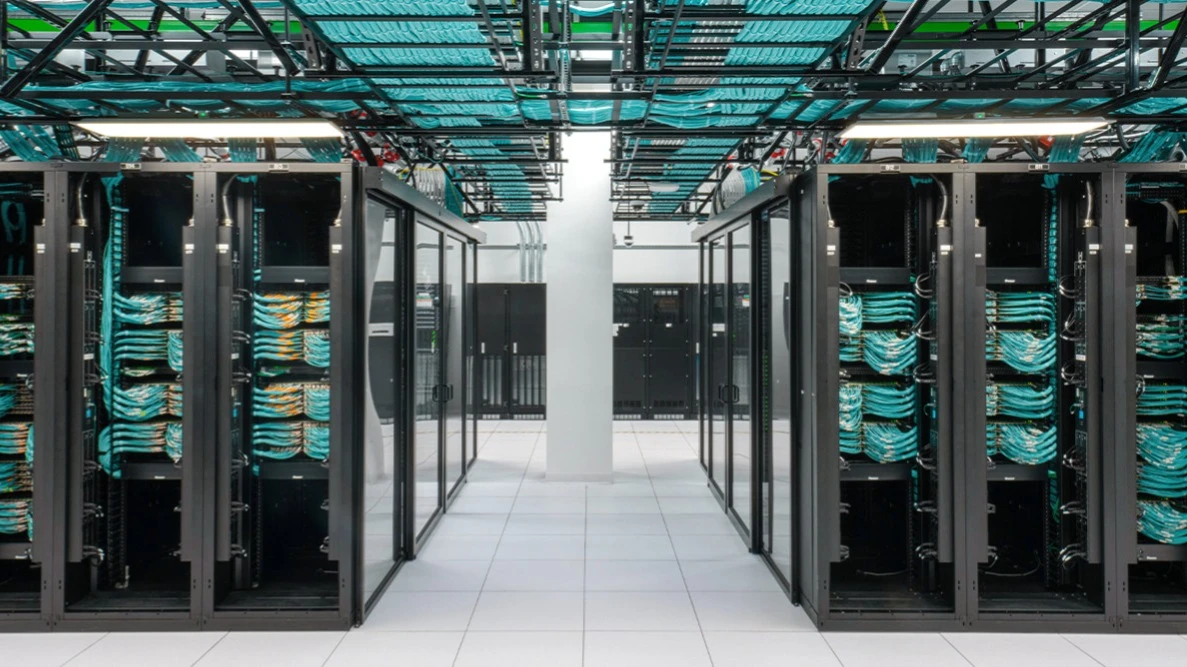
Operators of Asian and Brazilian data centers must now obtain a license to purchase advanced AI chips in the U.S. / Photo: Nvidia
Lenders have frozen billions of dollars in financing for data center and necloud operators in Asia linked to China’s ByteDance, Alibaba, and Tencent, Bloomberg reports. This move was prompted by new U.S. export restrictions on advanced AI chips. This could now significantly alter the landscape of the rapidly growing Asian market for debt financing of AI projects, the agency notes.
Details
Deals that were nearing completion were suddenly thrown into doubt, and banks trying to reduce their risks by selling off a portion of their loan portfolios are struggling to find buyers, Bloomberg reported.
In particular, some lenders have postponed their decisions to conduct further due diligence in connection with a $6.6 billion loan that Bridge Data Centres (BDC), owned by Bain Capital, intends to raise, the agency reports. According to sources familiar with the negotiations, ByteDance is among the clients of BDC’s Malaysian data centers. Bain referred Bloomberg’s questions to BDC, which declined to comment. ByteDance did not respond to a request for comment.
Another example: One bank decided to withdraw from a $372 million loan to Digital Halo, a company backed by Partners Group, even though the deal’s financing was fully guaranteed. Other banks have requested additional information, according to Bloomberg sources. The funds are intended for a data center in Malaysia that serves Alibaba and other clients. In addition, several banks are reviewing the terms of a $480 million loan to Singapore-based non-cloud provider Aolani, whose clients also include ByteDance, sources told the agency last week. Digital Halo, Aolani, and Alibaba did not respond to Bloomberg’s requests for comment, and Partners Group declined to discuss the matter.
Private credit funds, which had been the most eager to secure higher returns by financing GPU purchases, are also becoming more cautious. According to one of Bloomberg’s sources, at least one fund has decided to withdraw from a $300 million loan to GMI Cloud, a cloud partner of Nvidia. The funds were intended for the purchase of chips for a data center in Thailand, whose computing power was to be used by Tencent. GMI Cloud and Tencent did not respond to the agency’s inquiries.
Some banks are seeking to reduce the risks associated with lending to AI projects and data centers. To this end, they are, in particular, selling loans on the secondary market and using so-called significant risk transfer (SRT) transactions. According to Bloomberg sources, Singapore’s United Overseas Bank (UOB) intends to enter into an SRT transaction worth approximately $1 billion to transfer a portion of the risks associated with loans to data centers, infrastructure projects, and borrowers in other sectors. However, as one of the agency’s sources noted, recent developments are slowing down the deal’s preparation. Its terms have not yet been finalized and are subject to change. A UOB spokesperson declined to comment to Bloomberg, citing confidentiality.
The market slowdown has affected more than just debt financing. DayOne Data Centers, whose largest client is ByteDance, has suspended preparations for its U.S. IPO. In addition, a consortium involving BlackRock is considering lowering its bid for a portfolio of data centers in the Asia-Pacific region, according to sources who spoke with Bloomberg.
Not just China
New rules from the U.S. Department of Commerce require data center operators in Singapore, Malaysia, Indonesia, Thailand, and Brazil to obtain a government license to purchase advanced AI chips from U.S. manufacturers. Data centers around the world that already lease significant computing power to Chinese companies have 90 days to obtain a license in order to continue operating. More than a dozen bankers have reported that their teams are awaiting clarification on how the restrictions will affect borrowers, which will, at the very least, delay potential deals, Bloomberg notes. Citigroup, Standard Chartered, and Singapore’s largest banks have launched a large-scale review of clients in the data center sector, according to sources cited by the agency.
The restrictions are intended to close a loophole that arose following the Joe Biden administration’s 2022 export bans, the agency explains: At that time, an ecosystem of companies emerged in Southeast Asia that helped Chinese tech firms gain remote access to U.S. chips, and lending to data centers in the region surged. Since 2023, the volume of loans to data center operators in the Asia-Pacific region has increased from virtually zero to more than $49 billion, according to Bloomberg’s calculations.
“This pause might even be beneficial: it will allow us to assess the situation and reevaluate projects, given how overheated the market has been recently,” Ben Kostsheva, an international trade lawyer at Hogan Lovells Cadwalader, told Bloomberg. “This won’t stop the construction of all these data centers or paralyze the market, but it will slow its growth.”
This article was AI-translated and verified by a human editor