Louis Vuitton owner reports weak holiday quarter. Hope for China?
LVMH's sales are down 1% for 2025

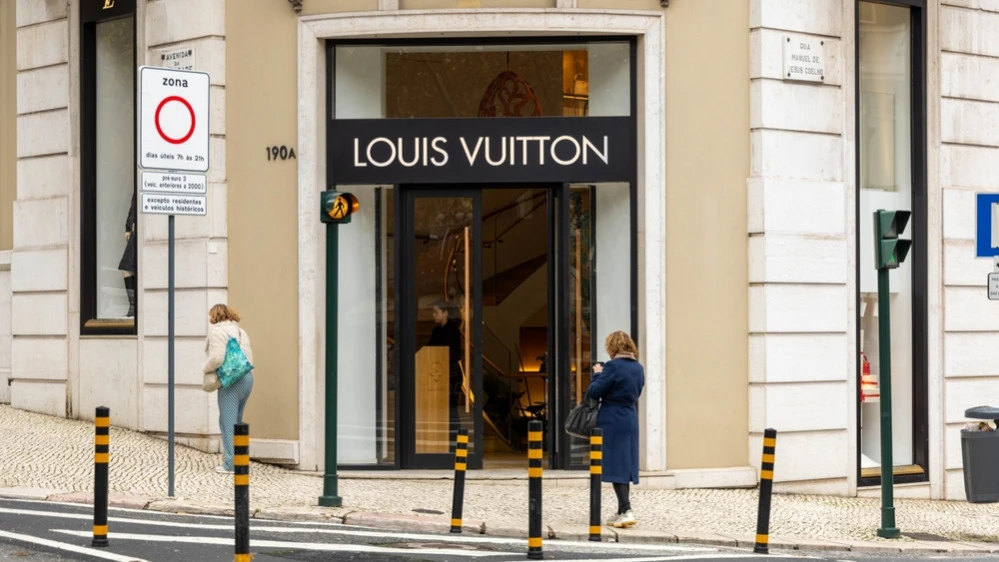
LVMH expects a "gradual improvement" in organic sales in 2026 / Photo: PixelBiss/ Shutterstock.com
LVMH, the world's largest luxury holding company , reported a decline in sales of its key fashion and leather goods division during the holiday season. Moreover, demand fell even more sharply than analysts had anticipated. At the same time, LVMH's total organic revenue increased for the second consecutive quarter. This indicates that the market recovery in China is beginning to be reflected in the financial performance of the sector, notes CNBC.
Weak demand in the most important season
LVMH Moët Hennessy Louis Vuitton reported on January 27 that organic sales in its fashion and leather goods division fell 3% in the fourth quarter. Analysts had expected a 2.94% decline, Bloomberg notes.
On the contrary, LVMH business in the segment of watches and jewelry showed results above Wall Street forecasts: it helped the company to compensate for the weakness of the fashion direction, the agency wrote. The Bulgari brand showed particularly strong results, according to the company's data.
LVMH's Wine & Spirits division ended the third consecutive year with a drop in sales. The decline in demand for Hennessy cognac was particularly noticeable.
LVMH's fourth-quarter revenue totaled €22.7 billion, beating LSEG's consensus forecast of €22.2 billion, CNBC writes. For the full year 2025, sales fell 1% to €80.8 billion.
Recovery of demand in Asia
LVMH organic sales in the fourth quarter, as in the same period last year, rose 1% in the U.S. and in the Asian region, which includes China, which exceeded analysts' expectations, but the drop in revenue in Europe by 2% and in Japan by 5% was worse than forecasts, notes Bloomberg. The company said that in Asia (excluding Japan), trends in the second half of 2025 (excluding Japan) improved markedly from 2024, and the region returned to growth.
LVMH chief financial officer Cécile Cabani told the Financial Times in an interview that the "creative renewal" and other initiatives implemented during a difficult period give the company confidence of a "gradual improvement" in 2026.
In October, LVMH shares jumped by 12% the day after the publication of results for the third quarter, when the company returned to sales growth for the first time in a long time. This data, along with the results of other players in the sector, caused a surge of optimism among investors: there was hope that the two-year recession, caused by a decline in spending by Chinese consumers, is coming to an end, recalls CNBC.
"After encouraging third quarter data, market expectations for the fourth quarter have likely risen," Barclays analyst Carol Maggio said before the report was published. Her note was quoted by CNBC. Maggio expects the sector to continue to recover in 2026, with industry growth of around 5-6% at constant exchange rates. She said the US market will remain the main driver of growth, while China will continue to stabilize. At the same time, she warned: "While investor sentiment on the sector is becoming more positive, there remain risks that current valuations look overstated, revisions to earnings per share (EPS) forecasts have not yet begun, and the return of 'aspirational consumers' is not yet assured."
What about the stock
LVMH published its financial statements after the close of the stock exchange in Paris. The company's shares rose 0.2% on Tuesday, closing at €589.3.
The securities of competitors on the American market reacted to the results of LVMH. Thus, the growth of quotations of Tapestry, which owns the Coach brand, slowed down from 2% to about 0.7%, and the securities of Ralph Lauren became cheaper by about 1%.
LVMH securities are now almost 9% cheaper than they were at the beginning of 2026. Analysts' opinions on them differ: the securities have 14 recommendations to buy (Buy and Overweight ratings) and hold (Hold), The Wall Street Journal shows. However, there are no sell recommendations.
Context
Luxury companies continue to struggle in the wake of the post-pandemic boom. Consumer spending is being pressured by the high cost of living and geopolitical instability. In addition, brands have faced negative consumer reaction to sharp price increases, Bloomberg writes.
Some players in the industry have proved more resilient, such as Richemont, the owner of Cartier: amid uncertainty, consumers tend to view gold jewelry - necklaces, bracelets and the like - as a more reliable means of preserving value than fashionable handbags, the agency notes. However, in LVMH's structure, the share of watches and jewelry sales is small, Bloomberg notes.
This article was AI-translated and verified by a human editor