Lucid has decided to launch 25,000 robotaxis in Europe in partnership with Bolt. Its stock soared.
According to estimates by the Boston Consulting Group, there will be about 120,000 robotaxis on European roads by 2035

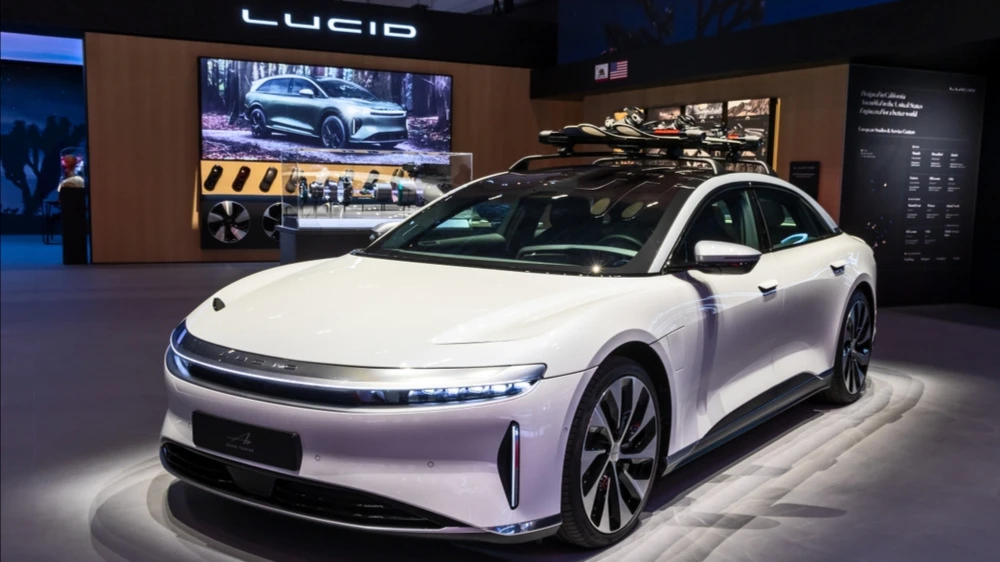
Bolt and Lucid declined to disclose the financial terms of the deal / Photo: VanderWolf Images / Shutterstock.com
Lucid Group, an American electric vehicle manufacturer, and Bolt, a European transportation services platform, announced on Thursday a partnership to launch robotaxi services across Europe. In addition, Lucid’s CEO announced the completion of work with a financial advisor to improve the company’s financial position. Lucid’s stock rose more than 12% during trading on September 17.
Details
Bolt plans to deploy 25,000 autonomous Lucid taxis in Europe’s largest cities, according to a press release from the automaker. This is part of Bolt’s ambitious plan to expand its fleet of self-driving cars to 100,000 by 2035. The Lucid vehicles will be built on the upcoming Lucid Midsize platform, featuring Nvidia Hyperion electronics for autonomous driving.
Bolt's autonomous driving division will help define requirements for vehicles, software, safety, and the user experience. It will also work on developing the vehicle fleet infrastructure, operating systems, and partnerships with city authorities necessary for a larger-scale rollout of the service. Bolt intends to own and operate its own fleet of robotaxis.
Bolt and Lucid declined to disclose the financial terms of the deal—which is currently only a memorandum of understanding—or to say when Bolt will begin ordering Lucid vehicles, according to the Financial Times. Lucid CEO Silvio Napoli said the company expects to begin rolling out the first batch of autonomous vehicles built on its platform as early as 2028.
During Thursday's trading session, Lucid shares rose as much as 12.6% to $4.55. However, compared to the start of 2026, the stock is still down 59%.
Why This Is Important for Investors
The partnership between Lucid and Bolt, according to the struggling electric-vehicle maker, is an “important step” toward stabilizing its finances, the Financial Times reports. Robotaxis have become a key element of Lucid’s efforts to find new sources of revenue and return to profitability, as the company is currently losing hundreds of thousands of dollars on every car sold to consumers, the publication explains.
Lucid has concluded its work with financial advisor AlixPartners, Napoli said on September 17, as quoted by Bloomberg. The agency believes this is a sign that the struggling company has a clearer path to turning its business around. Lucid’s stock plummeted in mid-July after Bloomberg reported that Lucid was discussing options for restructuring, bankruptcy, or delisting with a consultant. Lucid called these reports “completely false rumors” at the time. Since then, the company has unveiled a $1.4 billion cost-cutting program and postponed the long-awaited launch of its more affordable $50,000 model until next year.
Lucid already has a partnership in the U.S. ride-hailing sector with Uber and the autonomous driving technology developer Nuro. Under the terms of this partnership, Uber is set to launch a fleet of at least 35,000 Lucid vehicles starting this year, including Gravity SUVs and models based on the upcoming Midsize platform. Lucid and Bolt stated that their deal is structured differently from Lucid’s agreement with Uber, and that the capital will be invested “in phases.” Unlike Uber, Bolt will not receive a stake in Lucid as part of the deal, an FT source said.
Context
Lucid’s partnership with Bolt reflects the ride-hailing industry’s transition from pilot projects to commercial deployment, Reuters explains. At the same time, the European market is becoming highly competitive: in August, Uber, Verne, and Pony.ai launched robotaxi rides in Zagreb (Croatia), while Alphabet-owned Waymo is testing self-driving cars in Munich ahead of a planned service launch in Germany in late 2027. However, the rollout of robotaxis in Europe lags behind that in the U.S. and China, and fully autonomous robotaxis are still in the testing phase, the Financial Times notes. However, according to estimates by the Boston Consulting Group, there will be about 120,000 robotaxis on European roads by 2035, the FT reports.
This article was AI-translated and verified by a human editor