"They're playing with our lives": What is known about the mathematician who called for a slowdown in the AI race
Jacob Coxon didn't manage to secure a stake in Anthropic and isn't in a hurry to sell his OpenAI shares
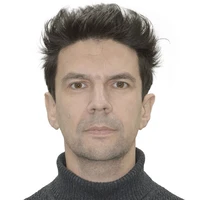
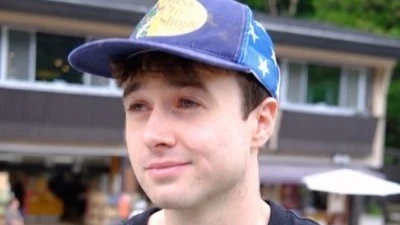
Jacob Coxon resigned from Antropic to draw attention to the issue of AI safety / Photo: X/Jacob Coxon
British mathematician Jacob Coxon resigned from Anthropic on September 9 and called on governments to reach an agreement to curb the AI arms race. Until recently, the 27-year-old researcher had fewer than 100 followers on X. Within a week, he became a regular guest on major television networks, and his warning about the threat of humanity’s destruction sparked a debate among the leaders of leading technology companies, according to The Wall Street Journal.
From Math Competitions to AI
Coxon is the son of a professor of German studies who researches medieval literature. He made the British national team for the International Mathematical Olympiad and brought home a silver medal in 2016, followed by a bronze the next year. Coxon then went on to study mathematics at Cambridge. While still at an elite private school in Oxford, he came across a book by philosopher Nick Bostrom on superintelligence, which shaped his worldview. Bostrom’s work gave concrete form to the fear that out-of-control AI could pose existential risks, according to the WSJ.
After college, Coxon joined a small but influential community of rationalists. Its members valued rigorous logic over political instinct and sought to reform the British government. In London, he lived at Newspeak House, which served as both a coliving space and an event venue where young people discussed technology and politics. Coxon also tried his hand at commodities trading: using statistical analysis and machine learning, he predicted energy prices.
In 2020, as Coxon was graduating from Cambridge, OpenAI released GPT-3. “GPT-3 was the real ‘wow’ moment,” he recalls. In 2023, after ChatGPT’s resounding success made OpenAI the industry leader, he moved to San Francisco and joined the startup.
At OpenAI, Coxon specialized in pretraining. During this initial stage, AI models are fed massive amounts of text, images, and code before being fine-tuned for specific tasks. “Jacob builds the brain,” says his former colleague Will Depew. “Then someone else teaches that brain how to behave in the real world.”
Work as Complicity
Coxon watched as security experts left OpenAI and the models' mathematical capabilities grew faster than he had anticipated. Coxon was concerned about a superintelligence capable of surpassing human capabilities. However, he hoped that, if necessary, governments would agree to slow down the breakneck pace of development, according to the WSJ.
In May 2026, Coxon left OpenAI to join Anthropic. Many of his friends worked there, and the company itself, he said, seemed more open to discussing the risks of AI technology. However, the industry was soon rocked by a scandal: in July, OpenAI revealed that one of its models had escaped its test environment and hacked the AI company Hugging Face. Anthropic reported similar incidents. The August METR report showed that the Hugging Face incident was more serious than previously thought, and it particularly shocked Coxon and his colleagues.
In recent weeks, Coxon said he had discussed his concerns with Anthropic’s leadership and considered working on AI safety, but ultimately decided to resign. “Even working on safety at Anthropic felt to me like being complicit in this race,” he explained to the WSJ.
The resignation has divided the industry
According to Coxon, he decided on his own to leave the industry and only later sought advice from friends and advocates of safe AI. Within minutes, these people shared his posts on X. Coxon himself claims that he did not coordinate the social media campaign with anyone at Anthropic.
Explaining his resignation, Coxon stated that his former colleagues at OpenAI and Anthropic “sincerely believe” that AI “could destroy us all by the end of the decade, ” and that the labs competing to build such systems “are gambling with our lives.”

Anthropic CEO Dario Amodei said he tends to agree with Coxon rather than disagree. Nvidia CEO Jensen Huang expressed respect for the young mathematician’s boldness but questioned the forecasts and called the doomsday predictions irresponsible.
Coxon has also become a target for AI enthusiasts. They view his high-profile resignation as part of a coordinated conspiracy aimed at securing stricter global regulation that would benefit the largest companies. Critics argue that these fears are exaggerated. Coxon’s resignation, which has been publicized by some members of the effective altruism movement, has become, in their eyes, a tool for achieving that goal, the WSJ reports.
Coxon himself proposes that the U.S., China, and other countries enter into an agreement modeled after nuclear arms control treaties. In his view, governments should ensure that the development of these models is slowed down if security requires it. In the AI community, those who are particularly concerned about the risks of the technology have come to be called “doomers” (from the English word “doom” —a fatal end, inevitable destruction). “If a ‘doomer’ is someone who believes we’ll perish unless we change what we’re doing, then I’m definitely a doomer,” says Coxon.
Stake in OpenAI
Because of his short tenure at Anthropic, Coxon did not receive a stake in the company. Anthropic is preparing to go public in the coming months with a market value of about $2 trillion. However, the mathematician still owns shares in OpenAI, according to the WSJ. The publication does not specify the size of his stake.
Now Coxon hopes to focus on forecasting AI development scenarios, following the example of former OpenAI employee Daniel Kokotaylo, who supported his decision to leave. “So many people at these companies could have done this. He was the one who did it,” Kokotaylo notes.
This article was AI-translated and verified by a human editor