Market has 'perfect storm', stocks and gold ended the week with losses: online

Photo: Shutterstock.com
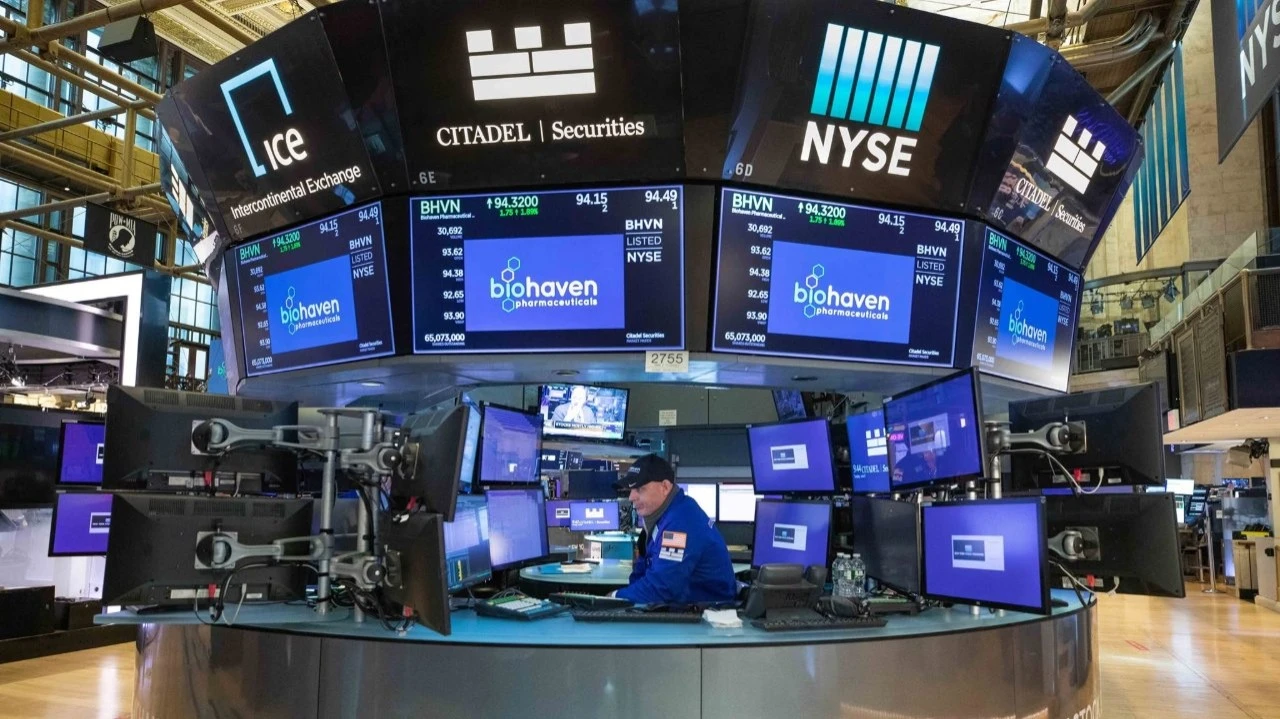
The price of Brent crude soared by 10%, exceeding $94 per barrel for the first time since 2023. The sharp rise in prices was triggered by news that Kuwait began cutting production due to a shortage of oil storage facilities, and Qatar warned that a prolonged war could "collapse the world economy". The White House said the war could last another four to six weeks, and US President Donald Trump ruled out talks with Iran and demanded its "unconditional surrender". Analysts believe that without de-escalation of the conflict, the cost of oil could exceed $100 in the coming days. At the same time, the US market was pressurized by the employment report, which contrary to expectations showed a reduction in the number of jobs and an increase in unemployment. What was happening in the market was followed in this online.
22.08 CET: How trading in New York ended this week:
- The Dow Jones blue-chip index was down nearly 1%, the S&P 500 broad market index was down 1.3%, and the tech-heavy Nasdaq was down 1.6%. For the entire week, the Dow Jones lost 3%, the S&P 500 lost 2%, and the Nasdaq lost 1.2%.
- Gold rose by 1.7% to $5163.8 per ounce at the end of trading on Friday. However, at the end of the week it fell in price by about 2%.
- The Wall Street Fear Index (VIX) crossed the psychological 20-point level for the week, which usually indicates rising market volatility and increased uncertainty among investors. On Friday, the indicator soared nearly 20% to 28.5 points.
- Brent futures for May delivery rose 8.1 percent to nearly $92.4 on Friday.
21.55 CET: Soaring fuel prices threaten to severely impact global airlines, the WSJ writes. Oil prices have risen by about 50 percent since the start of the year and jet fuel prices have more than doubled, Deutsche Bank analysts said in a note on Friday. The difference between jet fuel prices and benchmark oil prices exceeds the total cost of a barrel of oil in regions such as the Gulf Coast and the U.S. West Coast, they said.
The last time such a situation was seen was in 2005 after Hurricanes Katrina and Rita, which caused significant and widespread damage to the airline industry and was a factor in Delta Air Lines and Northwest Airlines filing for Chapter 11 bankruptcy, analysts said.
"In the absence of short-term measures to improve the situation, airlines around the world may be forced to suspend operations of thousands of aircraft, and some of the industry's most financially weak carriers may cease operations," the analysts warned.
21.09 CET: Gold ends the week with a loss for the first time in five years, down 1.7% over five days. Silver fell by 9.6% over the week.
20.40 CET: Saudi Arabia has stepped up direct engagement with Iran in an attempt to contain the war in the Middle East, sources told Bloomberg. They said the Saudis have been more aggressive in recent days in using diplomatic channels of communication with Tehran to de-escalate tensions and prevent the conflict from escalating.
20.10 CET: The Trump administration has announced a program to reinsure oil tankers and other vessels in an attempt to establish traffic through the Strait of Hormuz, CNBC reports. The US International Development Corporation (IDFC) will insure losses of up to $20 billion on an ongoing basis. DFC and the Treasury Department said they are working closely with U.S. Central Command to implement the plan.
According to tracking data, there are only nine empty supertankers left in the Persian Gulf. They can only accommodate Saudi Arabia's four-day oil production. If new tankers cannot enter the region soon, more and more countries will be forced to cut production, Bloomberg writes.
19.48 CET: The US operation against Iran is expected to take four to six weeks to achieve its goals, a White House spokeswoman said. She also said Washington was looking at potential candidates to become Iran's leader, Reuters reported.
"I know that our intelligence agencies and the U.S. government are looking at some people, but I won't go into details," she said.
19.30 CET: The cost of oil could hit $100 within days unless the fighting de-escalates, executives at major trading firms told Bloomberg.
"We expect the price of Brent to rise to $100 a barrel or higher in the coming days and weeks as the market realizes that the closure of the Strait of Hormuz is not a short-term disruption, but an event that will last several weeks," said Bob McNally, president of consulting firm Rapidan Energy Group.
There is no hope that the problem with traffic through the Strait of Hormuz can be solved while the war continues, Bloomberg notes.
Trump said Tuesday that the U.S. would provide insurance guarantees and naval escorts to ensure the safe passage of oil tankers and other vessels through the Strait of Hormuz. But shipowners contacted by the agency said they had not received any details of the plan and were concerned about the safety of the crews.
"The industry fears that passing ships through as part of a convoy will only make them a target," said Fearnley's Shipbrokers UK Ltd. director. Halvor Ellefsen. - "I don't see a short-term solution, and in my view it means higher oil prices, inflation and economic hardship.
19.01 CET: Three hours to the close of trading in New York. The S&P 500 index and the Dow Jones are down 1.3 percent, while the Nasdaq is down 1.1 percent.
19.00 CET: Shares in fertilizer producers rose on Friday as such companies could benefit from tight supplies and higher prices caused by the war with Iran, CNBC writes. More than a third of the raw materials used in fertilizer production are transported through the Strait of Hormuz.
CF Industries' quotations jumped by 5%, updating the annual maximum, these securities are on their way to a record closing. Since the beginning of the week, the value of the company rose by about 17%.
Intrepid Potash shares soared 9%, they're also at their peak for the year.
18.30 CET: More than 1,000 people traveling to Dubai for a Google corporate event are stuck in the city after the sudden closure of airspace due to Iranian shelling, sources told The Wall Street Journal.
Google's cloud division held its major annual Accelerate trade show in Dubai last week. It ended on Friday, and since Saturday Iran began attacking the emirate with missiles and drones. Google employees who traveled to Dubai from all over the world, many with their families, were stranded, the publication said.
Google has since managed to organize the departure of many employees, sources said. The company said it was concerned about the safety and well-being of employees in the region.
"I'm very happy to be back home and safe, but honestly don't feel truly back yet," Google engineer Sami Fadel, who works in Paris, wrote on LinkedIn. - Many of my colleagues and other travelers are still trying to get back to their families as air traffic disruptions and evacuations continue in the region."
18.25 NET: The war in the Middle East is heightening fears of a global energy crisis, Bloomberg writes. Oil producers in the Persian Gulf are looking for ways to secure supplies to markets and prevent their own facilities from being disrupted by an overload of crude they can't sell due to the closure of the Strait of Hormuz. More oil tankers are being diverted from the Persian Gulf to the Red Sea, where Saudi Arabia is increasing crude shipments at the port of Yanbu. Export shipments there are two to three times higher than last month's average, the agency notes. The UAE is also shipping oil from the Abu Dhabi desert to the port of Fujairah outside the Strait of Hormuz for delivery to world markets.
18.10 CET: European stock markets ended the week in negative territory. The Stoxx 600 composite index fell by 1%. Over the week, it fell by more than 5%.
18.05 CET: Brent surpassed $92 per barrel: the price was adding around 8%. US WTI crude was up 11% and approached $90 per barrel.
Qatar's Energy Minister Saad al-Qaabi told the Financial Times on Friday that oil prices could reach $150 in the coming weeks if tanker traffic through the Strait of Hormuz is not restored.
17.55 CET: Israeli stocks are rising fast amid a war with Iran, despite sell-offs in other markets and rising energy costs, Bloomberg writes.
Tel Aviv 35 index took the second place among the largest indices, having added more than 7% (in terms of dollars) by the end of the week. The energy company Delek Group rose in price by 22% over the period, and the defense company Elbit Systems, which has the largest "weight" in the rating, by 16%.
The Israeli shekel posted its best gain in two months, up 1.4% against the dollar.
Demand for Israeli assets was probably provided by local investors, including funds focused on Israeli assets, said Rafi Gozlan, senior economist at IBI Investment House, he was quoted by Bloomberg. Some investors may be making a long-term bet in the hope that an Israeli and U.S. victory will reduce risks for the region in the future, the agency noted.
17.40 CET: Trump is meeting with the heads of major defense contractors at the White House today. Among those invited are executives from Lockheed Martin, RTX, Boeing, Northrop Grumman, Honeywell International and L3Harris Technologies. Even before the Iran campaign, Trump repeatedly criticized defense companies for spending too little on weapons production and too much on dividends and share buybacks, Bloomberg writes.
5.20 p.m. SET: Iran has postponed the appointment of a successor to Supreme Leader Ali Khamenei amid security concerns over US and Israeli statements that any new leader would also be the target of strikes, The New York Times reported. Iran's previous supreme leader was killed in U.S. and Israeli airstrikes on Iran on Feb. 28. His son Mojtaba Khamenei is one of the top contenders for the post but is not considered a "viable" option for the U.S., Trump told Axios on Thursday.
16.30 CET: "A perfect storm" is how Barron's describes the current market situation, where the rise in the cost of oil coincided with an extremely weak employment report.
"Today's data could put the Fed between a hammer and anvil," notes Morgan Stanley Wealth Management strategist Ellen Zentner. - A significant weakening in the labor market should have supported a rate cut, but due to a surge in inflation, the Fed may feel the need to take a restrained stance."
This situation is reminiscent of 1970s-style stagflation - a scary word on Wall Street for those who remember the Fed's struggle with rising prices and a stagnant economy, Barron's writes.
"The longer the war lasts, the more it will squeeze the Strait of Hormuz, increasing the risk of stagflationary consequences for the U.S. and other countries," wrote Ed Yardeni, president of Yardeni Research. - In this scenario, the Fed would also find itself in a straitjacket - it would be unable to cut rates because of rising inflation, even if the economy were to weaken."
16.05 CET: The International Energy Agency (IEA) does not yet see the need to tap emergency oil reserves to stabilize the market, Bloomberg reports. "All options are being considered, but at this stage there are no plans for collective action," IEA Executive Director Fatih Birol said in Brussels on Friday. According to him, there is "enough oil" on the market now, and the price rise is caused by "temporary logistical problems."
The IEA, based in Paris, controls emergency oil reserves for developed countries such as the U.S., Germany and Japan, and has used them during crises such as Russia's invasion of Ukraine and the 2011 Libyan civil war.
15.45 CET: The average price of gasoline in the US rose by 10.8% in four days, according to data from Schwab analyst Kevin Gordon. This is the sharpest increase since Hurricane Katrina and the rise in fuel prices could hit Trump particularly hard ahead of the midterm elections in November.
"The only way to achieve a sustainable price decline is for oil supplies to resume through the Strait of Hormuz," ING analysts said in a note quoted by Axios.
15.30 CET: The market has opened. The Dow Jones blue-chip index and the tech-heavy Nasdaq are down 1.5%. The S&P 500 index is down 1.3%. The Wall Street Fear Index rises 17% to 27.8.
15.10 CET: US stocks are down. Twenty minutes before the opening of the main trading session in New York, futures on the S&P 500 are down 1.3 percent, the Dow Jones blue-chip index is down 1.4 percent and the Nasdaq is down 1.6 percent.
Earlier on Friday, U.S. employment statistics unexpectedly showed a contraction in the labor market in February - nonfarm payrolls fell by 92,000 jobs and unemployment rose to 4.4%. Economists polled by Bloomberg had expected 55,000 new jobs to be added to the market.
15.08 CET: US President Donald Trump has ruled out the possibility of a deal with Iran. "There will be no deal with Iran, except WITHOUT CAPITULATION," he wrote on the Truth Social network. - "After that, and after choosing a GREAT and ACCEPTABLE leader (or leaders), we and our many fine and very brave allies and partners will work tirelessly to bring Iran back from the brink of destruction, making it economically bigger, better and stronger than ever before.
15.05 CET: Brent futures for May delivery rose 5.5% to $90.08 per barrel.
The price of oil accelerated growth amid the news that Kuwait, a member of OPEC, began to reduce production at some fields due to a lack of space for oil storage. Sources told The Wall Street Journal that Kuwait is discussing further limiting production and refining at a level sufficient only to cover domestic demand. A decision is expected within a few days, the publication adds.
"Storage capacity is limited in the Middle East, and the only way to avoid overflowing reservoirs is to cut production," said Giovanni Staunovo, commodities strategist at UBS. - The longer the Strait of Hormuz remains closed, the more barrels of crude and refined products will be in short supply, pushing prices higher."
This article was AI-translated and verified by a human editor