Marvell's stock fell by nearly a third on news of the Lumentum acquisition. Should you buy it?
Marvell valued the optical components manufacturer at more than twice as much as its competitors on a per-profit basis

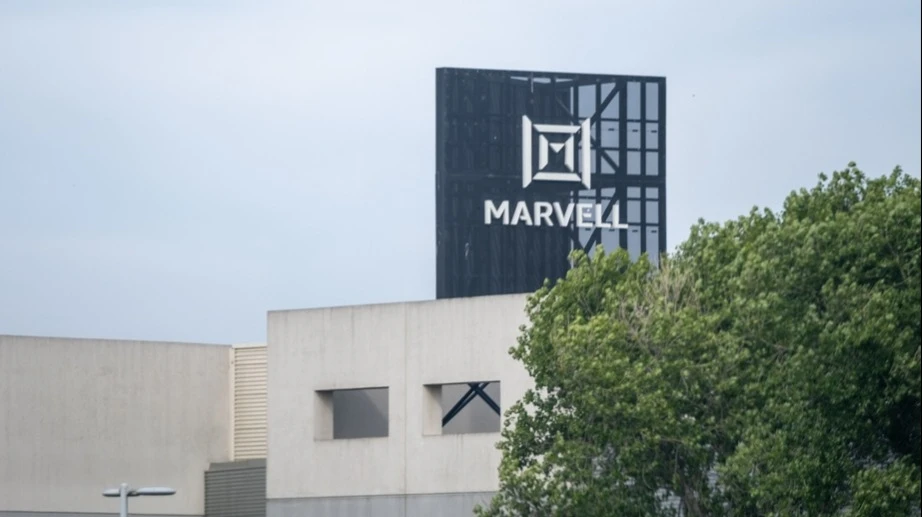
The AI boom has increased Marvell's market value fivefold since the beginning of 2023—from $32 billion to $154 billion / Photo: Larry Zhou/Shutterstock.com
The acquisition of Lumentum, a manufacturer of optical components for data centers—the largest in the history of chip developer Marvell—reminded experts of the dot-com bubble: the company is paying for the deal with its own shares, which have roughly doubled in price since the start of the year, according to MarketWatch. Among the initial reactions to the deal were downgrades, although most analysts recommend buying Marvell stock.
The market punished Marvell
On Monday, November 2, when Marvell announced the acquisition, its stock fell 12.7%, much more sharply than the market as a whole: the Nasdaq Composite Index declined 1.1% that day. The sell-off began as early as October 29, after Bloomberg reported on the companies’ negotiations, according to Barron’s. Over the past three trading sessions, Marvell’s market capitalization has plummeted by 31.9%.
For each Lumentum share, Marvell will issue 4.5 of its own shares. The deal is valued at $1,132 per Lumentum share—23.9% above its closing price on October 28, before reports of the negotiations emerged, according to Reuters. The exchange ratio is fixed, so the amount Lumentum shareholders will receive fluctuates with Marvell’s stock price. By the close of trading on November 2, 4.5 shares of Marvell were trading at around $771 on the Nasdaq. Lumentum shares fell 18.6% on the same day.
Expensive and ill-timed
The acquisition of Lumentum is intended to help Marvell compete with Broadcom for the money companies are spending on AI, according to Reuters. But the deal comes at a high price: $102.5 billion, excluding debt—more than half of Marvell’s own market capitalization. The agency calculated that the company valued Lumentum at approximately 33 times its projected core operating profitability for the next 12 months. For Lumentum’s competitors, the median value of this valuation-to-profitability ratio is about 16.
The Marvell shares she is using to pay for the acquisition remain expensive even after the recent decline: according to FactSet, their price is 65 times the company’s earnings per share over the past 12 months. MarketWatch notes that during the dot-com bubble, companies whose stock prices had skyrocketed also paid for acquisitions with their own expensive shares. JDS Uniphase (JDSU)—from which Lumentum later spun off—did the same. Anup Shrivastava, a professor at the University of Calgary, cites an example of one of its deals: “JDSU used its soaring stock to buy SDL for about $40 billion. By the time the deal closed, it was worth about $13 billion. And a year later, JDSU reported a loss of $50 billion.”
The timing of the move is also in question. “Now that demand for optical components and their prices are exceptionally high, we question the appeal of such a large acquisition at what may be the peak of the cycle,” Barron’s quotes Morgan Stanley analyst Meta Marshall as saying. The publication suggested that Marvell may have been a few months too late in making such a major bet on the further development of AI infrastructure: risks are mounting, and the stock market is taking an increasingly pessimistic view of AI spending.
"But this is a huge gamble, and investors are quite rightly wondering whether Marvell is overpaying and taking on too many commitments at once," the analyst added.
“The combination of Marvell’s specialized chips and expertise in networking technology with Lumentum’s optical components could significantly strengthen the company’s position, as data centers require increasingly faster and more energy-efficient connections, — said Axel Rudolf, chief technical analyst at IG Group. — But this is a huge gamble, and investors are quite rightly wondering whether Marvell is overpaying and taking on too many commitments at once.”
Banks have downgraded their recommendations
On Monday, Bank of America downgraded its rating on Marvell shares from “Buy” to “Neutral” and lowered its price target from $400 to $225, according to Seeking Alpha. The new target implies a 31% upside from the latest closing price. BofA analyst Vivek Arya is concerned about a lengthy regulatory review: the companies expect to close the deal only in the first half of 2028. To pay off Lumentum’s shareholders, Marvell will issue new shares, and its total number of shares will increase by about 1.5 times—meaning earnings will have to be spread across a larger number of shares. The $1 billion in cost savings that the deal could generate will not offset this, so earnings per share will hardly increase, Arya believes.
Investment bank TD Cowen also adopted a neutral stance, cutting its price target in half to $175, which is slightly above the latest closing price. Analysts fear that because the deal is being paid for entirely with stock, Marvell’s earnings per share could actually decline, according to Investing.com.
Marvell’s stock is now nearly half the price it was at its June record high. Before the AI boom began in 2022, the company was a relatively unknown chipmaker. However, its market value has since increased severalfold: Marvell helps Amazon and other tech giants develop their own AI chips, according to Reuters. According to Yahoo Finance, following the sell-off on November 2, the company’s market capitalization stands at about $154 billion.
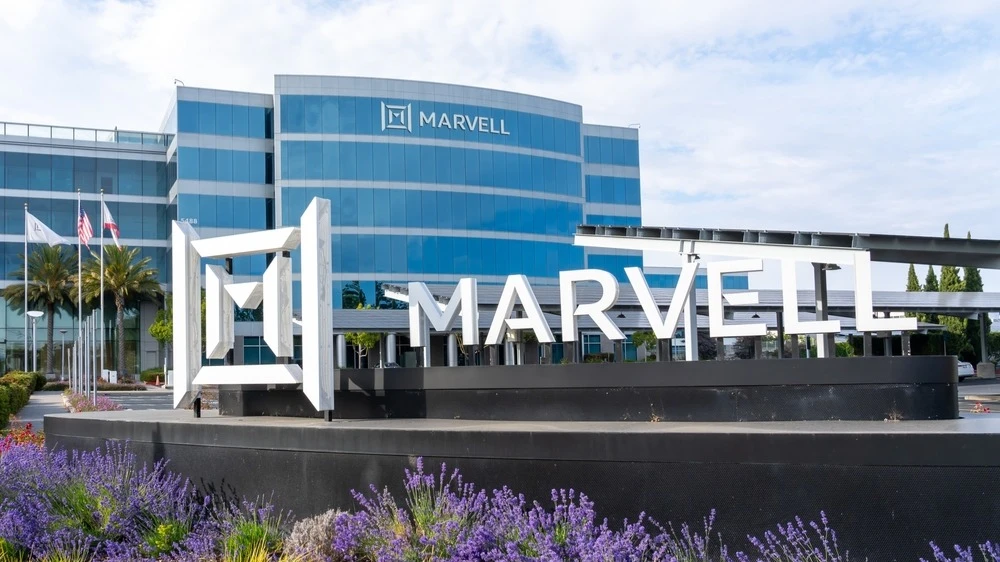
Most analysts remain optimistic: according to The Wall Street Journal as of November 3, 40 out of 45 recommend “Buy” or rate the stock “Overweight” (Overweight), and the average price target of $319.3 per share is 86% higher than the last closing price.
This article was AI-translated and verified by a human editor