Micro-cap Astrotech more than quintuples in a day amid strategic Moon initiative

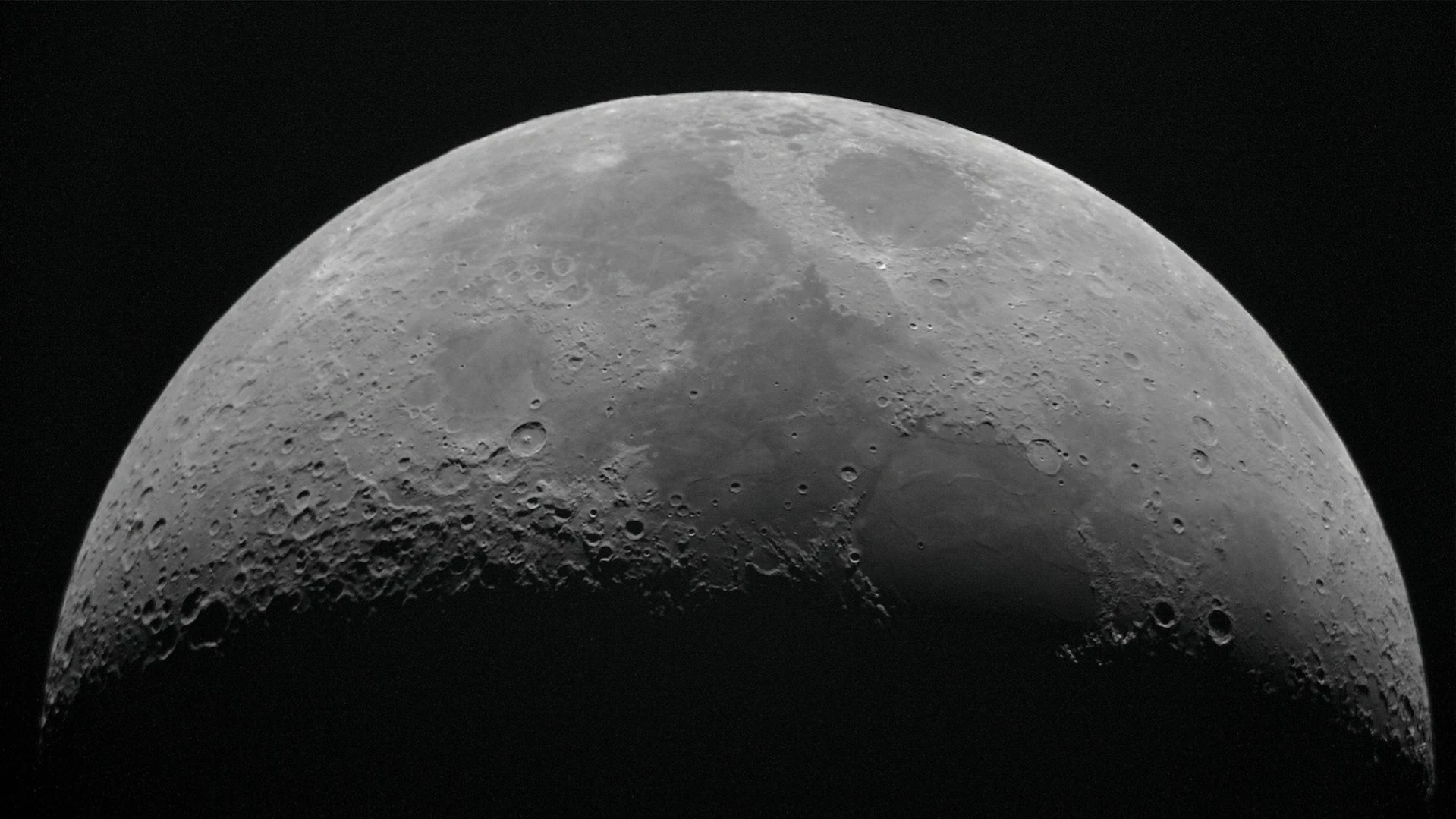
The initiative is intended to position Astrotech "to evaluate emerging opportunities associated with NASA programs" / Photo: Unsplash / Nicolas Thomas
Shares of Astrotech Corporation, once the first company to offer investors a way to bet on the commercialization of space and now a developer of narcotics-detection and industrial chemical-analysis systems, soared nearly 460% on Wednesday. The company announced plans to build infrastructure on the Moon that could eventually support semiconductor and quantum-computing manufacturing there.
Details
Astrotech shares surged 459% on the Nasdaq on Wednesday to $13.80 apiece, marking a three-year high. During the session, the stock climbed nearly 600% at one point, the biggest intraday jump in the company’s public-market history, according to Stocktwits data. In premarket trading on Thursday, the shares had added another 60% as of this writing.
Triggers for Wednesday rally
The rally began after Astrotech announced a new strategic focus aimed at developing autonomous industrial infrastructure on the Moon.
The company said the lunar surface offers abundant solar energy, extreme thermal conditions, reduced gravity, and strategically important materials, including ultra-pure silicon-28 atoms that could be used in semiconductor and quantum-computing manufacturing, as well as helium-3 atoms that may potentially support quantum-cooling systems.
All of this could make the Moon attractive for advanced computing infrastructure and next-generation quantum systems, the company said in a press release.
“Quantum computing, artificial intelligence, and advanced semiconductor manufacturing are rapidly becoming strategic national security and economic priorities,” CEO Tom Pickens said in a statement cited by the company. “We believe the Moon may offer unique long-term value.”
The initiative could also support NASA’s Artemis lunar-exploration program and its Commercial Lunar Payload Services (CLPS) program, as well as the development of next-generation commercial lunar transportation systems, the statement said.
About Astrotech
Astrotech currently operates through four subsidiaries, each focused on a different niche. 1st Detect develops and manufactures narcotics-detection systems, AgLAB produces analyzers for agricultural processing, Pro-Control develops chemical process-control solutions for industrial manufacturing, and EN-SCAN offers portable gas chromatography-mass spectrometry systems for on-site air, water, and soil analysis.
Originally, however, Astrotech was directly tied to the space industry. The company was founded in 1984 under the name Spacehab by Bob Citron and engineer Thomas McKinn. Citron initially wanted to create a pressurized compartment to transport tourists aboard spacecraft. He pitched the idea to NASA, which rejected it. The founders then pivoted toward creating commercially accessible laboratory modules for shuttle missions that could be used by private companies and research institutions to conduct experiments in orbit.
Spacehab’s board was chaired by former NASA administrator James Beggs, while former McDonnell Douglas Delta rocket-program executive Richard Jacobson became CEO in 1987. That same year, the company moved its offices from Seattle to a location across from NASA headquarters. The following year, Spacehab secured its first contract from the agency to develop a pressurized module. That attracted the company’s first investors, ranging from private Taiwanese backers to institutional investors including Mitsubishi Trust Bank and Banque National de Paris.
In 1993, NASA announced the first shuttle launch carrying a Spacehab module. Two years later, the company went public, selling stock at $12 per share and raising a total of $61.9 million. At the time, it was the only pure-play company offering investors exposure to the commercialization of space. However, because of the lack of stable revenue, the stock quickly declined.
In the following years, the company built another module for NASA. In 1999, it was used to resupply the newly launched International Space Station.
In 2009, Spacehab changed its name to Astrotech, which the company said “more accurately reflects the Company’s current mission and vision for future growth.” In 2014, it sold its space-focused division to a subsidiary of Lockheed Martin for $61 million and shifted its focus to mass spectrometry systems.