Morgan Stanley's profits soared thanks to SpaceX's IPO and revenue from stock trading


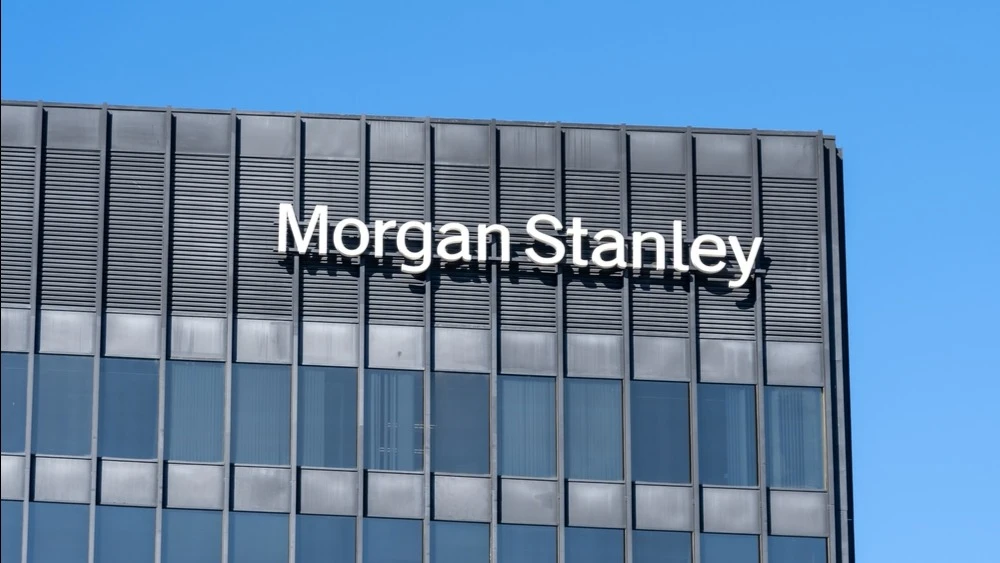
Following in the footsteps of other major Wall Street banks, Morgan Stanley reported record results for the past quarter / Photo: JHVEPhoto / Shutterstock
Thanks to favorable market conditions and ongoing volatility, investment bank Morgan Stanley joined other major players on Walland reported record revenue and profits for the second quarter of 2026, according to Bloomberg. The Financial Times (FT) points out that the bank’s performance in the past quarter was also bolstered by the SpaceX IPO—Morgan Stanley served as one of its lead underwriters.
Details
— According to a Morgan Stanley report, the investment bank’s net income jumped 58% in the second quarter compared with the same period in 2025, reaching $5.58 billion, or $3.46 per diluted share, compared with last year’s $2.13 and LSEG’s current forecast of $2.94, CNBC reports.
— The bank’s revenue rose 27% year-over-year to $21.35 billion (analysts had expected $19.64 billion). Revenue from fixed-income trading, driven by strong performance in credit trading, rose 13% to $2.46 billion, virtually matching the consensus estimate.
CNBC notes that the main driver behind these impressive results—as well as those of competitors such as Goldman Sachs and JPMorgan—was a sharp increase in revenue from equity trading. Morgan Stanley’s quarterly revenue from this segment reached a record $6.3 billion amid increased market activity driven by the AI boom—including “notable successes in Asia.” The figure exceeded the expectations of analysts surveyed by StreetAccount by approximately $1.9 billion.

However, Morgan Stanley’s profits show how the AI boom has helped drive the investment bank’s business growth beyond just equity trading, notes the Financial Times.
— Bloomberg noted that the bank’s underwriting fees for stocks in the last quarter totaled $851 million, up 70% from a year earlier. Overall, quarterly revenue from investment banking services—driven in part by IPOs and related equity market transactions (as well as Morgan Stanley’s fees for working on SpaceX’s initial public offering)—jumped 58% year-over-year, to $2.44 billion, exceeding analysts’ expectations by approximately $270 million, according to CNBC.
— In addition, Morgan Stanley’s client assets in its wealth management and asset management divisions reached $10 trillion during the past quarter. Within this business, which accounted for about 40% of Morgan Stanley’s profits last year, the wealth management division attracted $148 billion in net new assets during the quarter, notes the Financial Times (analysts had expected this figure to be $67 billion). Morgan Stanley stated that the bank received slightly more than half of this $148 billion through IPOs—including the listings of SpaceX and AI chipmaker Cerebras.
“The quarter was driven by customer activity in both the institutional and retail segments,” noted Sharon Yeshaya, the bank’s executive vice president and chief financial officer, while commenting on the bank’s results (as quoted by Bloomberg). “Our deal pipelines are full, and we continue to see growth in activity,” she added.
What about the stocks?
Morgan Stanley shares, which have risen 30% since the start of the year, gained another 1.5% during trading on July 15.
The consensus rating for the company’s stock is “Overweight,” however, of the 28 analysts covering the company’s securities, 13 recommend holding positions (Hold) in the investment bank’s securities, the same number advise buying them (Buy and Overweight ratings), and two recommend selling.
Context
Morgan Stanley’s results wrap up the second-quarter earnings season for the largest U.S. banks, according to Bloomberg. It was a phenomenal period for Wall Street—equity trading figures at each of the banks— JPMorgan, Goldman Sachs, Bank of America, and Citigroup—exceeded analysts’ forecasts and reached all-time highs.
In addition, Morgan Stanley co-led SpaceX's record-breaking IPO alongside Goldman Sachs last quarter, for which each bank received a $100 million commission.

This article was AI-translated and verified by a human editor