Morning in New York: Demand for Technology Will Support the "Bulls"

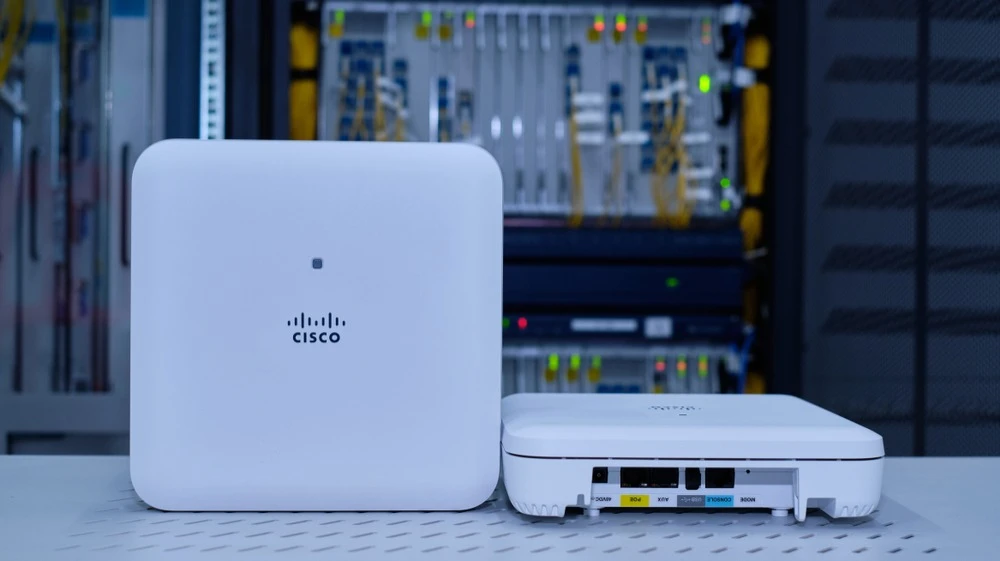
Financial reports from AI hardware suppliers indicate that demand for their services remains high / Photo: Anucha Cheechang / Shutterstock
A daily review and forecast of events in the U.S. stock market by Mikhail Denislamov, Deputy Director of Freedom Capital Markets Research.
We expect
Financial reports from AI hardware suppliers indicate that demand for their products and services remains strong. In light of this, Cisco (CSCO) and Cerebras Systems (CBRS) have raised their annual revenue forecasts. For Cerebras, one of the reasons for the guidance revision was a 70% year-over-year increase in its core metric for the third quarter. Meanwhile, Nebius (NBIS) has shifted a portion of its expected revenue to the first half of 2027 due to delays in the commissioning of third-party suppliers’ capacity. For cloud operators, the timing of platform launches determines when signed contracts will begin to generate revenue.
According to Bloomberg, Anthropic (ANT) received approximately six times more subscription requests for its IPO than the number of shares offered for sale. The company and its existing shareholders expect to raise up to $64.4 billion by offering 825 million shares at a price of $70–78 each. Additionally, a private placement of $26 billion is under discussion. Trading on the Nasdaq is scheduled to begin on November 19. Existing investors are expected to be given priority in the allocation of shares. The high demand indicates that interest in the largest AI developers remains strong following the tech sector’s correction.
One of the key issues for the technology sector remains the impact of the leadership change at Nvidia (NVDA). Following Jensen Huang’s resignation, the role of CEO has been assumed by CFO Colette Kress. The board of directors expects to maintain the product release schedule and fulfill its commitments to customers. In the November 17 earnings report, investors will be looking for confirmation of shipment plans and assessing whether the company’s approach to financing partners will change. Yesterday, we saw a rebound from the initial decline in NVDA shares amid a significant increase in trading volume. This suggests the rally is likely to continue in the coming sessions.
The Producer Price Index for October will be released at 8:30 a.m. Eastern Time (ET). The consensus forecast calls for a slowdown in the growth of the headline PPI from 1.3% to 0.4% month-over-month, and in the core PPI from 0.7% to 0.3%, with Freedom Broker analysts projecting a reading of 0.2% month-over-month or lower. The headline and core CPI rose by 0.4% and 0.3% MoM, respectively, in October, exceeding average forecasts by 0.1 percentage points in both cases. If the core PPI comes in below the consensus, it will ease concerns about sustained cost inflation, support technology stocks, and contribute to a decline in Treasury yields. At the moment, yields have stabilized after a sharp rise the previous day. Yields on two-year notes are around 4.86%, while those on ten-year notes are near 5.12%. If yields rise again, the potential for a rebound will remain limited.
S&P 500 futures are trading lower, while Nasdaq-100 futures are down moderately. We assess the risk outlook for the upcoming session as neutral, with elevated volatility. The release of the PPI data could intensify volatility even before the main session opens.
What to Watch for in the Pre-Market
— Microsoft (MSFT) is down more than 1% following a major outage affecting Outlook, Teams, Copilot, and other Microsoft 365 services. According to Downdetector, the number of reports of Outlook issues in the U.S. peaked at over 130,000. The outage affected corporate clients and public sector users in several regions, as well as integrations with OpenAI and Anthropic services. Microsoft attributes the issues to infrastructure overload and the unavailability of some servers. Recovery took more than 12 hours. In Asia and Europe, the problems persisted into Friday morning. The incident raises reputational risks for Microsoft’s cloud business and once again raises questions about the reliability of the infrastructure on which mission-critical corporate processes depend.
— Cerebras Systems (CBRS) shares rose by about 17% in after-hours trading in response to a strong earnings report and an upward revision to its full-year guidance. The company’s core revenue for the third quarter rose 70% year-over-year to $231 million. For the next three months, the company expects revenue in the range of $310 million to $330 million, compared to a consensus estimate of about $275 million.
— Cisco (CSCO) gave up its initial gains following the release of its earnings report. After the close of regular trading, its stock fell by about 0.8%. Amid strong demand for AI networking equipment, the company raised its revenue forecast for fiscal year 2027 from $72.2–73.4 billion to $74.8–75.8 billion.
— Tesla (TSLA) and SpaceX (SPCX) are trading near their closing levels following reports of progress in merger talks. According to media reports, the deal could be announced as early as December. Negotiations are ongoing.
— Candel Therapeutics (CADL) shares plummeted by about 40% in after-hours trading. The company has postponed the submission of its application to the FDA for approval of a drug to treat prostate cancer from the current quarter to mid-2027. The final dates will depend on the outcome of discussions with the regulator.
The Market on the Eve of...
Trading on U.S. stock markets on November 12 ended in negative territory. The S&P 500 fell nearly 1% early in the session, then recouped its losses, but by the end of the day slipped back into negative territory and closed down 0.35%. The Nasdaq-100 fell 0.3%, the Dow Jones declined 0.36%, and the Russell 2000 dropped 1.66%.
An equally weighted S&P 500 ETF fell 0.87%, underperforming SPY by 51 basis points. Combined with weakness in small-cap stocks, this points to broader market pressure than is evident from the performance of the major indices.
Nvidia (NVDA) shares fell more than 14% on news of Jensen Huang’s resignation, but had pared their losses to 4.34% by the close. These stocks contributed −29 basis points to the SPY’s performance. Broadcom (AVGO: +5.54%) and AMD (AMD: +5.86%) offset 21 basis points of this decline. Nebius (NBIS) plummeted 16.8% amid news, mentioned earlier, that part of its revenue would be deferred to the first half of 2027; in addition, the company’s guidance was revised to the lower end of its previous range. Gains by Nvidia’s competitors mitigated the index’s decline, while cloud service providers continued to focus on project launch timelines.
Only the energy sector closed in positive territory (+1.51%): WTI crude oil rose 2.6% to $88.74 per barrel following statements by Donald Trump that led to a decline in the likelihood of reaching an agreement with Iran. The biggest decliners were materials producers (−1.28%), telecoms (−0.96%), and industrials (−0.89%). Among the underperformers in the first of these sectors was Corteva (CTVA: −24.3%), which lowered its full-year EBITDA forecast amid deteriorating market conditions in Brazil.
Residential sales in the secondary market fell 5.5% month-over-month in October, reaching a low not seen since August 2010 at 3.75 million, compared with a consensus estimate of 3.85 million.
Yields on two-year Treasuries rose by about 15 basis points to 4.88%, while yields on 10-year Treasuries rose by 14 basis points to 5.12%. This trend was accompanied by a correction in segments sensitive to financing costs, including the real estate sector and small-cap companies.
This article was AI-translated and verified by a human editor