Nasdaq collapse exceeds 3%: this is the index's strongest drop in eight months


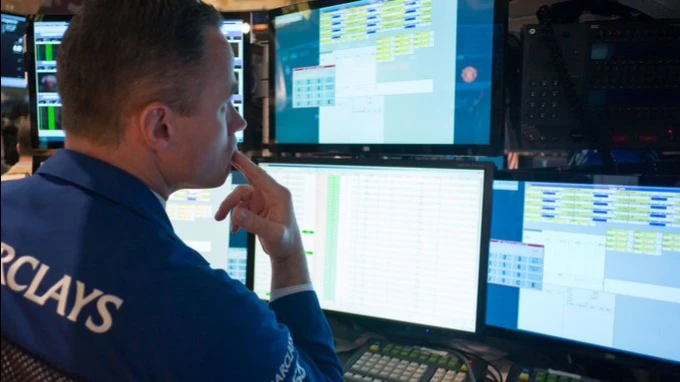
The sell-off in the technology sector intensified on Friday, June 5 / Photo: X/NYSE
The index of the U.S. technology sector Nasdaq Composite collapsed by more than 3% during trading on Friday, June 5. This was the strongest drop in the index during one day since October 2025, Bloomberg notes.
Other major U.S. stock indices were also in the negative. The broad market index S&P 500 was losing at a low of 1.9%, while the blue-chip index Dow Jones was down 0.9%. Meanwhile, earlier in the session, the Dow set a new all-time record of 51,660.4 points.
The yield on 10-year U.S. Treasury Department bonds - a key benchmark for rates on mortgages, auto loans and credit card debt - climbed seven basis points to 4.54%. The yield on two-year securities soared 12 basis points to 4.16%
Bitcoin temporarily dipped below $60,000 - for the first time since October 2024, when Donald Trump won the U.S. presidential election.
What's going on
Indexes in the U.S. fell due to a sell-off in securities of key chip makers, as well as due to rising treasury yields after stronger-than-expected jobs statistics, CNBC writes.
Investors began to reconsider their attitude to the bet on artificial intelligence, which was the main driver of market growth after the lows of this year, emphasizes Bloomberg. The Nasdaq collapse was caused by the sell-off of chipmakers' shares: quotations of Micron Technology fell by 11%, Intel - by 9%. Investors began to get rid of these securities on Thursday after Broadcom gave a weaker forecast for demand for its AI chips than the market expected. After that, its shares collapsed by more than 12% on Thursday, and in trading on Friday they were losing another 6%.
The historic series of weekly growth on Wall Street seems to be coming to an end, Bloomberg writes. The report on the labor market, which exceeded forecasts twice, increased investors' fears that the next step of the U.S. Federal Reserve may be an increase in interest rates. Although there were many positive signals in the economic data released on Friday, the report came out at a time when war-related risks of accelerating inflation pose an additional challenge for the Fed, Bloomberg writes. The interest rate swap market shows that traders expect the target range for the federal funds rate to be raised by 0.25 percentage points by the Fed's December meeting, the probability of a rate hike in October is estimated at about 60%, the agency reports.
What the analysts are saying
- The market may perceive "good news today" as bad news for stocks, but it's more of an emotional reaction to the bond market revising expectations for the Fed's future rate trajectory, said Renaissance Macro Research head Neil Datta, quoted by Bloomberg. "If the Fed is going to raise rates because of job expansion, I wouldn't automatically consider that a bad signal for the stock market. Stagflation is bad for stocks, but an inflationary boom is not," he said.
- "If [new] [Federal Reserve] Chairman [Kevin] Warsh starts pushing for rate cuts as early as the first [Fed's June 16-17] meeting, that would go against the grain," Bloomberg quoted Principal Asset Management chief global strategist Sima Sha as saying. - Our base case scenario still assumes the Fed keeps rates unchanged through 2026. However, if the employment data continue to come out at the level of Ma, the option of raising rates already this year will become quite realistic".
This article was AI-translated and verified by a human editor