Nasdaq gets SEC OK for tighter rules on micro caps; almost 200 names face delisting


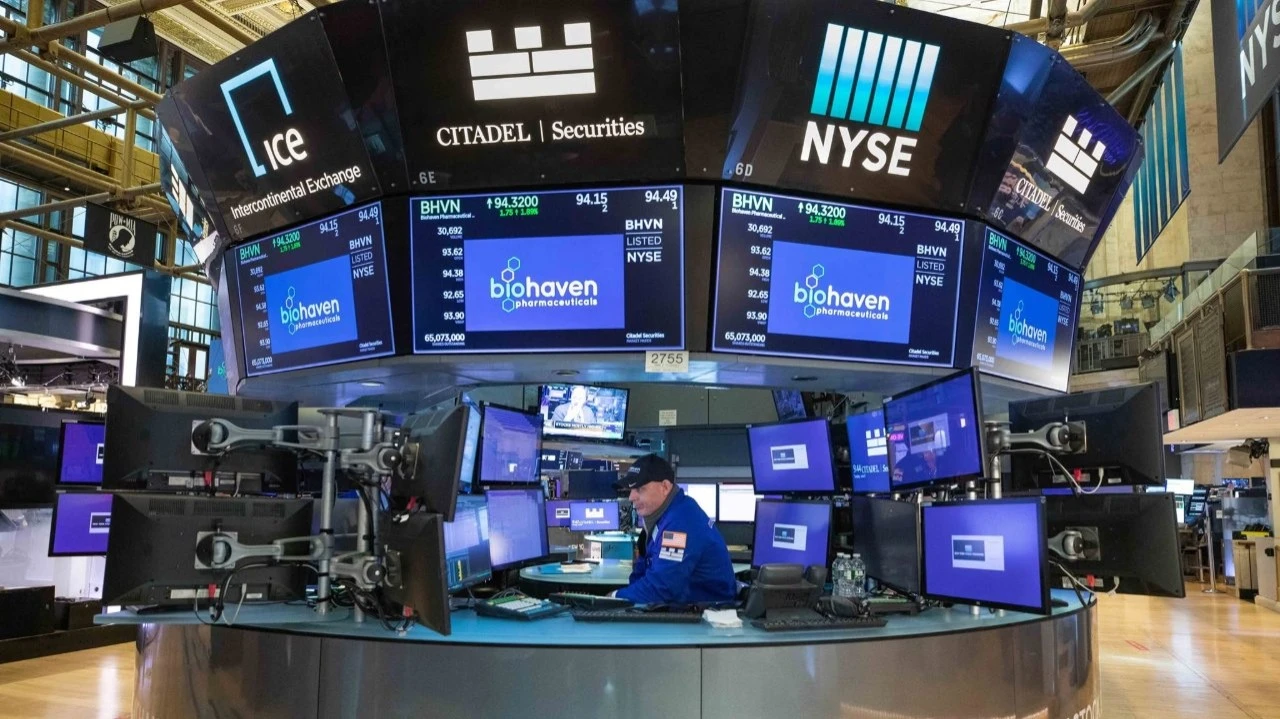
A Nasdaq-listed company worth less than $5 million for 30 straight days would face immediate suspension and delisting with limited opportunities to appeal under the approved plan / Photo: JHVEPhoto / Shutterstock.com
The U.S. Securities and Exchange Commission has approved a new Nasdaq rule allowing the exchange to immediately suspend and delist companies whose market value remains below $5 million for 30 consecutive business days. The exchange argues that such low valuations generally signal serious business problems and make stocks more vulnerable to manipulation. Around 200 Nasdaq-listed companies are currently at direct risk of delisting, according to calculations prepared by Freedom Broker for Oninvest.
The new rules and their rationale
According to the rules approved by the SEC on Wednesday, companies whose shares trade on the Nasdaq must maintain a market capitalization of at least $5 million. If they fail to do so for 30 consecutive trading days, the exchange may immediately suspend trading in their securities and begin delisting proceedings. The previous rules set the minimum market-value requirement at $35 million. Companies that fell short were given 180 days to regain compliance and could receive an additional 180-day extension.
This gave issuers facing temporary difficulties a chance to recover, Nasdaq explained. But the exchange believes a prolonged decline in market capitalization below $5 million is different. In its view, this points to significant problems at the company and makes its shares unsuitable for continued listing.
Once the market assigns a company a low valuation, it becomes difficult to maintain a fair and orderly market in its securities, negatively affecting all market participants, Nasdaq noted, referencing an unnamed commenter. In addition, another commenter cited by Nasdaq stated that “market participants have witnessed rampant use by bad actors in low-priced stocks, including manipulative trading following fraudulent account takeovers,” and estimated that “retail investors suffered around $15 billion in ramp-and-dump losses in 2025.”
Names at risk of being delisted
For stock issuers valued at $5-20 million, the risk of losing their listing is a key factor for the investment case, Freedom Broker points out. According to Finviz data, 557 Nasdaq-listed securities currently have market capitalizations below $20 million. Of those, 196 are at direct risk of being delisted soon because their market capitalizations are below $5 million, Freedom Broker estimates.
For example, at the close on Tuesday, Ebola vaccine developer GeoVax Labs had a market capitalization of $4.9 million, rapid drug-screening test maker Intelligent Bio Solutions was valued at $4.3 million, and real estate brokerage La Rosa Holdings at about $1.5 million.
Overall, around a third of low-market-cap companies are based in Asia, and some may already have been targeted in social-media manipulation schemes, Bloomberg reports.
In July 2025, Bear Cave, a research outfit, published a report on Pheton Holdings, alleging that “overseas scammers have promoted Pheton stock on rumors that Gilead Sciences will soon acquire or partner with Pheton.” It concluded that this had caused shares of the Chinese micro cap to spike and then collapse. The stock has since been delisted.
On various days in July 2025, seven Chinese micro caps listed on the Nasdaq plunged 80% or more in a single session, wiping a combined $3.7 billion from their market capitalization. All seven had been heavily promoted to investors on social media and messaging platforms shortly before their collapses, fueling buying and driving their share prices higher. Analysts told the FT that the moves bore “many of the hallmarks” of pump-and-dump scams.
The SEC estimates that hundreds of micro caps over the years would have failed the new standards. In 2025, according to the regulator, 91 Nasdaq-listed companies had market capitalizations below $5 million for 30 consecutive days.
What analysts say
Nasdaq first published its proposal in January, and it received support from Wall Street heavyweights including Citadel Securities, Charles Schwab, and securities trade group Sifma, Bloomberg writes. However, it drew fierce opposition from small companies, attorneys, and advisers, many of whom argued that the attempt to curb misconduct would punish legitimate startups.
“This rule will severely impact small businesses, will impair capital formation, and will create perverse incentives for short-selling in smaller companies,” Small Public Company Coalition President Marc Indeglia told Bloomberg. “It’s not consistent with the commission’s current mantra to ‘make IPOs great again’ and increase capital formation.” Only 13 micro-cap companies went public on the Nasdaq and the New York Stock Exchange in the first half of this year, versus around 80 by the midpoint of 2025.
Overall, the effect is likely to be positive, argues Freedom Broker, meaning fewer extremely illiquid IPOs, reverse stock splits, and potential pump-and-dump cases. The downside, it says, is that early-stage biotechs, pre-revenue tech firms, and other issuers in need of funding that have turned to the public markets will have fewer sources of capital.
Nasdaq’s decision could influence how other exchanges approach the balance between investor protection and access to public capital, Havas Edge head economist Thomas J. Thompson wrote on LinkedIn. He believes the decision signals a change in the direction of U.S. capital markets: for decades, policymakers largely focused on helping more companies to access public markets, while the new rules show that preserving confidence in those markets is becoming just as important.
“Higher listing standards may improve market quality and strengthen investor confidence, but they could also make it harder for legitimate early-stage companies to remain public or raise capital during difficult periods,” Thompson reckons.
Freedom Broker pointed to another issue: to bump up their market value, companies will need to raise capital, restructure, or complete a transaction. This increases the likelihood of urgent share offerings and substantial dilution for existing shareholders.
This creates what Freedom Broker described as a "delisting cliff": "as a company approaches $5 million, investors may start selling shares in anticipation of a move to the over-the-counter market. This can reduce liquidity and put additional pressure on its capitalization."