New York Morning: Middle East back in the spotlight


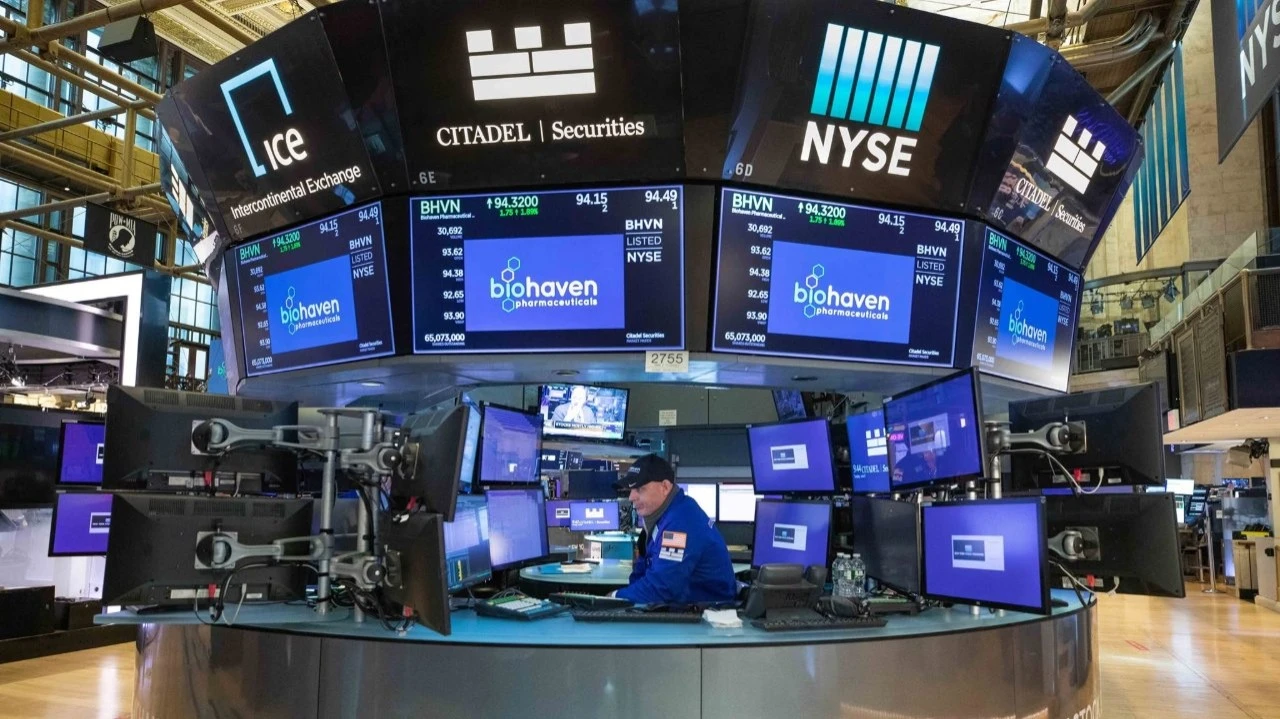
The main pressure on risk appetite in the upcoming trading will be the escalation of confrontation in the Middle East / Photo: Czerep rubaszny / Shutterstock
Daily review and forecast of events on the U.S. stock market from Mikhail Denislamov, Deputy Director of Capital Markets Research, Freedom Broker.
We expect
The main pressure on risk appetite in the upcoming trading will be the escalating confrontation in the Middle East. Iran fired missiles at Israel for the first time since the start of the truce, whose air force responded by attacking military targets in the west and center of the Islamic republic, despite calls from US President Donald Trump to prevent escalation. Talks between Tehran and Washington appear to have made little progress in recent weeks, although Trump has said an agreement is almost reached and only a few disagreements remain, particularly over frozen Iranian assets. That said, the U.S. military shot down several more Iranian drones over the weekend.
These factors led to a new jump in oil quotations. The participants of the OPEC+ agreement agreed to increase quotas by 188 thousand barrels per day from July. However, analysts note that the physical effect of this decision is close to zero with the continued blockage of the Strait of Hormuz.
There are no significant macro releases scheduled for this Monday. The key events of the week will be the publication of May inflation data (CPI and PPI), Apple's WWDC developers' conference, SpaceX IPO, placement of three-, ten- and 30-year treasuries totaling $119 billion, as well as Oracle (ORCL) and Adobe (ADBE) reports.
Before the open, FuelCell Energy (FCEL), Campbell's Company (CPB), Motorcar Parts of America (MPAA) will report quarterly results. Vail Resorts (MTN), Mission Produce (AVO), Mama's Creations (MAMA) will report after the main session.
Futures on American stock indices demonstrate positive dynamics. We assess the balance of risks for the upcoming session as neutral with moderate volatility. Markets may rebound moderately after Friday's sell-off.
The main thing on the pre-market
- Following NVIDIA (NVDA) CEO Jensen Huang's visit to South Korea, the company announced expanded partnerships with major local technology groups. NVIDIA and SK Hynix have entered into a multi-year agreement to develop next-generation memory chips for AI infrastructure that will be used in Vera processors. With SK Telecom, the company has agreed to develop large-scale cloud-based AI infrastructure, while collaborations with Hyundai and LG will be expanded into robotics, autonomous vehicles and data centers. Partnerships with Naver and Doosan include the application of NVIDIA technologies in AI data centers and industrial robots.
- Marvell Technology (MRVL) and Flex (FLEX) will be included in the S&P 500 instead of PoolCorp (POOL) and Campbell's (CPB) when trading opens on June 22. MRVL has more than tripled since the beginning of the year, gaining nearly 29% last week alone on the back of NVIDIA CEO Jensen Huang's announcement that Marvell will be the next $1 trillion company. The stock is up nearly 6% since the close of principal trading on June 5, and is moving up in anticipation of compulsory buying by passive funds before today's session opens.
- Novo Nordisk (NVO) presented positive results from three Phase III studies of the REIMAGINE program for CagriSema in patients with type II diabetes. The drug provided a reduction in HbA1c of up to 2.33 p.p. and body weight of up to 14.2%, and in the largest study it statistically significantly outperformed semaglutide at a dosage of 2.4 mg on both measures. The data strengthens CagriSema's position as one of the key candidates in the company's portfolio in the diabetes and obesity drug market.
- The takeover of Warner Bros. Discovery (WBD) by Paramount Skydance (PSKY) remains in doubt as California, New York and several other states plan to file a lawsuit in the coming weeks to block the $110 billion deal. The prospect of litigation increases uncertainty about the timing of the takeover's completion and is holding back the arbitrage spread in WBD stock.
- The negative background for the aviation sector was set by IATA's annual report: the industry cut its profit forecast for 2026 from $41 billion to $23 billion after $45 billion in 2025. The revision of the benchmark is due to the military operation against Iran, rising fuel costs and the reduction of the route network. Fuel costs, according to air carriers' calculations, will grow by almost 40%, up to $350 billion. The head of IATA Willie Walsh predicts new bankruptcies following the low-cost carrier Spirit Airlines, as well as takeovers of small companies by larger players. Against this background, shares of AAL, DAL, UAL and LUV may be under pressure.
- Interest in the topic of AI infrastructure development was fueled by SpaceX's agreement with Alphabet (GOOGL). The Internet corporation will pay $920 million per month from October 2026 to June 2029 for access to about 110 thousand NVIDIA gas pedals. The deal is designed to provide intermediate capacity for the growing demand for the Gemini Enterprise platform. For SpaceX, this is the second such agreement in recent times. A week before its planned IPO, the company struck a $1.25 billion-a-month deal with Anthropic. In the offering, SpaceX expects to raise about $75 billion at a valuation of about $1.75 trillion.
- The M&A market is focused on Ingredion (INGR), which, according to Bloomberg, is in advanced talks to buy Britain's Tate & Lyle for 2.7 billion pounds ($3.6 billion). The agreement could be announced as early as today.
The market on the eve of
June 5 trading on the U.S. stock exchanges ended with a sharp decline. The S&P 500 collapsed by 2.64%, breaking a nine-week series of growth, NASDAQ 100 collapsed by 4.77%, Dow Jones lost 1.35%, and Russell 2000 fell by 3.47%.
The main pressure factor was a large-scale sell-off in the segment of semiconductor manufacturers and artificial intelligence developers.
The bulk of the "Magnificent Seven" companies closed in deep negative territory.
The IT sector (XLK: -6.66%) led the decline, as the SOX chipmakers' index collapsed by more than 10% (the maximum for the day since March 2020). The non-cyclical consumer staples sector (XLP: +1.71%) looked much better than the market due to intensive capital flows into protective assets.
Macroeconomic statistics pointed to the continued overheating of the labor market. The number of jobs outside of agriculture (non-farm payrolls) in Ma increased by 172 thousand with a consensus of 85 thousand. At the same time, the same indicator for April was revised from 115 thousand to 179 thousand. The unemployment rate, as expected, remained at 4.3%, but the growth of average hourly wages accelerated from April 0.2% m/m to 0.3%. Against the backdrop of the publication of these data, the rates of treasuries at the near end of the curve rose by 11-12 bp. The labor market statistics confirms the favorable state of the economy, but do not allow us to count on a rapid reduction in interest rates by the Fed.
Company News
- Meta Platforms (META: -5.5% at the close of trading on June 5) plans to raise tens of billions of dollars through an additional share issue to finance large-scale AI projects. This way the company intends to accumulate liquidity to increase its core capex to a record $145 billion this year, with the prospect of further budget expansion in 2027.
- Planet Labs (PL: -26%) reported strong quarterly results and improved its outlook in light of growing demand from the European defense sector, while announcing an additional share issue of up to $1.5 billion.
- The Cooper Cos. (COO: +8.6%) reported the successful conclusion of litigation surrounding the CSI division. The positive corporate backdrop and strong results for the second fiscal quarter completely outweighed the negative effect of lowered full-year revenue guidance due to expected weaker demand in the Asia-Pacific markets.
- G-III Apparel Group (GIII: +5.2%) reported first-quarter results across all key metrics that were significantly better than Wall Street expectations. In particular, the company demonstrated outpacing growth in full-price merchandise sales and strong margin growth. This allowed management to significantly raise financial guidance for both the upcoming quarter and the entire current year.
This article was AI-translated and verified by a human editor