Oil inventories fall at record pace, raising risks of new price spikes - IEA
By early Ma, the amplitude of barrel fluctuations had eased but threatens to increase ahead of the summer consumption peak

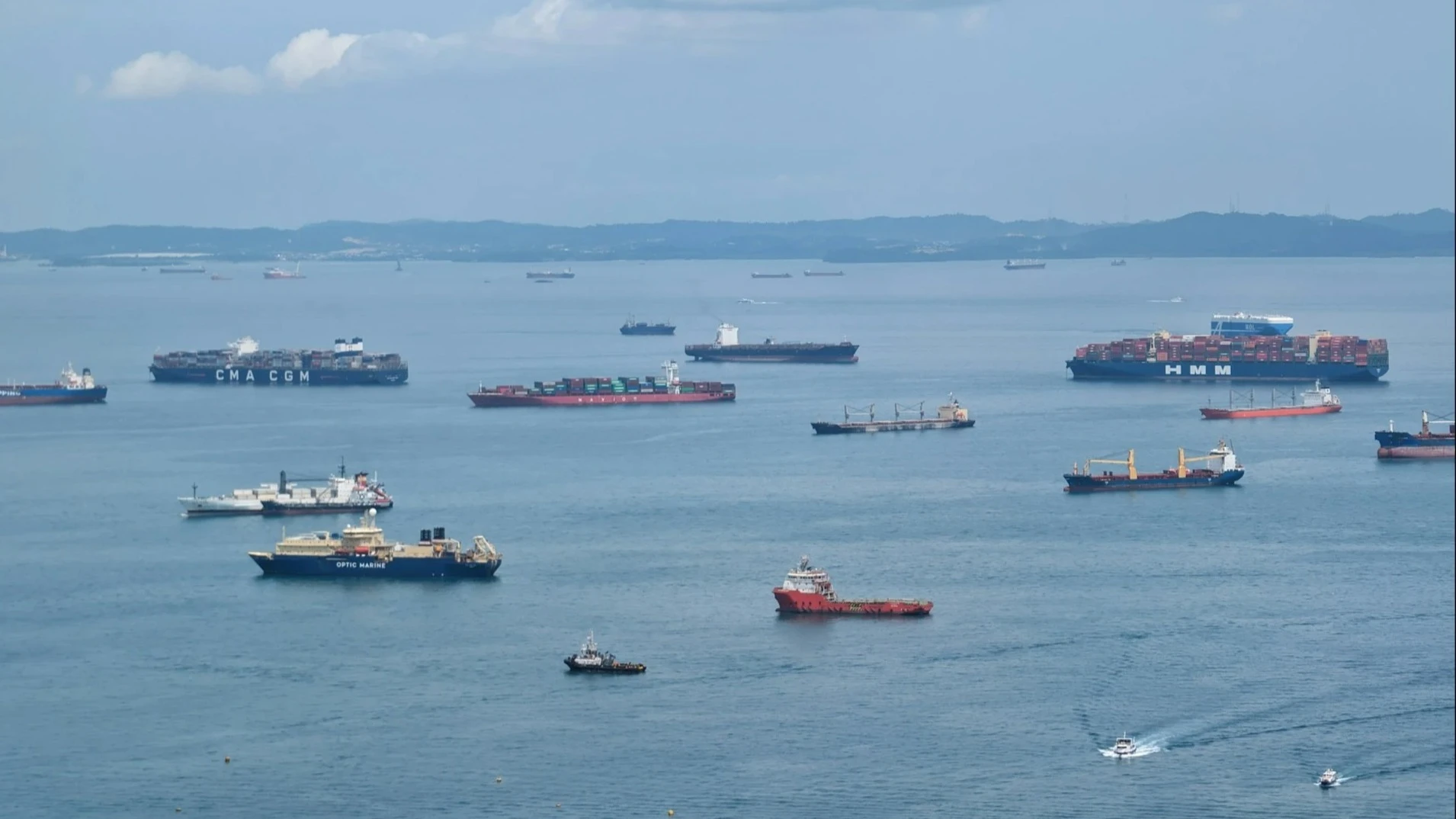
According to the IEA, in March-April global oil reserves fell by 250 million barrels, even taking into account the crude in the holds of tankers blocked in the Persian Gulf / Photo: Unsplash/Alexander K
World stocks of crude oil and petroleum products declined by almost 4 million bpd in April - more than the UK and Germany consume combined. The International Energy Agency (IEA) has warned that the risks of price volatility are growing sharply as stocks, which serve as a safety cushion for the market, deplete.
What the IEA predicts
"The world is using up oil reserves at a record pace while importing countries face unprecedented supply disruptions from the Middle East," the Financial Times quoted the IEA's monthly oil market review as saying on May 13. - The rapid depletion of these reserves in the face of continued disruptions could herald new price spikes."
According to the IEA, in March-April, global oil reserves decreased by 250 million barrels. The actual reduction in available supplies is even greater if we subtract the oil that was blocked on tankers in the Persian Gulf, the agency emphasized. The main problem remains the closure of the Strait of Hormuz, through which a fifth of the world's oil traffic passes under normal conditions.
"While demand could return to growth by the end of the year - assuming a peace agreement [between the US and Iran] and a gradual resumption of supply through the Strait of Hormuz from the third quarter of 2026, as laid out in this report - supply is likely to recover more slowly. As a result, the oil market will remain in deficit until the fourth quarter. [...] Further price volatility is highly likely ahead of the summer consumption peak," the IEA said.
Consumption has fallen in many countries, especially in Asia, which receives most of the Middle East's oil. In Europe, the situation is particularly acute with jet fuel: last year, the Middle East supplied 60% of the region's needs for this fuel. The IEA estimates that Europe will have to reduce its oil consumption by 140,000 barrels per day this year, assuming that the Iranian conflict ends by early June. If the blockade continues, the decline will be even deeper, says the FT.
What's up with oil prices
After three days of growth, futures for the benchmark grade Brent on Ma 13 were initially cheaper: the price fell to $106.1 per barrel, but then moved to a slight increase of 0.4%. The blockade of the Strait of Hormuz continues to severely restrict global energy supplies. The fragile truce between the US and Iran remains in jeopardy: Washington has rejected Tehran's latest proposals, while the Strait itself remains blocked by the militaries of both sides.
Disruptions in Middle Eastern supplies provoked abnormal volatility in the oil market in April: quotations of the North Sea Dated grade fluctuated in a huge range of almost $50 per barrel. However, by early Ma the market tension subsided. The main indicator of acute shortages - the premium for real oil to Brent exchange-traded futures - collapsed from April's record of $35 to $3 per barrel, and the price difference between WTI and Brent contracts with the nearest execution date stabilized around $5, the IEA said.
Context
While the market is waiting for the conflict to be resolved, the focus of global diplomacy is shifting: the upcoming meeting between US President Donald Trump and Chinese President Xi Jinping is expected to prioritize trade negotiations over the situation in the Middle East, according to Trading Economics. Meanwhile, the consequences of the oil crisis are already hitting the world's largest economy - due to the spike in fuel prices, April inflation in the United States accelerated faster than forecasted.
This article was AI-translated and verified by a human editor