Oura has postponed its IPO; OpenAI is seeking $30 billion: Key IPO Updates as of October 4

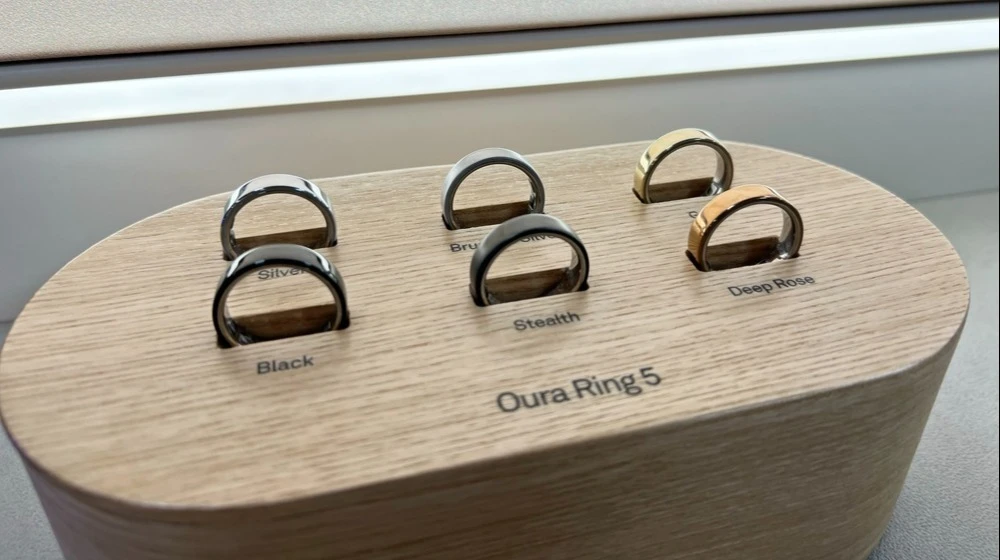
Oura, a manufacturer of smart rings, has postponed its IPO despite strong investor demand / Photo: JulieStar / Shutterstock.com
Oura, a manufacturer of smart rings, has postponed its U.S. IPO despite demand for its shares being roughly four times the supply. OpenAI, which has postponed its IPO until next year, is in preliminary talks to raise at least $30 billion at a valuation of about $1.4 trillion. Check out our roundup of the week’s top events in the IPO market.
What is known about future placements
— Reuters has reviewed Anthropic’s unpublished IPO prospectus. According to the document, the company’s revenue grew 12-fold in 2025, reaching nearly $4.6 billion, while its operating loss totaled $8.06 billion and its computing infrastructure expenses amounted to $7.3 billion; with just two clients accounting for nearly a quarter of revenue. In the same document, Anthropic warned investors about the “existential” risks of AI to humanity: The startup states that its models may resist being shut down, conceal or distort information, and exhibit behavior “resembling blackmail.” The startup expects to secure a valuation of over $2 trillion from investors. According to the prospectus, after the offering, the seven co-founders will retain control of 50.1% of the voting rights on key issues. According to Bloomberg, the offering, which was previously expected in October, will likely take place in mid-November.
— OpenAI is in preliminary talks to raise at least $30 billion at a valuation of about $1.4 trillion, excluding new capital, according to Bloomberg and CNBC. Back in September, the Financial Times reported a target valuation of approximately $1.2 trillion, whereas after the March funding round, the company was valued at $852 billion. According to Bloomberg, the new funding round is being discussed following OpenAI’s decision to postpone its IPO until 2027, and the initiative is largely driven by investors amid the company’s rapid business growth. Axios notes that the company’s annual revenue is approaching $70 billion, up from more than $40 billion in August.
— Chinese AI cloud infrastructure provider Infinigence AI is preparing for an IPO in Hong Kong in the first half of 2027 and expects to raise several hundred million dollars, Bloomberg has learned. The company, which has received investments from Tencent, Baidu, and Z.AI, has raised 4.3 billion yuan ($641 million) since its founding in 2023 and is valued at approximately 14.3 billion yuan. Infinigence is classified as a so-called “neocloud”: it does not own its own data centers but manages computing power from third-party facilities, including Chinese chips such as Huawei Ascend and Moore Threads, amid U.S. restrictions on the supply of advanced Nvidia processors to China.
— The Kalshi prediction markets platform is closing a new round of funding at a valuation of about $40 billion, Bloomberg reported. This round is expected to be the last before an IPO, which could take place in 2027. Since March, when Kalshi last raised capital, its valuation has nearly doubled. According to the agency, investor interest is fueled by rapid growth in trading volume and a gross margin of about 90%. In August, the company’s annualized revenue was approximately $4 billion, and trading volume exceeded $40 billion. Sequoia Capital and Wellington Management are in talks to lead the new funding round.
— Airtel Money, the fintech division of Airtel Africa, expects to be valued at about $7 billion in its London IPO, according to Reuters. The company plans to sell 270 million shares and raise about $703 million. Trading is set to begin on October 14. The offering could be the largest IPO in London since September 2025 and provide a boost to a market that has seen a shortage of major listings in recent years. Following the transaction, Airtel Money’s free float will be approximately 16.5%.
Who has postponed its IPO?
— Oura, a manufacturer of smart rings, has postponed its U.S. IPO, citing uncertainty in the initial public offering market, Bloomberg reported. The company and its shareholders had hoped to raise up to $2.2 billion, with demand roughly four times the size of the offering. According to the agency, some investors are currently holding off on investments in anticipation of Anthropic’s upcoming IPO.

— Barrick Mining may move up the IPO of its North American gold mining business from late 2026 to January, said Mark Hill, the division’s future head, confirming previously published Bloomberg reports. According to him, preparations for the offering have encountered some delays, but no significant delays are expected. Barrick plans to spin off its North American assets into a separate company and list its shares in New York. One of the key steps was an agreement with Newmont to transfer a stake in the Fourmile project in Nevada to Newmont in exchange for support for the IPO.
How Did This Week's IPOs Go?
— Data center infrastructure operator Accelevation priced its shares at $18 per share on September 30—below the previously announced range of $20–24, according to Reuters. This was yet another sign of investors’ more cautious attitude toward AI infrastructure amid high interest rates and questions about the sustainability of tech giants’ spending, the agency notes. Following the first day of trading on the Nasdaq, the company’s shares fell below the offering price.
Other Important News from the World of IPOs
— The postponement of the IPO by smart ring maker Oura is part of a broader cooling-off in the IPO market, according to Barron’s: companies are wary of volatility, high interest rates, and stricter screening by investors. According to Renaissance Capital, four companies have postponed or canceled their IPOs over the past week, and the total number of failed listings in the third quarter reached seven. Barron’s cites the flow of capital into AI as an additional factor: investors are preserving liquidity for major offerings such as Anthropic’s. Nevertheless, the year as a whole remains strong—110 IPOs raised approximately $146.9 billion, with SpaceX, SK Hynix, and Cerebras accounting for a significant portion of that total.
— SK Hynix’s $26.5 billion IPO fueled a series of major AI offerings in the U.S. during the third quarter, although the postponements of the IPOs for Holtec Nuclear, Bamboo Insurance, and Oura heightened doubts about market conditions, according to Bloomberg. From July through September, companies raised $36.1 billion on U.S. exchanges, making it the second-largest quarter by volume since 2021, following the record $117 billion in the second quarter driven by SpaceX. At the same time, shares of companies that conducted large IPOs are performing best: SpaceX and SK Hynix shares rose 12% and 24%, respectively, while excluding IPOs exceeding $10 billion, the average return on this year’s offerings stands at minus 4%. In total, U.S. IPOs have raised $162.6 billion since the start of the year, and Anthropic’s potential offering could bring the market closer to the record $195.2 billion set in 2021, the agency notes.
This article was AI-translated and verified by a human editor