Personal finance in a blacklisted country: what does the average Iranian do with their money?

In December this year, the Russian Federation was added to the EU's blacklist in the area of anti-money laundering and combating the financing of terrorism, which in the long term should make life more difficult for those who are somehow connected with Russia. Iran has been on this list for many years. Oninvest asked Iranianist Nikita Smagin, who has lived in the Islamic Republic, to describe how life is organized for Iranians from a financial point of view.
As of 2022, Iran and Russia - two very different countries - have found themselves similar on a number of issues.
Both are among the leaders in terms of the number of Western sanctions imposed against them. Russia's system of "white lists" during internet shutdowns is very similar to the "national internet" that were turned on in Iran during the protests in November 2019 and the 12-day war in June 2025. And after Russia's inclusion on the EU's anti-money laundering and counter-terrorist financing blacklist, the countries have another similar feature: Iran has been on it for more than a year.
Let's imagine ourselves as an ordinary member of the urban middle class in Iran and see how he interacts with the financial reality around him, what problems he faces and how he solves them.
Cards, transfers and cash
Let's start with a simple question: how to pay in a store? The answer is not difficult at all - with a bank card. But there are a number of nuances here.
Bank terminals are ubiquitous in Iran - in every store or stall. Even a vendor selling trinkets or cookies on the subway often carries a bank terminal. The reason for this depth of spread is simple - stimulating domestic trade was one of the main methods of combating the effects of Western sanctions in the 2010s. Therefore, bank terminals have become a mandatory attribute of commerce at all levels in a short period of time.
At the same time, by today's standards, the relevant technologies are a generation past. Only bank cards with magnetic tapes are in use (although the rest of the world is now issuing cards with chips and developing contactless payment technologies). Formally, many terminals in the country have the ability to recognize contactless payment method, but cards with such technology are not issued in Iran. As for the appearance of cards, it also lags behind global trends - often the data on the card is printed with ink, which is quickly erased.
By the way, it is difficult for a foreigner to open an account in an Iranian bank, even if he has all the necessary documents, for example, a residence permit. The rules are constantly changing, and an ordinary bank employee, seeing a foreign passport, will do everything possible to find an excuse not to open an account. You will either have to go around a lot of banks or have acquaintances who will help you overcome these barriers.
Paying in cash will be more difficult. First of all, endless inflation has made this option uncomfortable - too much paper. Back in the pandemic years, many stores stopped accepting cash under the pretext of fighting the spread of the coronavirus. Of course, in most cases they will still take it, but very reluctantly, and some may even refuse it.
But what should a citizen of a country do if he suddenly forgets his card at home, or the magnetic strip stops working (and it happens). If we are not talking about a chain supermarket, but about an ordinary stall, or, say, paying for a cab ride - the solution is simple. It calls "carte be carte", i.e. transfer "from card to card". Online transfers in Iran are ubiquitous, usually commission-free, instantaneous and do not raise any questions with the country's authorities.
The Islamic Republic has had its own national payment system, Shetab, in place since 2002, which enables bank transactions and transfers without the involvement of the international Visa and Mastercard systems.
Finally, Iran has its own Digikala marketplaces (analogous to Amazon) and food delivery services and food from restaurants, like Snapp Food or Tapsi Food. Everywhere you can pay online, you can also link a card to pay for cab services (the same Snapp or Tapsi), which work very well. All in all, it's not the most problematic picture so far, is it? But everything is not so simple.
Bank isolation
First of all, we should not forget that the whole ongoing feast of bank transactions is taking place in a situation of external isolation.
With an Iranian card, you will not be able to pay for a purchase in a foreign store or subscribe to an application on your phone. In the latter case, there are no options at all, you can't pay from your cell phone account either. In other words, only those who have a foreign card will be able to get Apple Music or paid VPNs from the app store. And there are only a few of them in the country.
It is also not easy to open accounts in foreign banks. Because of all sorts of sanctions, an Iranian citizen is likely to be able to open a bank card in a foreign bank only if he or she has a residence permit or permanent residence permit in another country. And even in this case, there are many examples of accounts being frozen after several years without explanation: some Turkish, Emirati, and even Russian banks have done so.
Transferring money to someone abroad is a separate craft. As a rule, Iranians use the services of "sarrafis", or currency exchangers, for this purpose. This means that many money changers in Iran have business partners or representative offices in other countries. This method of transfer is most often called "hawala". That is, an Iranian gives money to a "sarrafi," and they call the desired country and ask the partner to transfer the same amount of money in local currency to the addressee.
Of course, there are some exceptions. For example, in a carpet store in Isfahan, I was once offered the chance to buy local products using a foreign card. This was well before 2022, when Russian cards were still accepted all over the world. When I was surprised and reminded that Iran was cut off from the world's payment systems, they handed me a terminal. I did not buy anything, as I looked into the shop purely out of curiosity. But nevertheless I saw with my own eyes what the system looks like in practice when a terminal of a UAE bank is used in Iran. These are rare cases, and such transactions, I was told, increase the final cost of goods by 15-20%. Moreover, since the early 2020s, the UAE has begun to crack down on such practices.
There are official bank transfers to and from Iran. We are talking, first of all, about those countries where there are branches of the Iranian state-owned bank Melli. For example, in Russia, its subsidiary is Mir Business Bank.
But the problem is that when you convert to Iranian rials, the amount is recalculated on the basis of the official Sana exchange rate, which is noticeably lower than the market rate. This means that during the transaction you will lose at least 15% only on the exchange rate difference, excluding possible commissions. The same is true for official transfers of other currencies in those countries where it is possible to send money to Iran. A few weeks ago I tried to transfer dollars to Iran through the official branch of Melli Bank in Azerbaijan. It was explained to me that it was possible to transfer dollars, but the recipient would receive the money only in rials at the same official exchange rate.
Russian Mir cards have already been integrated with the Iranian Shetab banking system. However, so far they are only accepted in the terminals of some banks, and again, due to the difference in currency exchange rates, a substantial sum will have to be lost.
Of course, PayPal, Western Union and other Western services are not available. So if an Iranian still needs to send money abroad or receive it from another country, he goes to the very "sarrafi" - here the commission is usually 1-3%. So, in order to transfer money to Iran, I ended up calling an acquaintance in Moscow who deals with such transfers. I handed him rubles, and his authorized person immediately credited the money to the right person in Iran through the "carte be carte" system.
The dollar as an investment
However, very few Iranians are concerned about foreign remittances. But questions about where to invest or where to keep their money are a regular concern for the middle class. According to official estimates alone, inflation has been above 30% since 2019, and at its peak - in 2023 - was 44.6%. This means that keeping money in rials is a thankless business - they depreciate in no time. At the same time, there are many questions about the official figures, because the food basket of an average Iranian can easily rise in price by more than 70% in a year.
In 2019-2020, buying shares on the local stock exchange has become popular. Of course, Iranian residents do not have any instruments to invest in foreign stocks, so they can only invest in domestic securities.
At the time, this method was actively supported by the government of reformist President Hassan Rouhani. As a result, the benchmark index of the Tehran Stock Exchange (TEDPIX) grew sevenfold in 2019-2020 alone. During this period, ordinary citizens could double, and the more fortunate could triple their investments within a few months.
But it ended badly - without foreign investment, Iranian investments quickly formed a "bubble" that soon burst. In July 2020, the stock market fell more than 30% in about a week. Some stocks lost up to 50% in value, wiping out the savings of many retail investors who believed the government's promises of a safe stock market.
About 60% of the largest issuers on the Tehran Stock Exchange are export-oriented metallurgical and petrochemical companies. Examples are Mobarakeh Steel, National Iranian Copper Industries Company, Jam Petrochemical Company. Now there is no such prohibitive growth of the index - since the beginning of the year the index has grown by about 34%. To save your money, you need to overtake inflation above 30% (annual inflation at the end of November amounted to 40.4%). Today, the stock exchange can't give such a performance even close to that.
Real estate looked like a logical alternative. However, this form of investment is inaccessible to the average citizen of the country due to its unaffordable cost. Moreover, Iranians are increasingly losing faith even in this method of investment. Thus, from 2020 to 2024, the average cost of real estate in Tehran grew by 15-20% annually. These figures are quite high for a country with a stable economy, but in Iran such dynamics again does not allow to overtake inflation. It is a similar story with bank deposits - on average, they can bring about 20% per year for long-term investments.
Against this background, specific forms of earning money that are practiced among Iranians are emerging. For example, when housing is rented out, many landlords prefer to slightly reduce the rental rate in exchange for a large deposit - on average, it amounts to six monthly rent payments. The landlord puts this amount in the bank, and a year later returns the deposit in the original amount, receiving their 20% profit. But these are specific rental models rather than a way of investing.
One of the most stable ways to save your money is to buy gold coins. Iran produces several types of coins of different weights for this purpose, each of which has its own price. According to the results of the last 1403 Iranian calendar year (March 2024 - March 2025), the value of gold coins increased by 106%. The year before that it was about 70% increase in value, and even a year earlier it was about 96% increase in value. In other words, this option has remained one of the most reliable ways to keep your savings for the last few years.
Finally, the last and perhaps the most favorite way is to buy cash dollars. A whole culture has developed around this. Dollars cannot be bought in a bank, only in special "sarrafis". They operate on a shortened schedule, and can close at any time. As soon as the market starts to experience sharp currency fluctuations, the "sarrafis" stop working and may refuse to exchange dollars for several days until the exchange rate stabilizes. Finally, there are several exchange rates, including several government-issued ones for different needs, such as supporting key importers. "Sarrafi's, on the other hand, offer cash at the market rate.
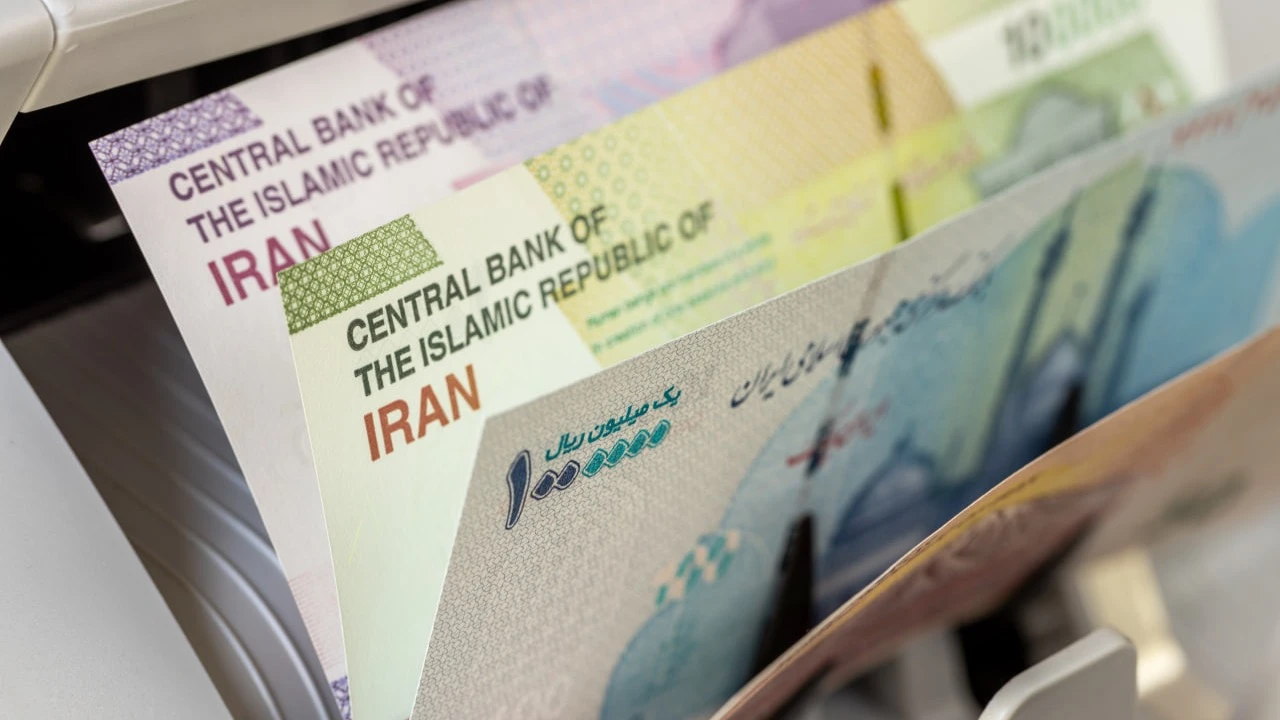
As for the exchange rate, since the U.S. withdrew from the nuclear deal in 2018, the Iranian rial has been on a never-ending journey called "currency collapse." While in May 2018 a dollar was selling for about 47,000 Iranian rials, in December 2025 a dollar is already worth 1.26 million rials. That is, the value of the U.S. currency has increased almost 27 times in seven years. The exchange rate is unstable, one year it can jump by 200% compared to the previous year, and in another year - by 8%.
This article was AI-translated and verified by a human editor