Delta projected $2 billion in losses due to rising fuel costs. Why did the stock soar?
The company is considering raising ticket prices

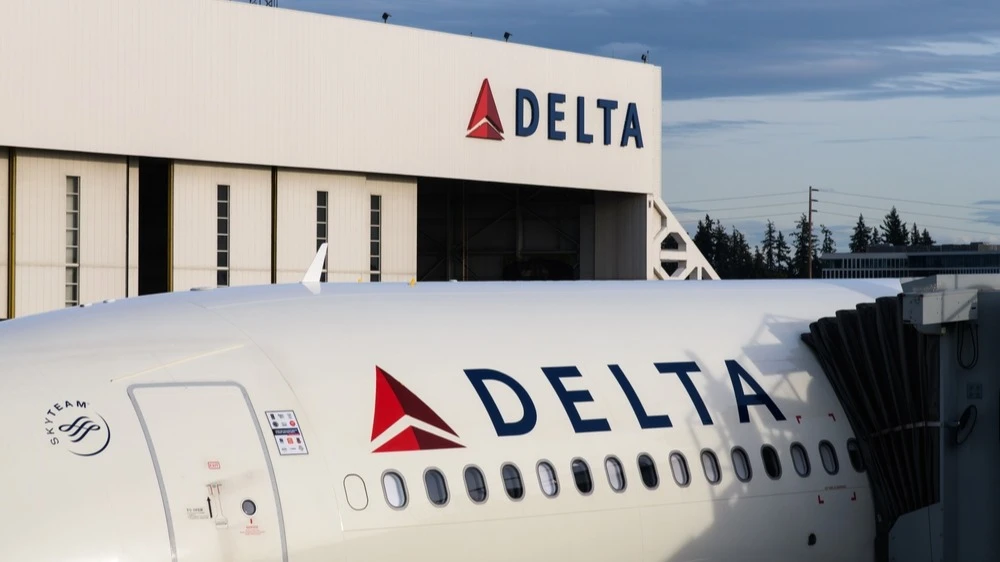
Delta holds forecast amid fuel shock and cuts capacity / Photo: Ian Dewar Photography / Shutterstock
American air carrier Delta Air Lines, the largest in the country by market capitalization, expects more than $2 billion in additional fuel costs by June due to the consequences of the U.S. war with Iran and the associated increase in energy prices. Against that backdrop, the company has scrapped capacity growth but kept its full-year profit forecast unchanged. Shares rose as much as 13% momentarily in trading on April 8, but then slowed.
Details
Delta Air Lines expects the price of jet fuel to be around $4.3 per gallon in the second quarter, increasing fuel costs by more than $2 billion from last year. Delta CEO Ed Bastian said the cost of jet fuel has more than doubled in the past 30 days, Yahoo Finance reports.
At the same time Delta decided not to adjust its annual financial forecast. At the end of last quarter, the airline predicted earnings per share in 2026 in the range of $6.5-7.5, which implies growth of about 20% in annual terms, as well as free cash flow at the level of $3-4 billion, notes Yahoo Finance.
"We are not revising the forecast given the uncertainty, so it would be unwise to make any estimates right now," Bloomberg quoted Bastian as saying. He added that the company is not abandoning its current forecast, but will be able to update it more accurately as the impact of the fuel price spike becomes clearer in the coming months.
Delta is "considering further fare increases" beyond those already imposed, Delta's CEO said. Carriers are forced to decide how much of the increased costs can be passed on to passengers through higher fares, without undermining the volume of bookings, Bloomberg noted. In the second quarter, the airline abandoned the planned increase in capacity, which will reduce supply by about 3.5 p.p. compared to the original plan, Reuters writes.
Shares of Delta at the auction on April 8 rose in price by 13% at the moment, then slowed down to 6%. The securities of other market participants were also actively growing: for example, United Airlines added 11% in price. Shares of airlines around the world rose on April 8 after U.S. President Donald Trump agreed to a two-week truce with Iran in exchange for the opening of the Strait of Hormuz - a key route for the export of oil and other commodities, notes Bloomberg.
As Delta reported
- Delta reported adjusted earnings of $0.64 per share in the first quarter, topping analysts' forecast of $0.57, according to Bloomberg. Revenue rose 9.4% year-over-year to a record $14.2 billion versus expectations of about $14.08 billion, Bloomberg reports.
- Operating income reached $652 million with an operating margin of 4.6%.
- For the second quarter, the company forecast revenue growth in the "low double-digit" percentile, operating margins in the 6-8% range and adjusted EPS of $1-1.5. The midpoint of the forecast ($1.25) is below the LSEG analyst consensus of $1.41, Reuters reports.
- That said, Delta expects pretax profit of about $1 billion despite fuel costs rising more than $2 billion in the second quarter.
What the analysts are saying
Delta Air Lines became the first major U.S. airline to report for the quarter, so it is seen as an indicator of the state of the world's largest aviation market, according to Bloomberg. The absence of an updated forecast for the year emphasizes how volatile the situation in the industry has become, the agency said.
"The conflict with Iran has turned the airline industry upside down, with fuel costs more than doubling at a time when demand, by contrast, has started to recover," according to Melius analysts led by Conor Cunningham and quoted by Bloomberg.
TD Cowen analyst Tom Fitzgerald said additional revenue streams - including premium transportation and loyalty programs - continue to grow and Delta's second-quarter results confirm the resilience of its business model. His opinion is cited by Reuters.
Wall Street is generally positive on the company's stock, with 25 of the 28 analysts covering Delta Air Lines advising to buy it. Three are neutral and recommend to keep them in the portfolio.
This article was AI-translated and verified by a human editor