Shake Shack: From a Park Kiosk to a Global Chain. What Will Be the Next Driver of Growth?

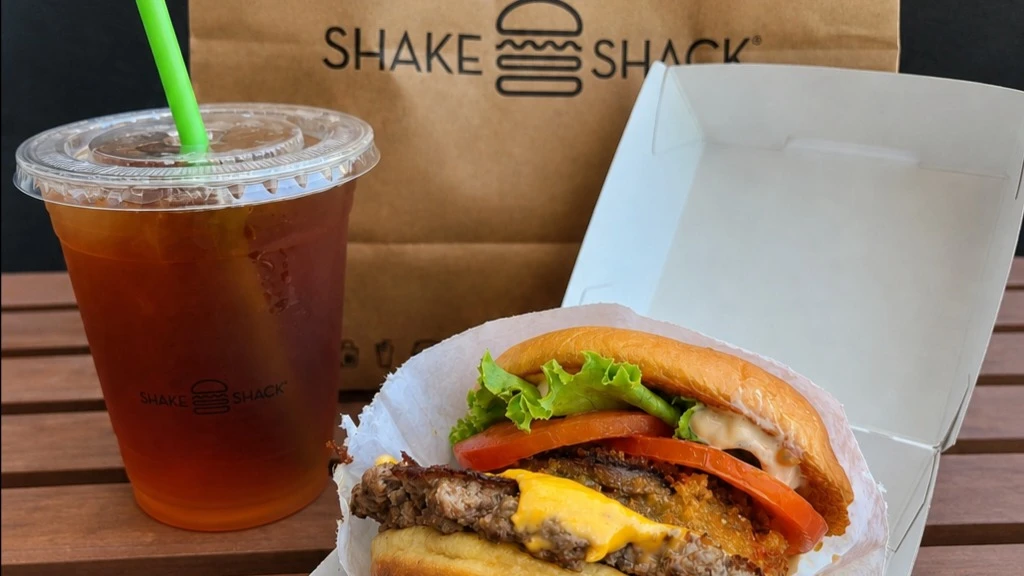
Shake Shack started out as a hot dog cart in Madison Square Park and was not originally intended to be a restaurant chain / Photo: Hology Interactive / Shutterstock.com
Shake Shack started as a small kiosk in a New York City park, and today it is a chain with more than 700 restaurants worldwide. Now the company has set a new goal: to significantly increase the number of locations while competing with budget fast-food chains, all while maintaining quality. Shake Shack’s shareholders include BlackRock, Vanguard, and Ken Griffin’s Citadel. In August, they were joined by the activist fund Starboard Value, which believes the company can grow faster and its shares can be worth more. How Shake Shack went from a single kiosk to a global chain—and how it plans to continue growing—is covered in this Oninvest article.
A menu on a scrap of paper
The founder of Shake Shack is restaurateur Danny Meyer, owner of several successful New York City restaurants, ranging from Michelin-starred establishments to more casual spots. Shake Shack traces its origins to 2001, when Meyer’s team set up a hot dog cart in Madison Square Park in Manhattan to help raise funds for the park’s revitalization. The hot dogs were such a hit that the cart remained in the park for two more summers.
Riding the wave of his popularity, Meyer secured a contract for a permanent kiosk in Madison Square, and in 2004, the first Shake Shack opened there. “We were just trying to breathe new life into the park and take a fresh look at the idea of an American burger joint,” Danny Meyer said in an interview with Forbes. “What if people could use the park the way they used to use the parking lot—just to hang out?” He described the restaurant’s concept as a combination of the casual atmosphere of the original park kiosk with the quality and service of fine dining. It’s worth noting that for this kiosk, the company prepared dishes in the kitchen of Eleven Madison Park—one of New York’s most famous restaurants, which was later awarded three Michelin stars.
Restaurateur Danny Meyer and the company’s future CEO, Randy Garutti, literally jotted down the first ideas for Shake Shack on a scrap of paper: burgers, Chicago-style hot dogs (with plenty of toppings), corrugated fries, and frozen desserts. That’s what drew customers to line up at the new restaurant. They even had to set up a webcam so fans could monitor the length of the line in real time.
Dog Cookies and Eddie Murphy
Shake Shack was not originally conceived as a chain. Meyer and his team didn’t open their second restaurant until 2008—near Central Park and the American Museum of Natural History. In an interview with Eater, Meyer shared his concerns about expansion, believing that the success of the first location was due to its prime location. The steady stream of customers at the new restaurant put his doubts to rest.
Shake Shack has added some local specialties to its main menu: near the museum, they’ve introduced a dessert called “Crunchstillation” (Crunchstillation), inspired by the planetarium, and at some restaurants with outdoor seating, a dog menu has been introduced, where a frozen dessert with peanut butter sauce and dog biscuits has become a hit.
By the end of 2010, the company already had seven restaurants in the United States, and in 2011, it opened its first international location—in one of Dubai’s popular shopping malls. In the U.S., the company mainly opened its own restaurants, while abroad it began using a licensing model, choosing high-visibility locations—this ensured high revenue and increased brand recognition. By the end of 2014, the company already had 63 Shake Shacks in nine countries.
Meanwhile, the first restaurant in the park became a New York tourist attraction, according to The Guardian; the lines became legendary, and the brand gained popularity among the general public. Successful product placement also played a role in this. In addition to appearing on popular TV shows, the company charged fees for filming at its locations. Its portfolio includes the HBO series *The Newsroom* and the films *Something Borrowed* starring John Krasinski and *Tower Heist* starring Eddie Murphy and Ben Stiller.
Red-hot IPO
In January 2015, Shake Shack went public on the New York Stock Exchange and raised $112.3 million at a price of $21 per share. On the first day of trading, the stock surged 132% from the offering price. On the day trading began, Bloomberg described the event as a “red-hot IPO.”
Forbes reported that the frenzy was driven by the “search for the next Chipotle”: the IPO of that chain, which was spun off from McDonald’s in 2006, made investors a fortune, and they were hoping to replicate that success. This was especially true given that Shake Shack had ambitious plans. In its IPO prospectus, the company stated that it could potentially expand its chain to more than 450 company-owned locations in the U.S., but did not specify a timeline.
The Papa John’s Experience
By the end of 2016, Shake Shack already had 114 restaurants. During the pandemic, in late 2021, the company began expanding into digital formats and opened its first drive-thru locations at a couple of sites in the U.S. In 2022, it became clear that the format was working well for Shake Shack: the company observed higher visit frequency among drive-thru customers, higher average weekly sales, and decided to invest in this format.
As part of its plans to move “into the next phase of growth,” the company brought in a new CEO: Rob Lynch, who had previously led the successful Papa John’s restaurant chain. In early 2025, Shake Shack announced plans to open at least 1,500 company-owned restaurants, counting on more frequent visits and optimizing opening costs.
What's happening now
For the first quarter of 2026, Shake Shack reported a 4.6% increase in same-store sales. Profit rose 14% year-over-year to $366.7 million, compared with analysts’ expectations of $372.4 million. Shake Shack’s adjusted earnings per share came in at zero, while Wall Street had expected earnings of 12 cents per share, according to The Wall Street Journal.
According to Rob Lynch, poor weather affected restaurant attendance: “The significant impact of weather conditions reduced our comparable sales by 240 basis points and negatively affected adjusted EBITDA for the quarter,” Lynch said in the presentation. Following the release of the report on May 7, the stock closed down 28% for the day. The company announced that it plans to work on improving the efficiency of its restaurants and supply chain.
In early August, it was reported that the activist fund Starboard Value had taken a new position in Shake Shack. The fund’s CEO, Jeff Smith, believes the chain could grow faster if it were to expand its franchising operations in the U.S. more aggressively. Following the news, the chain’s stock rose 12% on August 5.
On the same day, Shake Shack reported a 17.2% year-over-year increase in second-quarter revenue, to $417.6 million. Adjusted EBITDA rose 3.9%, to $61.2 million. The company opened a record 16 new company-owned restaurants and 11 franchised locations. As of July 1, the chain had 703 restaurants worldwide—406 company-owned and 297 franchised.
Shake Shack is also popular among institutional investors: its largest shareholders include BlackRock, Vanguard, State Street, and UBS. Ken Griffin’s Citadel Advisors is also among the company’s major institutional investors.
What Analysts Are Saying
Following the release of its second-quarter report, Deutsche Bank maintained its “buy” rating with a price target of $93. This is approximately 30% higher than the stock’s closing price on August 27.
Shake Shack posted strong second-quarter results: revenue and profit exceeded expectations, according to a report by Deutsche Bank analysts dated August 5 (the report is available at the Oninvest editorial office). Same-store sales rose 3.5%—better than expected, even excluding the impact of the World Cup. According to the bank’s analysts, investors may still be underestimating the brand’s momentum.
The company maintained its adjusted EBITDA forecast for 2026 in the range of $225–235 million, which had already been lowered in June due to cost pressures. According to Deutsche Bank analysts, this forecast was generally in line with market expectations.
BNP Paribas reported a nearly 30% increase in sales through its app (the report is on file with the editorial office). The bank’s analysts reaffirmed their “Outperform” rating (recommending a buy) and raised the price target from $77 to $81. In their view, the company has “long-term margin expansion potential,” even given rising beef prices.
Jefferies analyst Andy Barish lowered his price target for Shake Shack shares from $76 to $66, while maintaining a “Hold” rating. He notes that comparable sales rose 3.5% versus a forecast of 2.5%, and EBITDA exceeded expectations. However, Jefferies believes that rising beef prices continue to put pressure on margins (the August 6 report is on file).
Since the beginning of the year, Shake Shack’s stock has lost about 13% of its value. According to Marketwatch, analysts’ opinions on Shake Shack’s stock are split: 14 analysts recommend buying the company’s stock, while 13 recommend holding it. There are no sell recommendations. The average price target is $81.73, which implies a 15.8% increase from the closing price on August 27. The highest target—$126 from Loop Capital analysts—means the stock could rise another 80%.
This is not intended as individual investment advice.