Small-Cap Highlights: Cancer Vaccine, BellRing Forecast, Russell 2000 Outperforms S&P 500

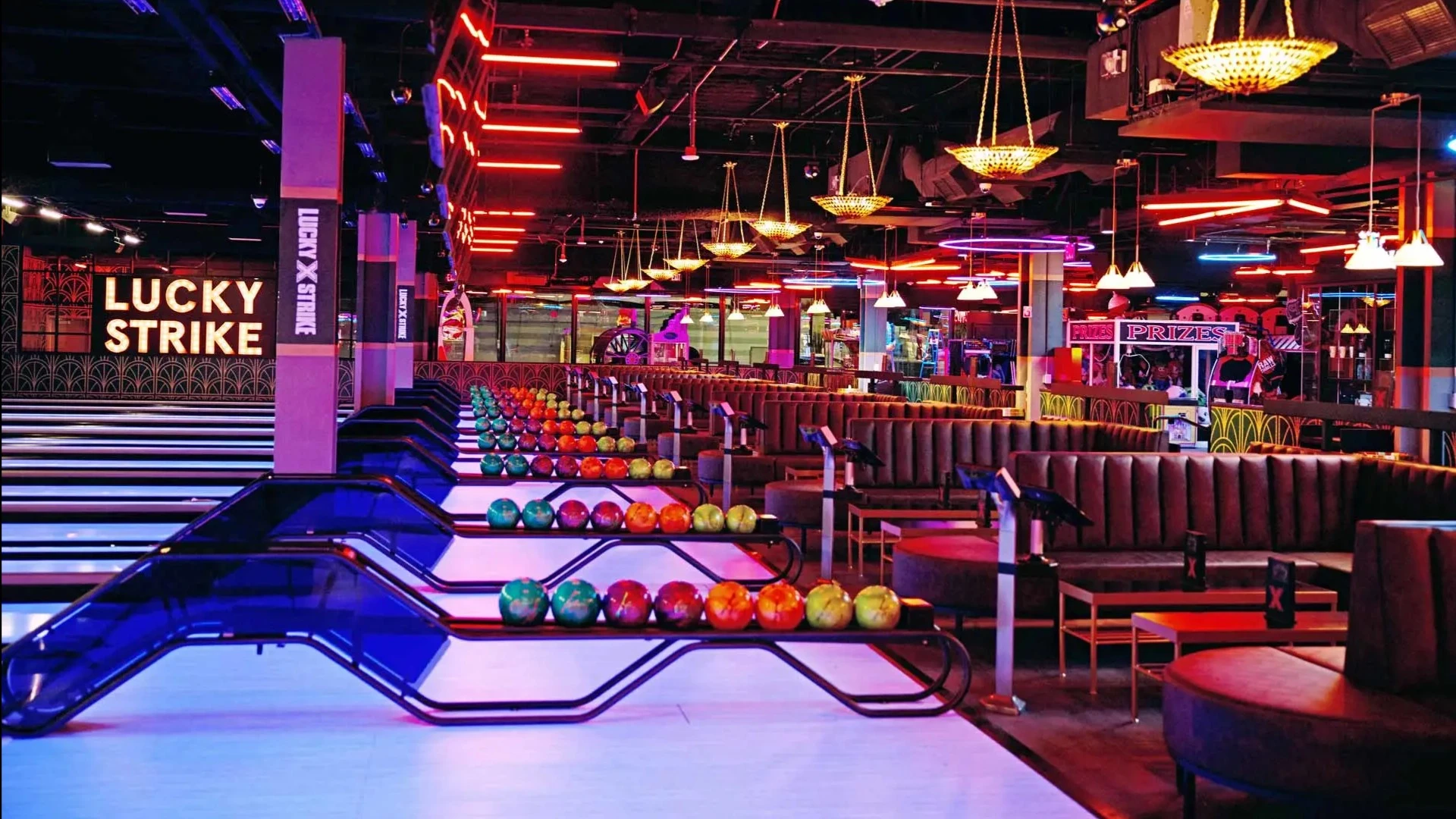
Lucky Strike Entertainment, which operates bowling alleys, may go private and delist from the stock exchange / Photo: www.luckystrikeent.com
Sellas Life Sciences announced that its experimental vaccine for acute myeloid leukemia has met the primary endpoint of its Phase 3 trial. The founder of Lucky Strike has proposed buying out the company’s shares and taking it private. Protein shake maker BellRing Brands released its earnings forecast. Year-to-date, the Russell 2000 index has outperformed the S&P 500, the Nasdaq Composite, and the Dow Jones. Highlights from the small-cap market for the week of November 16–20 are featured in the Oninvest digest.
Small-cap stocks have outperformed the S&P 500 since the beginning of the year
At the close of trading on November 19, the Russell 2000 was up 7% year-to-date, outperforming the S&P 500 (+4.8%), the Nasdaq Composite (+2.7%), and the Dow Jones (+2.2%). Barron’s believes that small-cap companies, especially value stocks, can help diversify a portfolio: the iShares Russell 2000 Value ETF gained 15.5%, compared with 5.5% for the growth stock fund. However, Georgy Timoshin, a senior analyst at Freedom Finance Global, warns that high interest rates remain a risk for small-cap stocks, and the outperformance of defensive stocks is not in itself a reason to increase their weight in a portfolio. Read more in this Oninvest article.
The Sellas vaccine has improved survival rates among leukemia patients
Shares of biotech company Sellas Life Sciences surged 156% on November 17 following the release of results from a blood cancer vaccine trial.
The company's drug, Galinpepimut-S (GPS) was tested in patients with acute myeloid leukemia who had entered their second or subsequent remission following treatment and for whom a donor stem cell transplant was not an option. According to the primary results of the Phase 3 trial, the vaccine reduced the risk of death by 41%. The median overall survival was 24 months, compared with 14.7 months with the best available treatment.
Sellas plans to discuss the next steps in the registration process and the possibility of an expedited application with the FDA. The company expects to hold this meeting and continue preparing the documentation in the first half of 2027.

The founder of Lucky Strike offered to buy out the company
Shares of Lucky Strike Entertainment, an operator of bowling centers and water parks, jumped by about 26% on November 17, to $4.17. The day before, the company announced that its founder and CEO, Thomas Shannon, had offered to buy back Class A shares not owned by him and his partners at $4.35 per share. This is 31% higher than the closing price on November 16.
The Board of Directors intends to establish a special committee to review the proposal. Under the terms of the proposal, it must also be approved by a majority of shareholders not affiliated with Shannon. If the deal goes through, Lucky Strike will become a private company and delist from the stock exchange, but will continue to operate. The proposal is preliminary and may be withdrawn.
The proposal came amid weak comparable sales and a loss. Lucky Strike’s revenue in the first fiscal quarter (ended September 27) rose 3.5% year-over-year to $302.6 million, but same-store sales fell 2.6%. The net loss widened to $25.7 million from $13.8 million a year earlier. The company attributed the pressure on certain business segments, in particular, to a decline in consumer spending.

BellRing released its forecast for fiscal year 2027
Shares of protein shake maker BellRing Brands rose 24.07% on November 18 following the release of its earnings report and outlook for the new fiscal year. Fourth-quarter revenue increased by 6.8% to $692 million, compared with the approximately $658 million expected by analysts. A 14.9% increase in sales volume offset an 8.1% decline due to lower prices and changes in the product mix.
For fiscal year 2027, which ends in September, the company expects adjusted EBITDA to range from $310 million to $350 million—a 7–21% increase over the previous year’s result ($288.8 million). BellRing also plans to achieve at least $100 million in gross savings over three years through supply chain optimization.
The company attributes its growth potential to increased sales of cocktails at neighborhood stores and new products, including a carbonated protein drink.