Spanish stocks are among Europe's top performers. What to watch as Spain votes.
A change in government could reshape tax policy and energy regulation

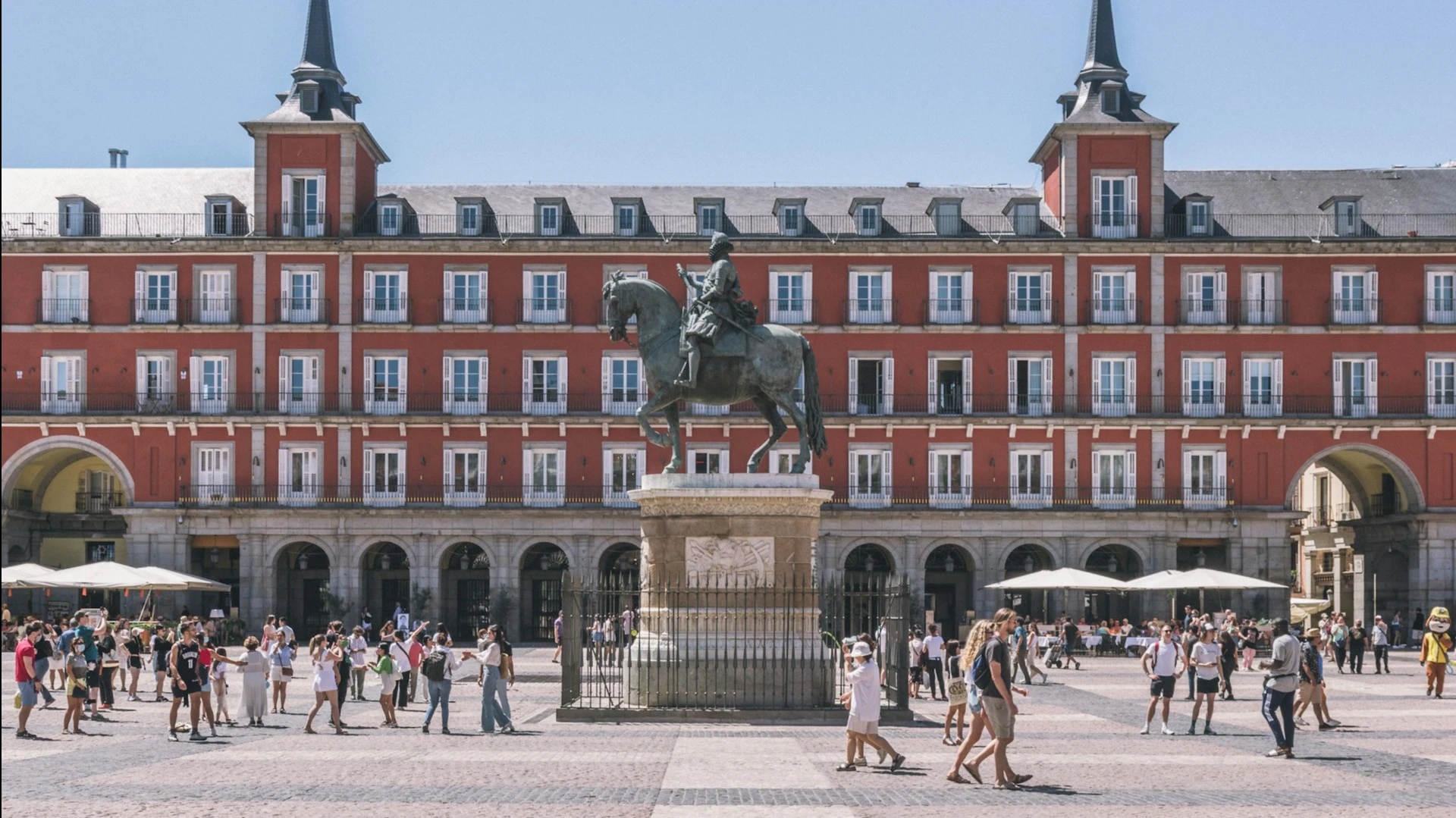
Spain could see a change in government after the upcoming parliamentary election / Photo: Unsplash / Kristijan Arsov
Spain holds a general election on Sunday, November 29, that could move domestic stocks, including some of the market’s most popular sectors, Bloomberg reports. Spain’s benchmark IBEX 35 is among Europe’s best-performing indexes this year and is on track for a fourth straight annual gain.
As of Monday, polls showed Prime Minister Pedro Sánchez’s Socialists trailing the opposition People’s Party, led by Alberto Núñez Feijóo, who could form a coalition with the right-wing Vox party, Bloomberg writes.
Barclays strategists say changes in taxes and regulation could make domestically focused companies the most exposed to a change in government. A coalition between the People’s Party and Vox could strengthen the case for Spanish stocks through tax cuts and a more business-friendly agenda.

“If you have a very strong growing economy and, on the political side, you probably even have a bit more orthodoxy, and a bit more business-friendly policies, the outcome is likely to be taken positively for financial markets,” Kevin Thozet, a portfolio adviser at Carmignac, told Bloomberg.
Which sectors should investors keep an eye on?
Banks
Banks have led the rally in Spanish stocks in recent years, and their shares offer the clearest gauge of how investors view the election outcome, Bloomberg reports.
At stake is a temporary windfall tax on banks introduced in 2022. Sánchez has pledged to extend it and raise EUR1.4 billion for housing. The People’s Party plans to push for its repeal. CaixaBank, Sabadell, and Unicaja Banco are the most exposed to the levy because of their domestic focus, according to Citigroup analysts.
The vote could be especially consequential for CaixaBank, whose shares have risen more than 350% since January 2022, Bloomberg writes. The government owns an 18% stake in the bank, and Feijóo has said it would be put up for sale. “Santander and BBVA appear more insulated from potential election outcomes thanks to their international diversification,” Citigroup analyst Borja Ramirez told Bloomberg.

Energy
Spain is one of Europe’s fastest-growing renewable energy markets. Private investors have poured billions into the sector, creating excess capacity and leaving solar producers facing negative wholesale prices. Sánchez’s support for the industry through subsidies helps explain why shares of Grenergy Renovables, Corporación Acciona Energías Renovables, and Audax Renovables fell on the day the election was announced, Bloomberg writes.
A coalition between the People’s Party and Vox could prioritize extending the operating lives of Spain’s nuclear plants, according to Alantra Partners. Barclays expects clearer nuclear policy and looser regulation to benefit Iberdrola and Endesa. Renewable energy developer Solaria Energía y Medio Ambiente could benefit from rising demand for electricity from data centers, Bloomberg notes.
“The market is pricing a change in government, which would create additional demand for power from data centers and economic development,” RBC Capital Markets analyst Fernando Garcia told Bloomberg.

Data centers
Spain’s fast-growing data center sector has attracted billions of euros from Amazon, Blackstone, and Merlin Properties Socimi. The People’s Party has pledged to repeal a decree requiring data centers to meet 80% of their hourly electricity needs from renewable sources. The requirement is due to be phased in over five years, Bloomberg writes. Merlin shares fell 3.6% on the day the decree was approved. Alantra analysts call a potential change in government a “clear positive” for Merlin and Solaria, saying a new coalition would support investment in the sector.
Construction
The housing crisis was one of the main triggers for the election. A new government could change its approach to homebuilding, putting developers Neinor Homes and Metrovacesa in focus, Bloomberg points out. Metrovacesa has led the sector in 2026 with a 19% gain, while Neinor has been the top performer over the last four years. Clearer housing policy could encourage more construction, according to Carmignac’s Thozet.

Bonds and state holdings
Spanish government bonds enter the election in a position of relative strength. The yield premium on Spain’s 10-year bonds over comparable German sovereigns narrowed in January to its smallest since 2008 and remains well below equivalent French and Italian spreads.
Barclays economists led by Saadalla Nadra-Yazji see election risks as “broadly contained” because any government will likely be led by a center-right or center-left party. “Spain’s credit outlook remains supported by factors that are relatively independent of the electoral cycle,” reckons Carlo Capuano, executive director at Scope Ratings.
Investors are also watching the government’s stakes in strategic companies. Through its holding company SEPI, the state owns 10% of Telefónica and 28% of defense company Indra Sistemas. Feijóo has said he would push a future government to sell its stake in Telefónica. Indra has been through a period of turmoil over former chairman Ángel Escribano’s proposal to merge it with his family’s defense company. Indra could also be sensitive to higher defense spending. Sánchez had resisted raising spending to meet NATO targets, while Feijóo has pledged to audit public finances before committing to higher spending, Bloomberg reports.
Alantra expects less government intervention in Indra and Telefónica under a new administration, Bloomberg adds.