Software developers were considered the future victims of AI. Why was the sell-off almost entirely unaffected by them?
Investors continue to wonder who will be the winners and losers in the AI race


Chip Stocks Plummeted, Software Holds Steady: Investors Reassess the Winners of the AI Boom / Photo: Arnold O. A. Pinto / Shutterstock
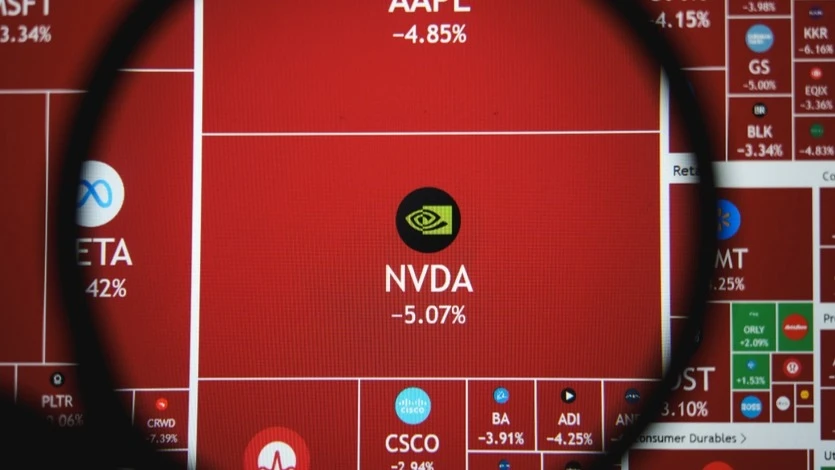
Software developers’ stocks were relatively unscathed by the tech sector’s collapse in November, according to the Financial Times. The brunt of the blow fell on semiconductor manufacturers’ stocks, which until recently had been investor favorites. Now, looking at year-to-date performance, the stocks of semiconductor manufacturers and software developers are virtually on par. Perceptions of the winners and losers of the AI boom have shifted dramatically, the newspaper notes.
Details
The S&P 500 sub-indices for semiconductor manufacturers and software developers are currently trading slightly below their levels at the start of 2026. A sharp sell-off in chipmakers’ stocks in November sent the Nasdaq 100 index tumbling more than 20% from its recent peak, pushing it into so-called “bear market” territory, while software companies’ stocks were hit significantly less hard, the FT notes. The shift came as investors reassessed who would ultimately win and who would lose out from the artificial intelligence boom, the publication says.
At the beginning of the year, investors were selling off software developers’ stocks en masse, fearing that the development of AI would undermine the companies’ business models, and were shifting their investments to chipmakers. In the second half of the year, the software sector recouped those losses.
"The attitude toward semiconductors right now is exactly the same as it was toward software six to nine months ago," said Max Uleer, head of asset strategy at Deutsche Bank (as quoted by the FT).
Who won the most, and who lost the most?
The recovery in the software sector has been selective. Shares of companies in the cybersecurity and data infrastructure sectors have outperformed the rest: since the start of the year, CrowdStrike shares have risen 72%, while Palo Alto Networks shares have risen 89%, amid concerns among regulators and investors about the risks of AI attacks and data breaches.
Large companies with broad customer bases—including Microsoft, which had initially been caught up in the sell-off—also recovered their losses: investors recognized that for companies with diversified revenue streams, AI may be not only a threat but also an opportunity.
At the same time, some software companies continue to lose market confidence— Salesforce and Adobe shares have fallen by more than 30% since the start of the year, while Intuit’s have dropped by 58%.
Institutional investors have significantly reduced their holdings in chipmakers’ stocks in recent weeks while simultaneously increasing their positions in software stocks, the FT reports, citing data from State Street. The recent U.S. midterm elections dealt a significant blow to the semiconductor sector: the Democrats’ victory in Congress and in key gubernatorial races has heightened market concerns about a possible tightening of regulations on the pace of data center construction, the FT notes.
What Analysts Are Saying
“There’s no doubt that perceptions of the software sector have changed; it used to be considered almost entirely problematic, but now there’s a clear distinction between those who will emerge as structural winners and those who won’t,” said Lawrence Jamison, co-head of Barclays’ Equity Capital Markets division for the EMEA region.
"The year 2026 became a 'game of guesswork in which investors drew rather hasty conclusions—for example, assuming that software development companies and their products would become obsolete,'" said Christine Hooper, chief market strategist at Man Group . “Over time, views changed: this theory was called into question, and ultimately, concerns began to focus on semiconductors,” she added.
“Not all software development companies are the same,” said Ben Preston, global equity strategist at Orbis Investments . “While some businesses are indeed facing upheaval, others have their own data, strong customer relationships, and specialized expertise that AI cannot easily replicate.”
According to Preston, the weakness in software developers' stocks this year may present an opportunity to "buy fundamentally strong businesses at attractive valuations."
"This year's trend reflects a return to normalcy after the previous pessimism regarding software," said Maria Weitmane, head of equity strategy at State Street . According to her, many large software companies “continue to post high profits and stable sales.”
Context
The sell-off in software stocks in early 2026 gained momentum following the release of new tools from the AI lab Anthropic, which made it easier for users to perform complex tasks in the fields of law, sales, and marketing. As the sell-off deepened, a strategy of overweighting semiconductors while underweighting software became one of the most popular strategies among hedge funds at the start of the year, according to the FT.
This article was AI-translated and verified by a human editor