Storonsky: “Our American dream is to build a company on par with Google or OpenAI”
Revolut's Founder on Lessons in Trading, Artificial Intelligence, and a Plan B for Entrepreneurs

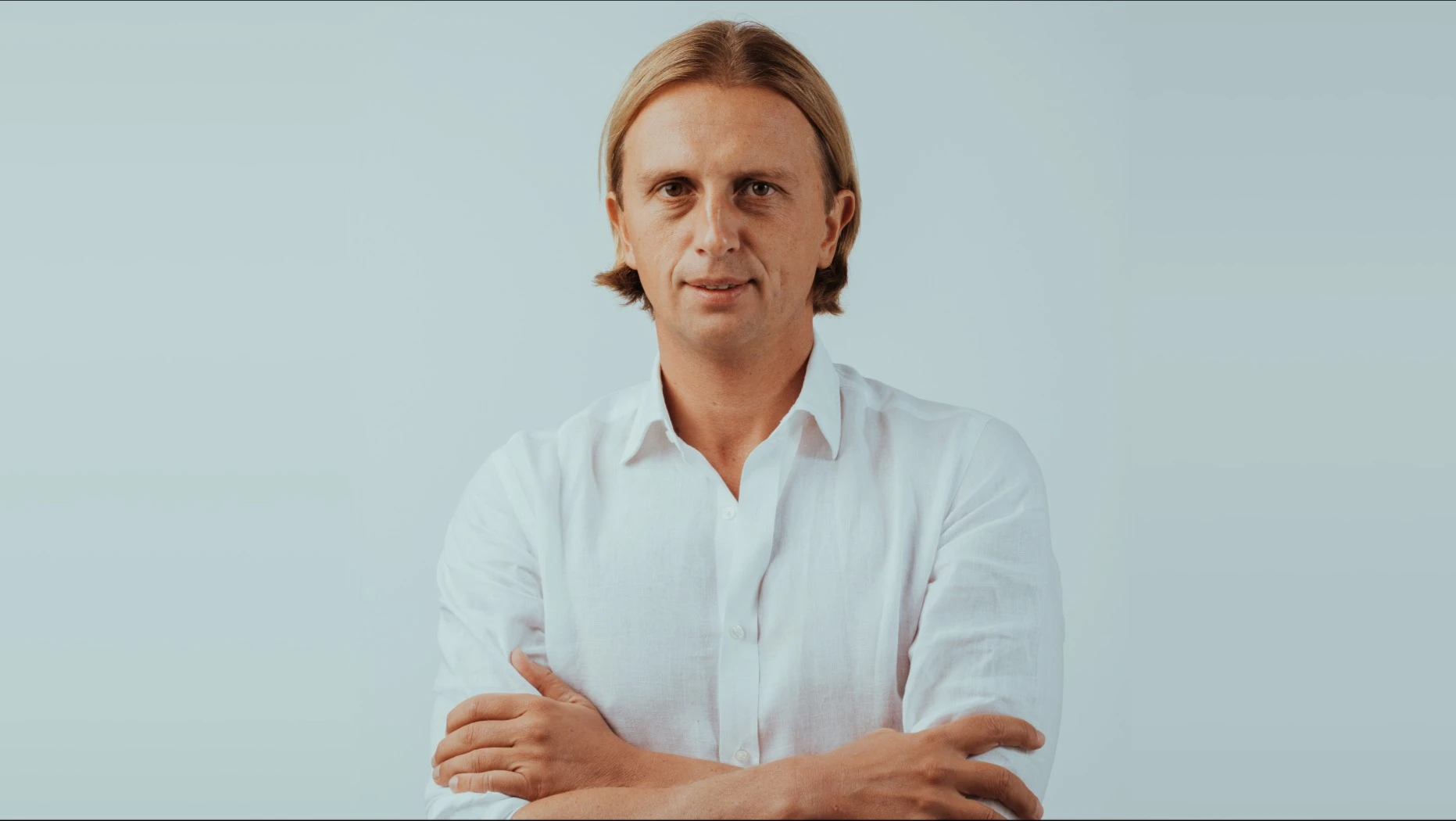
Revolut founder Nikolai Storonsky considers the U.S. market a huge prize for any entrepreneur / Photo: Revolut
Revolut’s goal is to become a global technology company on par with Meta, Google, Anthropic, or OpenAI, said Staronksy, founder of Revolut—Europe’s most valuable startup—at the Wave by Vento forum in Turin on October 9. Oninvest has compiled the highlights of his speech.
On entering the U.S. market: “The U.S. is the very embodiment of capitalism. If you’re a company founder in Europe, you’re essentially playing a certain game. And to succeed in the U.S. means to succeed in capitalism in its homeland. The American market is a huge prize for any entrepreneur. Our American dream—though in this case it would be more accurate to call it a European one—is to create a global technology company on par with Meta, Google, Anthropic, or OpenAI, but one that originates in Europe. Moreover, we want to focus not only on banking services but also on other technology services that improve people’s lives. We plan to develop other products as well—not necessarily financial ones, but ones that are connected to the financial sector in one way or another.”
On artificial intelligence: “I’ve never believed in multiverses. We live in the physical world, and to me, multiverses are more of a toy than something serious. But two or three years ago, artificial intelligence emerged. And this, in my view, is a revolution squared. AI is completely changing absolutely everything. I used to build all systems around people: their strengths and weaknesses, ways to compensate for shortcomings and amplify strengths. But now, with the advent of AI, we may simply have to throw all these systems out. I’m still trying to figure out how to build new systems around artificial intelligence rather than people. I haven’t found the answer yet.”
On AI at Revolut: “We’re building our own AI systems for Revolut. We already have them. We plan to add the ability to make purchases to them. You’ll be able to simply tell the AI what you want to buy, and it will find the right product across various online stores and securely complete the purchase using your protected card information. Of course, there will also be financial analytics and recommendations for managing personal finances: which stocks to buy, which to avoid, which funds to invest in, and so on. Everyone will have their own financial system capable of making purchases, investing, and providing financial advice.”
On the path to entrepreneurship: “I’ve wanted to start my own company since I was six. I was born in the Soviet Union, which later collapsed. As a child, I watched new companies emerge and dreamed of starting my own business one day. When I was 20 and finishing college, I decided to get into trading. I liked the financial markets; I liked their complexity. I thought that with my education [Storonsky studied physics at the Moscow Institute of Physics and Technology and economics at the Russian Economic School. — Oninvest], I would be able to succeed in this field. The plan was this: work as a trader for two years, and then start my own business.”
On Lessons from Trading: “Trading is very different from running a business. But I’ve learned two important lessons from it. First, I’ve become extremely cautious about risks, especially financial ones. In trading, I’ve seen all too often how traders lost everything because they took on too much risk or simply gambled. To me, financial markets have always been like a casino. And I don’t want to gamble. I’d rather own a casino or build my own so that all the traders would play there. <...> The second lesson: even if you’re a professional gambler or trader, you need to be extremely flexible. When new information comes to light, you need to be able to change course. It’s exactly the same in the market. Let’s say you opened a long position, expecting the price to rise, but the market started to fall. You must be ready to close that position immediately and open a short one—on the very same day or even within the same minute.”
On Flexibility in Business: “When you’re starting a business, you need to build everything in a very systematic way at the beginning. But once the company is up and running and you start managing it, the main challenge is choosing the right direction. And here, it’s very important to be able to pivot quickly. Today we may be moving in one direction, but if new information emerges tomorrow or it becomes clear that the chosen approach isn’t working, we need to be ready to pivot instantly and take a completely different path.”
On Plan B: “I’ve always had one thought: even if I start a company and it doesn’t work out, I can always get a job again. In the worst-case scenario, I’ll go bankrupt, but then I’ll find another job. That’s why I’ve never been afraid to start companies, launch new projects, or change direction. I think it’s very important to believe in yourself. When you start a company, it might fail. But that’s okay—you can always start the next one.”
On the role of a founder: “What is a company? Essentially, it’s a group of people striving toward a common goal. Together, they form a new organism. It has legs, arms, a brain, a heart, and blood. The founder’s task is to build this organism from a group of people and ensure it functions effectively. An analogy with an orchestra works very well here. The conductor’s job is quite similar to what company founders do—and what I do. I look at all the musical instruments and the people playing them, and I make sure everything sounds harmonious and good. As soon as I hear someone playing out of tune, I make an adjustment to restore the harmony.”
On investors: “Investors shouldn’t interfere with the company’s operations at all. Their job is to provide capital. And after that, they should leave the company alone. If the founder is good and the team is strong, they’ll solve practically any problem on their own. So there’s no need to try to help them unless they ask for it <...> It’s kind of like if you had a professional soccer team. The players take the field and play soccer. Meanwhile, the fans stand on the sidelines and start telling the professional soccer players what to do. Everyone has an opinion. But not every opinion is valuable.”
Revolut, founded just over a decade ago, was valued by investors at $115 billion this year—more than the market capitalization of the British bank Barclays and the French bank Société Générale. This year, Revolut received a full banking license in the UK, followed by one in France, and in September secured preliminary approval for a license in the U.S. The company is considering an IPO, but not before 2028.
This article was AI-translated and verified by a human editor