Suspicious oil bets amid war hit $7 billion - Reuters
Shorts in the oil market could make hundreds of millions of dollars in minutes

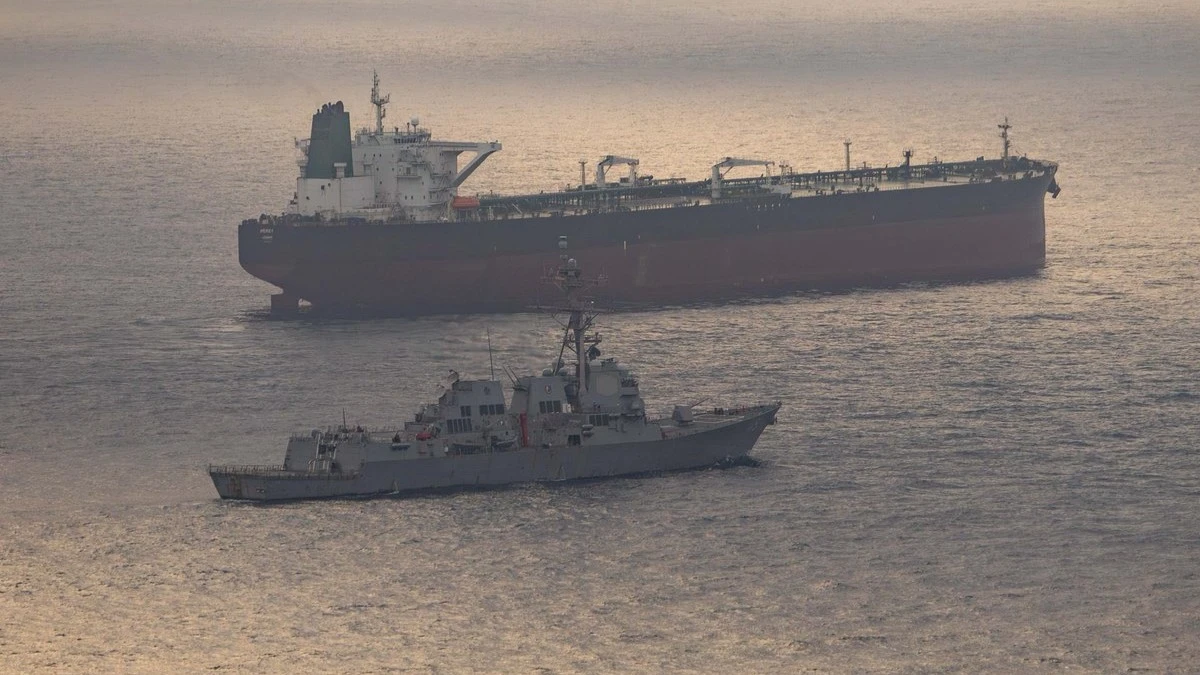
Oil prices jumped on May 8 after the U.S. and Iran exchanged military strikes / Photo: X/U.S. Central Command
The real volume of dubious bets on the fall in oil prices before the important statements of the U.S. leadership on Iran in March-April was several times higher than the initial estimate and amounted to about $7 billion, Reuters found through an in-depth study of exchange statistics. A large-scale downside play affected oil, diesel and gasoline futures on the floors of major exchanges - Intercontinental Exchange (ICE) and Chicago Mercantile Exchange (CME).
Details
Earlier, the volume of suspicious transactions in nearby futures for benchmark Marks Brent and WTI was estimated at $2.6 billion. The presence of such transactions has already forced the U.S. administration to officially warn government officials against using non-public information for enrichment purposes. However, taking into account European diesel contracts, U.S. gasoline futures and oil futures with longer maturities, the amount of bets reaches $7 billion, states Reuters.
The series of unusual deals was first recorded on March 23. In April, the scenario was repeated three times: on the 7th, 17th and 21st. In all these cases, abnormal activity on the stock exchanges occurred a few minutes before US President Donald Trump or Iranian officials announced decisions to reduce geopolitical tensions - postponement of strikes on energy infrastructure, prospects for opening the Strait of Hormuz or ceasefire - after which oil quotations collapsed by more than 10%, the agency recalls.
Reuters estimates that successful timing with $7 billion in short positions could have brought shorts hundreds of millions of dollars in profits on those four days.
Context
The insider-like deals were repeated on Ma 6: about an hour before the release of Axios' article on the preparation of the U.S. peace memorandum on Iran, contracts worth $1.7 billion changed owners. Ilya Bushuev, former president of Koch Global Partners, called what was happening "a continuation of unfair play." Phillip Nova analyst Priyanka Sachdeva added: "Investor emotions are being manipulated almost daily through news headlines."
Both benchmark oil Marks - WTI and Brent - fell by more than 7% on May 6. The next day, the decline continued as investors reacted to news about progress in resolving the Middle East crisis. However, on the morning of May 8, prices jumped again: Tehran accused Washington of violating the ceasefire. The U.S. Defense Department parried: the strike on Iran's military facilities was a response to an attempt to attack U.S. destroyers traveling through the Strait of Hormuz. Later on Ma 8, the U.S. military announced strikes on two Iranian tankers in the Gulf of Oman, which allegedly tried to break the U.S. blockade in the Strait of Hormuz. Against this background, contracts for Brent with delivery in July rose to $101 per barrel (up more than 1% from the previous close), WTI rose by 0.9% to $95.67.
This article was AI-translated and verified by a human editor