Tesla is facing a lawsuit following the death of a person after a car crashed into a house
The driver claims that the autopilot was responsible. Tesla denies this.
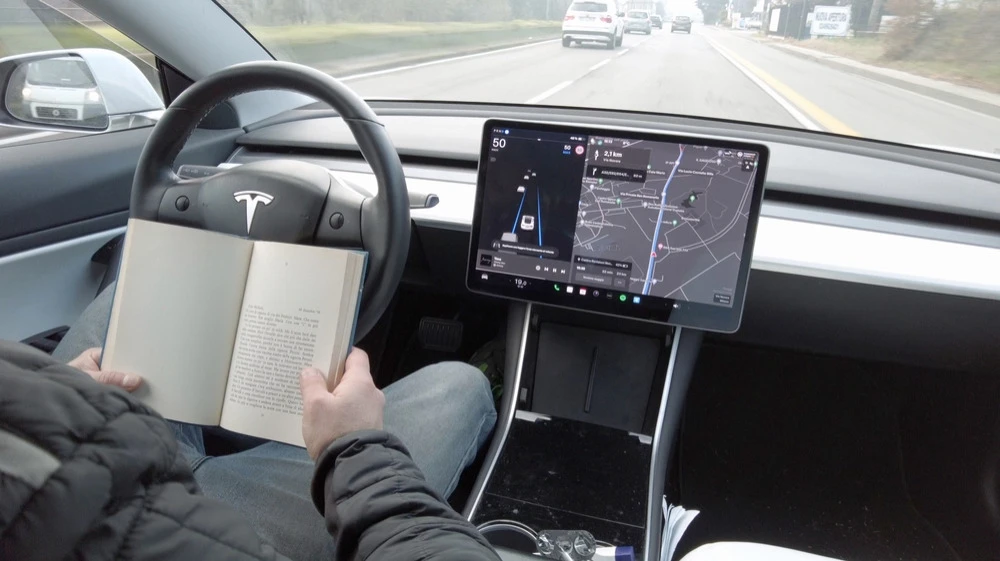
The lawsuit against Tesla alleges that Autopilot failed to recognize the end of the road and subsequently crashed into the wall of a house / Photo: DELBO ANDREA / Shutterstock.com
The family of Texas resident Marta Avila, who died last week after a Tesla Model 3 crashed into her home in a Houston suburb, has filed a lawsuit against Tesla. The plaintiffs are seeking to hold the electric car manufacturer liable for the 76-year-old woman’s death due to gross negligence and a failure to warn of defects in the Autopilot and Full Self-Driving driver-assistance systems, Reuters reports.
Details
According to the lawsuit filed by Avila’s daughter, Jennifer Barbour, and her husband, Justin Barbour, the driver of the Model 3, Michael Butler, admitted to law enforcement officials that he had activated the Autopilot system before the June 19 accident, Reuters reports. The lawsuit states that Tesla’s automated technology failed to recognize the end of the road and stop the car before it crashed into a brick house, Bloomberg reports. Avila died in the hospital, and Justin Barbour claims he was also injured.
The plaintiffs are seeking more than $1 million in damages for alleged “reckless disregard of a substantial risk of serious harm to health,” Reuters reports. The lawsuit also alleges that the company engaged in misleading marketing, Bloomberg notes.
Tesla and its CEO, Elon Musk, did not respond to requests for comment from Reuters. On June 22, Musk wrote on X that FSD “drives slowly on residential streets, but this was a high-speed crash.” Tesla’s vice president of AI and software, Ashok Elluswamy, also claimed on X that “the driver manually disabled Autopilot by fully depressing the accelerator pedal in this residential area,” but did not provide evidence to support this version of events, Bloomberg notes.
A video showing a Tesla crashing into a house at high speed was published by The New York Times. According to Elluswami, the vehicle was traveling at 73 miles per hour (117 km/h) at the time of the collision. The U.S. National Highway Traffic Safety Administration (NHTSA) is investigating this accident.
Tesla shares fell 1.6% to $375.5 during trading on June 24. They are down more than 16% year-to-date.
Context
Since 2016, the NHTSA has opened nearly 50 special investigations into accidents involving Tesla vehicles that were allegedly linked to autonomous driver-assistance systems. Reuters reports that there have been about two dozen fatalities.
In 2023, Tesla recalled about 2 million vehicles—nearly all of its models on U.S. roads—to better ensure that drivers remain attentive while using Autopilot, Reuters reports (A vehicle recall in the U.S. can simply be a remote software update without physically retrieving the vehicle from the owner). Tesla stated that Autopilot allows vehicles to turn, accelerate, and brake within their lane, while Full Self-Driving enables them to obey traffic lights and change lanes. The automaker also claimed that both technologies require the driver to be “fully attentive” and keep their hands on the steering wheel, the agency reports.
Tesla has faced more than a dozen lawsuits in which fatal accidents were linked to flaws in its technology, according to Bloomberg. The company has reached confidential settlements in several cases and, in 2023, won two trials in California. However, in 2025, a federal jury in Miami found the company partially liable for a fatal collision with a parked car and ordered it to pay a $200 million fine and $43 million in damages. Tesla plans to appeal the ruling.
This article was AI-translated and verified by a human editor