Tesla May Sell Its China Business to Merge with SpaceX — WSJ. Musk Denies This
SpaceX's Chinese subsidiary could hinder the merger due to defense contracts

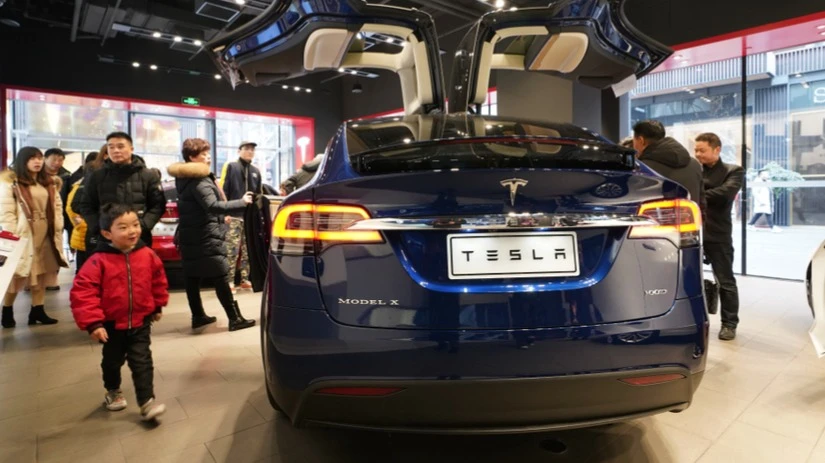
China Helped Tesla Become the Leader in the Electric Vehicle Market / Photo: B. Zhou/Shutterstock.com
Tesla is exploring ways to restructure its business in China, which could complicate its potential merger with SpaceX, The Wall Street Journal reported, citing sources. According to the sources, the Chinese division could be spun off from Tesla, sold, or shut down. Elon Musk, who heads both companies, accused the newspaper of spreading “absurd fake news.”
"Laser" Between Businesses
Due to geopolitical tensions, Musk instructed executives several years ago to structure Tesla so that there would be a “laser-sharp” line between its U.S. and Chinese operations—the two parts of the company were to be separated that clearly, according to WSJ sources. This structure was intended to safeguard at least Tesla’s U.S. operations in the event of a conflict between Washington and Beijing.
Now this structure may come in handy in a different way: several top Tesla executives have been instructed to prepare for the spin-off of the Chinese division ahead of a possible merger with SpaceX, according to the WSJ. Tesla’s management is also discussing the possibility of creating a separate sales structure for cars exported from China, sources told the business newspaper.
In recent months, Musk has spoken about the potential for collaboration between Tesla and SpaceX and has been restructuring both companies around artificial intelligence projects. However, he denies that preparations are underway to spin off Tesla’s China operations. “This issue has never even been discussed,” the entrepreneur stated on X. He called the news “a completely absurd fake story.”
Tesla shares are up about 2% in premarket trading on the Nasdaq on July 31. During the previous trading session, they rose 3.5% to $308.85. The “outperform” (Outperform), calculated by S&P Global based on estimates from 47 analysts, implies a recommendation to buy Tesla shares. The average price target of $398 per share suggests a 29% upside potential over the next year.
Defensive Barrier
A merger between SpaceX and Tesla would almost certainly draw Beijing’s close attention: Tesla’s factories in China would come under the control of a major Pentagon contractor, and their technological advancements could be used to benefit the U.S. military, according to WSJ sources. They point out that spinning off Tesla’s Chinese assets would resolve this conflict of interest by creating a barrier between them and the U.S. part of the company.
Why is China important to Tesla?
Any of the scenarios under discussion could have a significant impact on Tesla and alter its market valuation: its Chinese division has helped the company become consistently profitable and emerge as a leader in the electric vehicle market, according to the WSJ.
Tesla has two large facilities in Shanghai that manufacture electric vehicles and batteries. Their products are sold in China and exported, but not to the United States. China remains Tesla’s second-largest market after the U.S. and accounted for about 18% of the company’s sales in the first half of 2026, the business newspaper notes.
Tesla is the first foreign automaker that China has allowed to operate without a joint venture with a local company. This has helped Tesla gain a foothold in the world’s largest automotive market, where other Western brands such as Volkswagen and BMW are struggling, according to Bloomberg.
Backup Plan
Planning in advance how to handle business operations in China should circumstances change is standard practice for American companies, according to the WSJ. Starbucks recently sold a controlling stake in its regional division. Yum Brands, which owns Pizza Hut and KFC, spun off its Chinese operations from the rest of the group back in 2016, after which local investors acquired stakes in the division.
Mergers involving multinational companies typically require regulatory approval in multiple jurisdictions. In 2018, Qualcomm abandoned its plan to acquire the Dutch chipmaker NXP Semiconductors after failing to obtain approval from Chinese authorities.
This article was AI-translated and verified by a human editor