The Anthropic Case: What New Uncertainties Will Investors Have to Deal With?
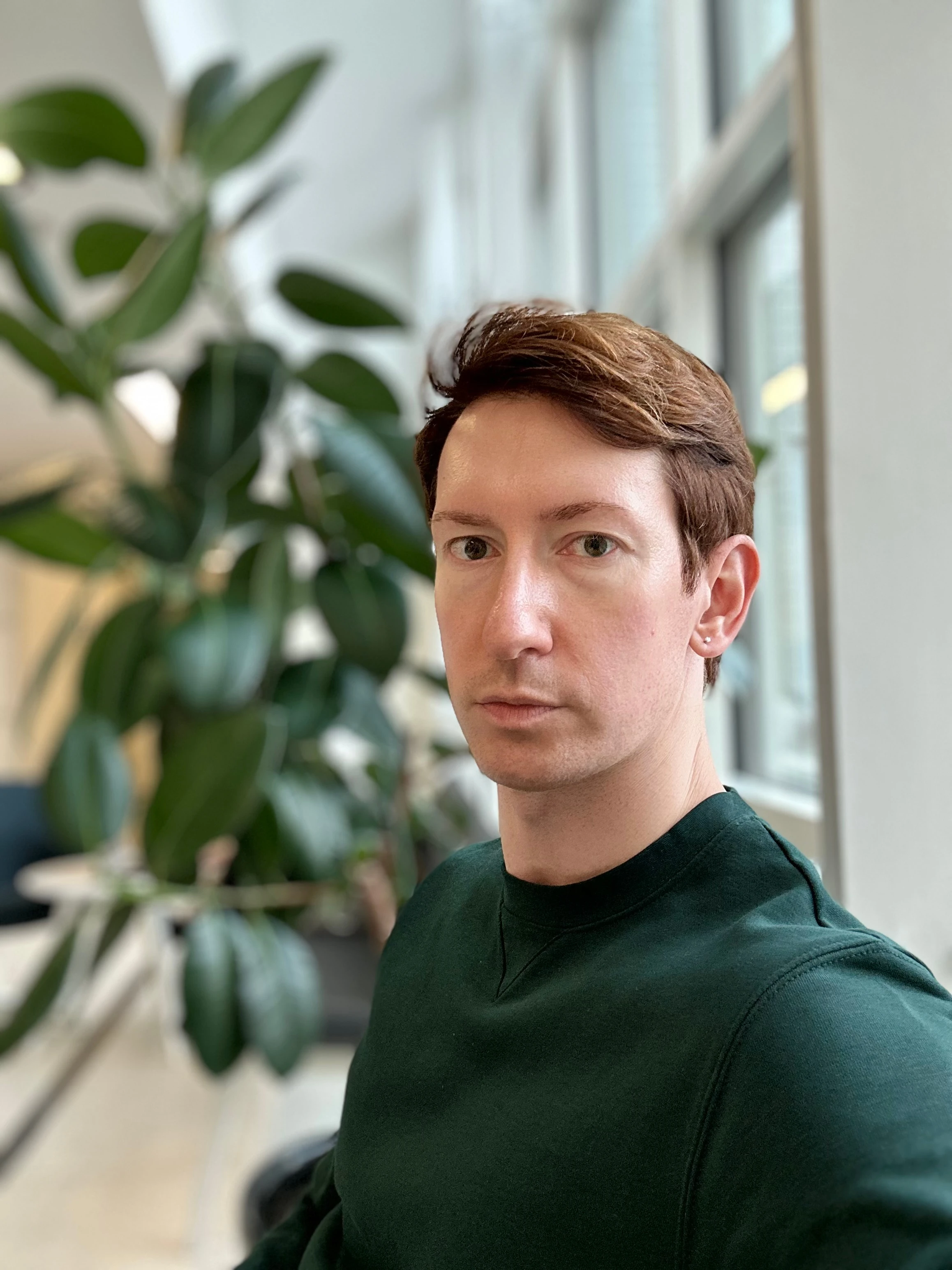
Chris Chori, head of Anthropic's international division, stated that negotiations in Washington are close to a "peace agreement," and that restrictions on Fable 5 and Mythos 5 could be lifted "within a few days." Photo: Oninvest
The American company Anthropic has disabled its flagship AI models for foreign users following a request from the U.S. government. Anthropic is planning a mega-IPO this year; during its latest funding round, it was valued at $965 billion. What message has this sent to its future investors?
What Happened
On Friday, June 12, 2026, at 5:21 p.m. Eastern Time, Anthropic received a demand from the U.S. Department of Commerce to immediately block access to Fable 5 and Mythos 5 for all foreign nationals, including the company’s own expatriate employees. Anthropic launched these two most powerful models on June 9, 2026. Claude Opus 4.8, Sonnet, and Haiku continue to operate without restrictions.
The Trump administration did not comment on the reasons behind its decision: According to Bloomberg, in a letter dated June 12, U.S. Secretary of Commerce Howard Latnik informed Anthropic that the company would need to obtain a special export license to grant foreign users access to its latest AI models. In its official statement, the company itself indicated that, in its view, the U.S. government made its decision after discovering that Fable 5 could be “hacked,” that is, its security barriers could be bypassed.
On June 15–16, Anthropic engineers met with representatives from the White House and the Department of Commerce. However, they were unable to reach an agreement on lifting the restrictions. As of this publication, Fable 5 and Mythos 5 remain unavailable.
Claude's verified users include insurance giant Allianz, the London Stock Exchange Group ( LSEG), L'Oréal, Deloitte, Accenture, KPMG, PwC, and several others.
Why did Anthropic simply shut down access to two of its models? Michael Volkov, the Volkov Law Group CEO and former former federal prosecutor, said in a comment to Oninvest that Anthropic had no system in place to identify foreign nationals working in the company, though it should have had this control in place so that they could adjust if needed to meet regulatory requirements restricting foreign national access to information. Basically that in part had made the Ministry of Trade’s requirement to make a global shutdown the only way to comply.
How is the market reacting, and what is actually happening?
Investors’ reaction to the restrictions and Anthropic’s subsequent actions can be described as subdued. In the first few minutes after news of the U.S. Department of the Treasury’s decision broke, the price of perpetual pre-IPO futures on the Hyperliquid crypto exchange fell by about 4% to $1,627. But then they not only recovered from the drop but also began to rise—the contract is now trading at $1,710.89 per token.
The rise came amid news that on June 17, Anthropic opened an office in Seoul, and the company’s head of international operations, Chris Chori, stated at a press briefing that export restrictions on Fable 5 and Mythos 5 could be lifted “within a few days.” According to him, negotiations in Washington are close to a “peace agreement.”
Forbes described the incident as a new type of regulatory risk for investors. The publication notes that this risk “must now be factored into the criteria for selecting an AI provider.” AI Weekly, for its part, warned that recurring conflicts with the government could cause investors to downgrade their assessment of Anthropic if they view this as a “structural regulatory risk.”
Michael Volkov calls what happened an “unprecedented action” taken by the U.S. government, leaving no room for proceeding, opportunity for comments and arguments. Olek Skwarczek, founder of the Multiples.vc tech valuation data platform, agrees: the U.S. government has reached past the supply chain, viz. chips, fab, equipment etc. and "switched off" a commercial model.
According to Reuters and the Washington Post, the Commerce Department’s current demands on Anthropic are the culmination of a political standoff that has lasted for months. Michael Volkov from Volkov Law Group agrees: this reflects a linger set of issues starting with the Pentagon.
Earlier this year, the Pentagon demanded that Anthropic lift restrictions that prohibit the use of Claude for mass surveillance of U.S. citizens and for autonomous weapons systems to make decisions about attacks. However, Anthropic CEO Dario Amodei stated that the company “cannot in good conscience agree” to lift these restrictions, even under the threat of having its contract with the Department of Defense terminated. Following this, the Trump administration ordered all federal agencies to stop using Anthropic’s technologies, and Defense Secretary Pete Hegset designated the company as a “supply chain threat.” Anthropic sued the Pentagon and won.
There is nothing new about Washington's actions from the perspective of the White House's current behavior, according to Mikael Gorsky, an AI researcher and lecturer at the Holon Institute of Technology.
The Ministry of Trade’s demand to Anthropic dated June 12 does not constitute a regulatory risk, since it did not arise from the legislative process, public hearings, or a regulatory act, but rather as an administrative decision by the executive branch, he says.
Regulatory risks arise when a regulator steps in and simply imposes a ban. With AI, there will definitely be no such meaningful regulation in the coming years.
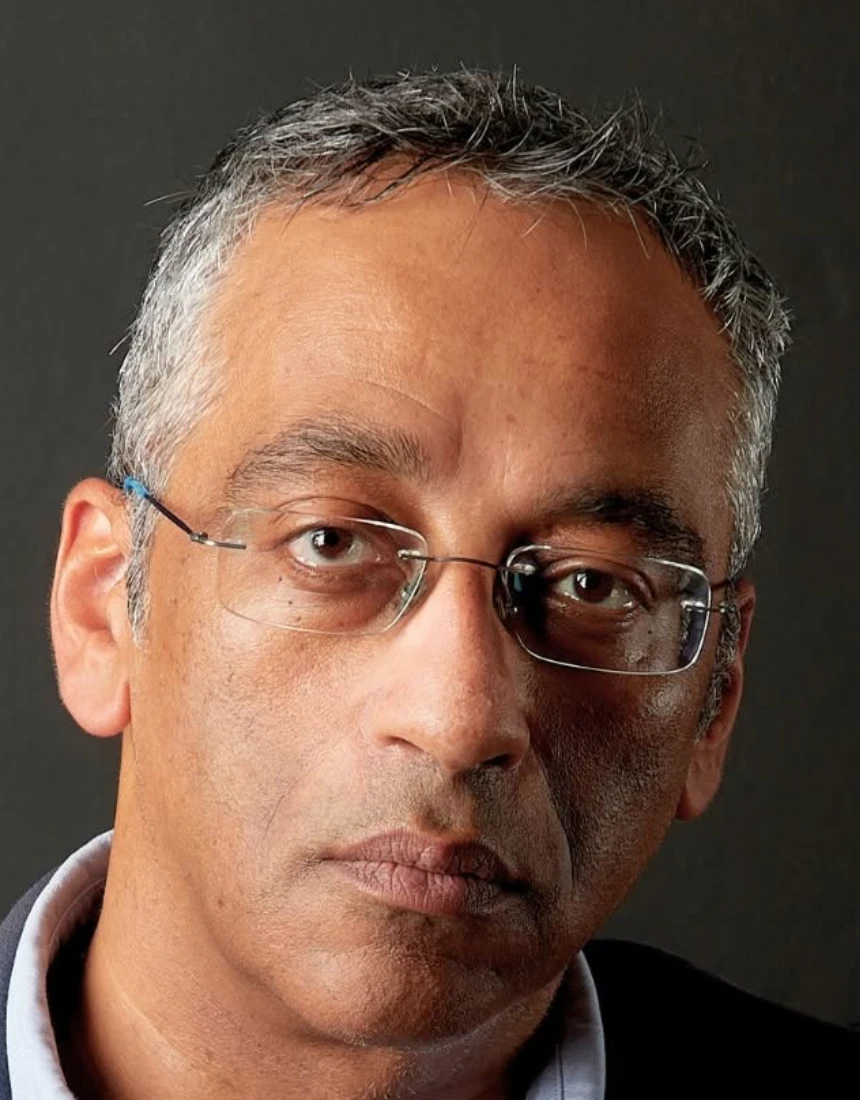
Gorsky calls what happened an example of a typical impulsive reaction by the executive branch, which institutions—courts, procedures, Congress—will ultimately bring within legal bounds, since developed democracies have a system of checks and balances for executive branch officials, and “it works,” he adds. Political risks in such countries are traditionally considered very low. In the case of Anthropic, it is also inappropriate to speak of political risks.
At the same time, Gorsky does not rule out the possibility that the administration’s actions regarding Anthropic have an electoral undertone. According to the expert, in the run-up to the midterm congressional elections, the White House is taking a hard line on issues of “AI national security,” using the high-profile case of a major private AI company as a PR opportunity for its voters.
As of the time of publication, Anthropic itself had not responded to Oninvest’s questions regarding the company’s plans in light of the U.S. Department of Commerce’s requirements.
What does this mean for investors?
Following SpaceX's IPO, Anthropic's upcoming public offering could serve as a test of investors' overall interest in companies that specialize exclusively in developing cutting-edge AI models, CNBC reported.
But now, for investors, a lot depends on whether this is a one-off incident, or not, notes Olek Skwarczek. A single action that gets reversed will hardly have much impact on the company, but an export-control posture on frontier models is a serious risk now.
AI is becoming a bit of a national-strategic resource, and labs like Anthropic are starting to look less like ordinary software vendors and more like assets a government will reach for as leverage. The current directive is the first concrete instance of that. But how that translates into multiples is premature to tell, and I wouldn't expect it to drive serious turbulence near-term.

In essence, this may be a matter of institutional uncertainty, argues Mikael Gorsky. This raises a question that, historically, has never arisen in the context of the United States: How quickly and reliably will American institutions be able to counterbalance the executive branch’s impulsive decisions in the technology sector? The speed and predictability of these checks and balances are already a matter for scenario analysis, Gorsky notes.
Michael Volkov adds that, “Washington can help a company grow and be successful and you need to maintain positive relationships with the government at every level — that is why so many companies and industries have Washington offices and maintain presence at tech seat of power”.
What about Europe?
The European Commission announced that it is “closely examining the practical implications” of U.S. restrictions on European users and warned that such measures “should not discriminate against partners.” Thomas Renier, the Commission’s spokesperson on technological sovereignty, emphasized that this case only underscores the issue of the EU’s technological sovereignty.
However, Olek Skwarczek is convinced that it is already too late for Europe to compete with the U.S. and China in the field of AI or to create a response to frontier AI labs in China or the US.: the continent lacks the capital as in America, does not have proper private markets, lacks sufficient computing capacities as well as the political willingness.
The only somewhat relevant European AI lab Mistral is incapable of competing worldwide, and should not be treated as a European sovereign asset and response to frontier AI labs in China or the US. , the expert continues.
Europe’s real leverage across the entire AI value chain lies with the Dutch company ASML, which develops and manufactures lithography systems for chips, including the world’s only EUV lithography machines.
But even this asset is fully dependent on European and Asian contracts, Skwarczek adds.