Apnimed IPO: Sleep apnea drug developer debuts on the Nasdaq
The pill is set to compete with Eli Lilly's Zepbound

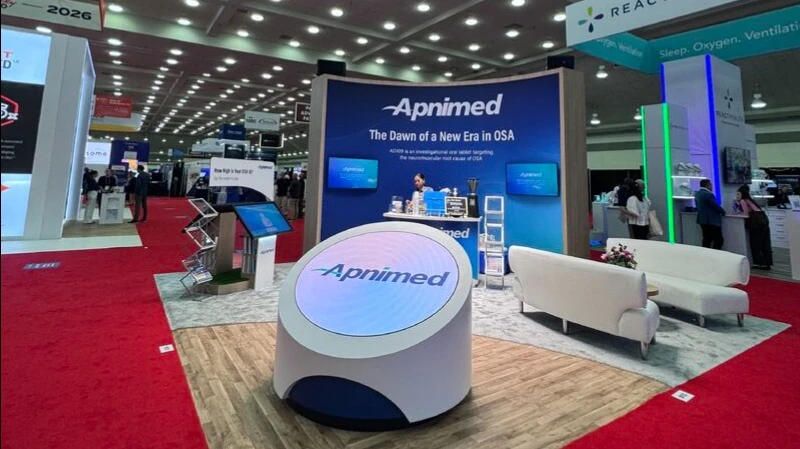
Apnimed raised $192 million in an upsized U.S. IPO, priced at the top of a marketed range / Photo: LinkedIn / Apnimed
Early trading in Apnimed, a small-cap developer of sleep apnea therapies, has started on Freedom’s trading platform (to trade, clients should click on APMD). The company, backed by Alpha Wave, an investor in Uber, Twitter (now X), and Revolut, expects an FDA decision on its drug in February 2027. If approved, it will compete with Eli Lilly’s blockbuster Zepbound, which is also used to treat sleep apnea. Apnimed stock is set to debut during the Nasdaq regular session later on Friday under the ticker symbol APMD.
Details
Apnimed, whose sole clinical product candidate is intended to treat sleep apnea, has raised $192 million in an IPO on the Nasdaq. The company sold 12 million shares on Thursday, 20% more than initially planned, at $16 per share, the top of its initially announced range of $14-16 per share. That gives the company a market capitalization of around $608 million, Bloomberg estimates.
BofA Securities, Evercore ISI, Cantor, and LifeSci Capital served as the book-running managers for Apnimed’s IPO. They received a 30-day option to purchase up to an additional 1.8 million shares.
Apnimed plans to use most of the proceeds to fund the regulatory approval process for its drug and, if approved, its commercial launch, according to the company’s prospectus filed with the U.S. Securities and Exchange Commission. Apnimed plans to use the remaining proceeds for other R&D activities, working capital, and other general corporate purposes.
About Apnimed
Larry Miller, Barry Wohl, and Luigi Taranto cofounded Apnimed in the U.S. in 2017 to address sleep apnea, a condition in which breathing repeatedly stops during sleep. The current standard treatment is a continuous positive airway pressure, or CPAP, machine, which delivers pressurized air through a mask to keep the airway open. The method is effective, but many patients refuse or discontinue treatment because of discomfort, the company stated in its prospectus.
Zepbound is currently the only drug on the market approved to treat sleep apnea, but it is authorized only for adults with obesity and must be used in combination with a reduced-calorie diet and increased physical activity.
There is currently no FDA-approved pharmacologic therapy that treats a crucial underlying cause of obstructive sleep apnea, or OSA, neuromuscular dysfunction during sleep, Apnimed stated.
Apnimed is developing just such a drug, called Oxnimbi. It combines atomoxetine, which is used to treat attention-deficit/hyperactivity disorder, or ADHD, with aroxybutynin, a novel selective antimuscarinic related to oxybutynin, which is used to treat bladder spasms. Together, they stimulate the motor neurons controlling the upper-airway muscles, preventing the throat muscles from relaxing and the airway from collapsing during sleep.
Clinical trials of Oxnimbi have been completed, and Apnimed submitted its application for U.S. regulatory approval in April. The company expects a decision by the end of February 2027.
What analysts say
Sleep apnea affects around 80 million people in the U.S. between the ages of 30 and 69, according to research conducted by Clarivate for Apnimed. However, only around 20% of people with sleep apnea seek diagnosis and treatment, mainly because frontline healthcare professionals fail to diagnose OSA. The latter may not recognize that nonspecific symptoms such as fatigue, daytime sleepiness, hypertension, and irritability are associated with the condition, BlueSleep founder and CEO Jordan Stern says.
Meanwhile, a review published in Sleep Medicine in 2024 found that only just over a third of patients with OSA are considered clinically obese, meaning that many are not eligible for treatment with Zepbound, Pharmaceutical Technology, an industry news platform, wrote.
Apnimed’s key risks include its reliance on a single product and lack of product revenue, IPO specialist Donovan Jones reckoned in a column for Seeking Alpha. The company stated in its prospectus that it has incurred significant operating losses since its inception. Its operating loss totaled $53.8 million in 2025.
Nevertheless, Freedom Finance analyst Alem Bektemirov is upbeat on the stock. Freedom Finance has a target price of $21.20 per share for Apnimed, implying 32% upside from the IPO price. The global sleep apnea devices market is valued at $10.3 billion in 2025 and projected to grow to $11 billion in 2026 and $22.87 billion by 2034, he noted, citing Fortune Business Insights.
Given the current stage of clinical development, Bektemirov expects first commercialization by 2028. However, he points out the company has yet to generate revenue, with its products remaining in development. Further regulatory requirements could delay or prevent the commercialization of some or all of the drug candidates, Bektemirov warned.
______________
Freedom clients can trade Apnimed shares before the start of the main U.S. session. Premarket trading will open 2-3 hours early, at 15:30-16:30 Astana time. To start trading, select the symbol APMD on the Freedom platform.