The Fed kept the rate on hold for the third consecutive time. This may be the last decision under Powell.
The percentage disagreeing with the decision is at its highest since 1992


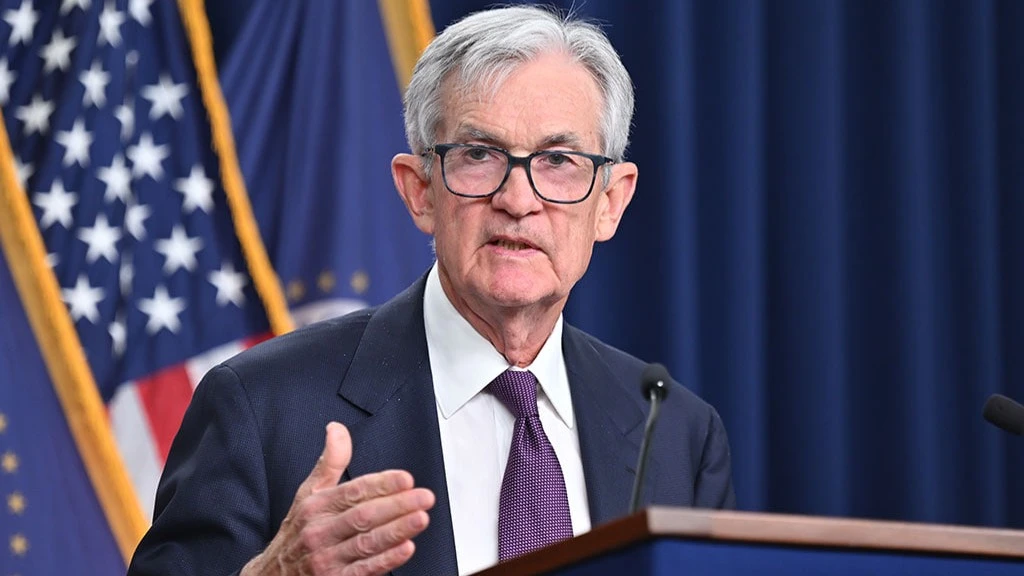
It is highly likely that the Fed made its last rate decision under Jerome Powell as chairman / Photo: X/Federal Reserve
The U.S. Federal Reserve at the end of the meeting on April 28-29 did not change the interest rate, keeping it at the level of 3.5-3.75%. This decision was made for the third time in a row, and it is fully in line with market expectations. At the same time, it was opposed by four members of the Federal Open Market Committee (FOMC), which has not happened for almost 35 years.
Details
Economic activity in the US is expanding at a solid pace, although job gains remain low on average, according to the Federal Reserve, the regulator said. "Inflation is elevated, reflecting in part the recent increase in global energy prices [...] Developments in the Middle East are contributing to a high level of uncertainty about the economic outlook," the Fed said.
The number of dissenters with the decision of FOMC members reached the maximum since 1992, notes CNBC. Stephen Miran favored a quarter percentage point rate cut, while Beth Hammack, Neel Kashkari and Laurie Logan supported keeping the rate unchanged but opposed mentioning any signals of a possible future rate cut, the Fed said. According to CNBC, they disagreed with the suggestion that the Fed would scrutinize incoming data, updated forecasts and the balance of risks when considering the scope and timing of "additional" rate adjustments. The word "additional" hints at the likelihood that the Fed's next move will be a rate cut, as the regulator has been doing just that until the current pause, the channel explained.
How the market reacted
Broad market index of U.S. stocks S&P 500 after the publication of the regulator's decision slightly accelerated the fall and declined by about 0.3%. The index of "blue chips" Dow Jones was losing 0.8%, and "technological" Nasdaq Composite - 0.27%.
Markets are largely ruling out the possibility of any rate cuts before the end of the year, Barron's notes. And the probability that the rate will not change until July 2027 now exceeds 50%, shows the CME FedWatch tool.
What about inflation
The regulator made the decision in the context of persistently high inflation. In March, the Consumer Price Index (CPI), which reflects the change in the cost of goods and services in the US, jumped by 0.9% month-on-month to a two-year high. This was the first inflation data since the start of the war in the Middle East, and the main influence on the growth of the index was the rise in energy prices. At the same time, the core CPI, which does not take them into account, increased moderately.
The Fed's preferred inflation indicator, the core PCE index, has not yet been published for March. In February, i.e. in the run-up to the Iranian crisis, it amounted to 3%, slightly slower than in January.
In anticipation of a change in Fed chief
This is likely to be the regulator's last meeting before Jerome Powell steps down as chairman - his second term expires on Ma. 15. His eight years in charge were marked by a pandemic, a surge in inflation and an aggressive rate hike cycle, Barron's recalls.
Powell's presumed successor - Kevin Warsh, nominated by President Donald Trump - could be in office by the Fed's June meeting, the Journal reports. The Senate Select Committee on Wednesday backed Warsh, so the full chamber will vote in May. Responding to questions from committee members as part of the consideration of his candidacy, the candidate for the post of head of the Fed several times stressed that he would not be a puppet of Trump, who criticizes the Fed for high rates, and did not agree with him on upcoming decisions on monetary policy. At the same time, the candidate himself has repeatedly advocated for easing and faster response of the regulator.
That's when Warsh outlined the changes he thinks the Fed needs to make. He criticized forward guidance, a tool it has used since the early 2000s to communicate the likely direction of policy. In addition, Warsh doesn't like the way the Fed measures inflation: he called the PCE indicator flawed and said new data sources should be used. Overall, he believes inflation risks have "improved somewhat over the past year."
At the same time, Worsh's ability to implement his agenda remains questionable against the backdrop of persistent inflation, rising oil prices and the increasingly hawkish bias of the Federal Open Market Committee (FOMC), says Barron's. Despite widespread support from businesses, investors and some politicians, his plans could face serious constraints - especially if the war with Iran drags on further, the publication adds.
"The question is how quickly he [Warsh] can change the Fed. Much of that will depend on how quickly the Board of Governors and the FOMC are refreshed - including whether Powell steps down as governor," Bloomberg quoted Evercore ISI analysts as saying.
The news is complemented by...
This article was AI-translated and verified by a human editor