The Fed left the rate unchanged. What to expect next?
Two FOMC members favored a quarter percentage point rate cut


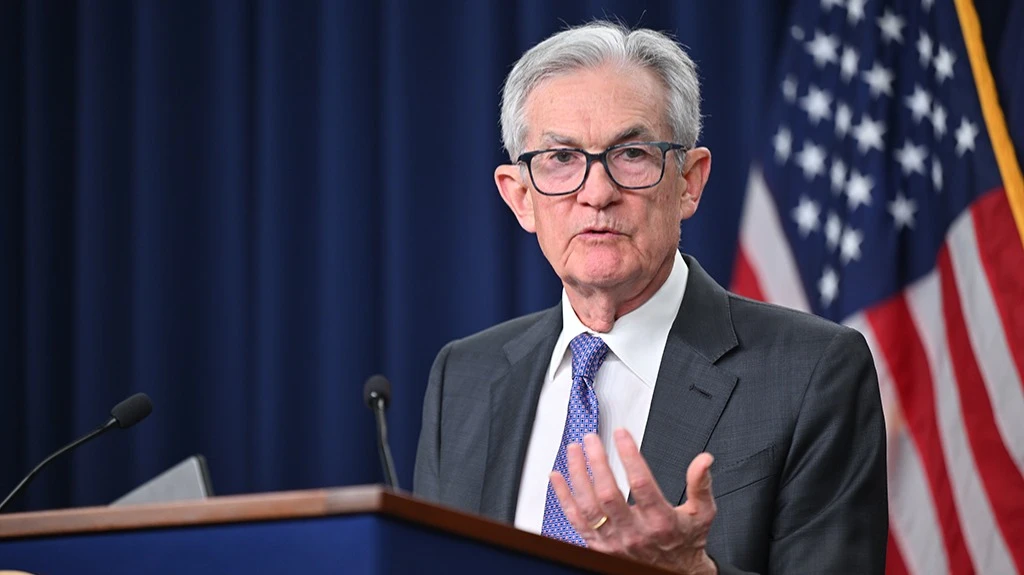
The Fed kept the interest rate in the range of 3.5-3.75 / Photo: X/Federal Reserve
The US Federal Reserve kept its benchmark interest rate unchanged after three consecutive cuts last year. Investors will now have to assess how long the regulator will keep the pause, given the political pressure from Donald Trump, the upcoming change in the central bank's leadership and expectations of a rate cut in the second half of the year.
Details
The Fed kept the rate in the range of 3.5-3.75%, according to the message on the regulator's website. The decision is fully in line with the expectations of economists and market participants.
"Available indicators suggest that economic activity is expanding at a solid pace. Job gains have remained low, and the unemployment rate has shown some signs of stabilization. Inflation remains somewhat elevated," the Fed said. Uncertainty about the economic outlook also remains elevated, he said.
Two members of the Federal Open Market Committee (FOMC) - Stephen Miran and Christopher Waller, who are members of the regulator's Board of Governors, opposed the rate cut. They supported the rate cut by a quarter of a percentage point.
"Normalizing our [monetary policy] should help stabilize the labor market while allowing inflation to resume its downward trend toward [the target level of] 2% once the effects of the duty hike have passed," Fed Chairman Jerome Powell said at a press conference following the release of the FOMC decision(quoted by Bloomberg).
How the market reacted
Investors took the Fed's decision with restraint. The S&P 500 broad market index and Dow Jones blue chip index shortly after the publication of the regulator's message declined within 0.1%, the Nasdaq Composite added 0.2%. The Russell 2000 index of small-capitalization companies was falling 0.2%. Then, during Powell's press conference, the S&P 500 and the Dow managed to switch to slight gains.
The Fed has likely begun an "extended pause" given strong economic activity and signs of labor market stabilization, Goldman Sachs Asset Management analyst Kai Hey said in a Bloomberg note. "However, we expect a resumption of [monetary policy] easing later this year as slowing inflation allows for two more 'normalization' cuts [in rates] to bring them back to neutral, according to the median FOMC view," Hay said.
"The [Powell] press conference reflected a more positive assessment of the U.S. economy, which confirms that the pause in the [monetary policy] easing cycle may be long-lasting. On the other hand, it also confirms a cyclically supportive context for the dollar, but its movement at the start of the year is not overly linked to near-term fundamentals, so upside potential may be limited and short-lived," said Bloomberg Intelligence analyst Audrey Child-Freeman.
Context
The decision to keep the rate was made amid increasing pressure from US President Donald Trump on Powell. The U.S. Justice Department in early January threatened the Fed with criminal charges over the Washington headquarters renovation project, which the Fed chief sees as an attempt to force the regulator to lower the rate. Powell at a press conference declined to add anything to his statement on the matter, made on January 11, at a press conference after the publication of the FOMC decision.
Powell has only two more monetary policy meetings to go before he steps down as Fed chairman in May. Trump said on Jan. 21 that he had narrowed it down to one nominee. He could announce a decision as early as this week, CNBC wrote. Trump's nominee must still be confirmed by the Senate.
Investors believe that the Fed will extend the taken pause at the next meetings, writes Reuters. The market estimates the probability of a rate cut in March only about 16%, follows from the FedWatch tool. If the new Fed chairman chosen by Trump proves more inclined to cut rates, the regulator could switch to a dovish policy as early as summer, MarketWatch notes. Federal funds rate futures indicate that investors estimate a 59.4% chance of a rate cut in June. The prospect of future cuts gives the Fed additional reasons to keep pausing at upcoming meetings.
At the same time, the participants of the CNBC poll do not expect a sharp easing of policy even after the change of the Fed's leadership. The consensus forecast calls for two 25bp cuts this year - a total of 50bp with no further cuts in 2027. Trump has previously called for a rate cut to 1%. With inflation around 2%, that would effectively mean negative real rates, CNBC notes.
What's important to investors
Investors are now more focused on corporate reporting and the state of the economy than on Fed decisions, MarketWatch notes.
"There is little reason for the Fed to cut rates right now," said Resonate Wealth Partners Chief Investment Officer Alex Giuliano. He said market volatility could intensify in the middle of the year - as the market adjusts to his rhetoric and the course of the new Fed chief.
Investors often attach undue importance to every word of the Fed chief, says Liz Thomas, head of investment strategy at SoFi. According to her, the Fed essentially just explains what data it relies on, what looks positive or alarming in it, and how it affects the rate decision. While other institutions make comparably accurate forecasts, the Fed's status makes investors pay special attention to it.
This article was AI-translated and verified by a human editor