The perfect black swan: what the SpaceX IPO will bring to the markets


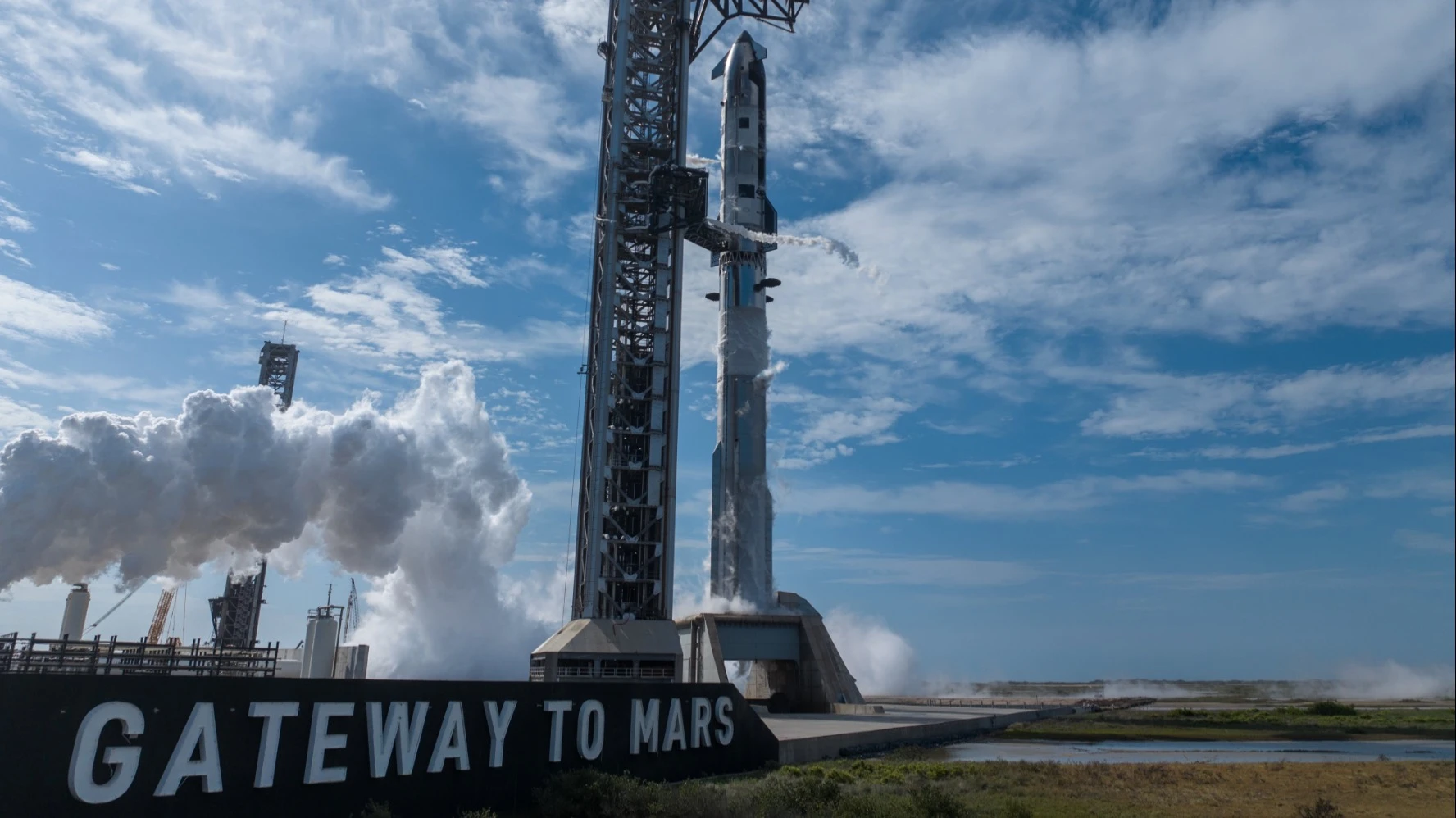
Elon Musk's SpaceX has held an IPO. In its plans - the construction of orbital data centers and the colonization of Mars. Photo: SpaceX / X
Elon Musk's SpaceX shares will start trading on Nasdaq today - under the ticker SPCX. On Thursday, June 11, the company set the IPO offering price at $135 per share. It raised $75 billion by selling 555,555,555,555 securities. The total valuation of the company amounted to $1.77 trillion. Thus, the market was offered approximately 4.2% of the company's capital. Retail and institutional investors want to invest more in the IPO than Musk is willing to sell. How to evaluate the prospects for trading SpaceX securities? Arbat Capital Advisory Services Limited (UK) analyst Alexei Golubovich and Arbat Capital analyst Denis Chigarev wrote about it. Spoiler: they do not exclude a negative scenario.
Four risks for investors
At the valuation that the creators of the beautiful (from a technical point of view) company SpaceX and the investment banks placing the shares have achieved, this IPO threatens investors and the entire market with an accelerated and deep correction.
SpaceX's entry on Nasdaq, raising a record $75 billion, is indeed a "financial-historical" event. However, for investors, this placement of funds can only be compared to "walking through a minefield".
They risk losing their money on this IPO if they don't lock in profits quickly enough (if they do, of course). And if there is a fall in the capitalization of the "new giant", it can cause a sharp "deflation of the stock market bubble". More precisely, the first phase of such a "deflation", similar to the one that took place in the summer-autumn of 2008.
Risk one - "cosmic overestimation"
Is the SpaceX IPO a path to new all-time highs on the Nasdaq or a "space bubble"? To answer this question, it is worth, first of all, to pay attention to the current "market" valuation of Elon Musk's company.
SpaceX is already valued at $1.75-1.77 trillion on IPO day, and with 2025 revenue of about $18.7 billion, the Price-to-Sales ratio is already close to 100. This level always means extreme overvaluation, and in the vast majority of cases leads to a stock drop if the company is already very expensive in absolute terms.
To justify such an advance, the company's revenue would need to grow at a multiple rate for more than a decade without a single serious failure in sales. The latter will be possible only with a combination of continuous growth in global demand for services (which is impossible when we are talking about tens of billions of dollars) and monopolism, i.e. the absence of major competitors in the United States and, for example, in China.
Risk two - the company is deeply unprofitable
For 2025 alone, SpaceX has a net loss of $4.94 billion. A huge chunk of the capital is being spent on integrating xAI (an AI startup merged with SpaceX) and on deploying a huge and still completely unrecoverable data center infrastructure for the foreseeable future.
Risk three - the illusion of AI leadership
Investors are being "sold" SpaceX as a company not only for launching rockets and putting satellites into orbit, or as an operator of the Starlink satellite network, but also for the idea of building the world's largest orbital and ground-based "AI infrastructure." But if the continued growth of companies developing artificial intelligence systems slows down and the AI bubble bursts first, it will pull SpaceX's space infrastructure business, economically unrelated to AI, with it.
Risk four - retail market
SpaceX gave retail investors, according to various reports, between a little over 20% and 30% of the IPO. In any case, this is a large share. And retail investors buy on emotion and will be the first to panic sell shares at the slightest technical or financial problems, which will cause severe turbulence.
Elon Musk retains control over more than 82% of voting rights through Class B shares. Public investors (including the largest) buy a "passenger ticket" with no ability to influence management, audit or financial discipline.
How SpaceX's fall could be the trigger for an entire market collapse
The US market is at historic highs, and SpaceX, given its size, is becoming its systemic element. As a result, a fall in the company's quotations may cause a "domino effect".
It could trigger a rebalancing of funds and ETFs tracking major U.S. indexes, including the Nasdaq-100 and Russell, adding to the pressure on quotes. The leading index providers (Nasdaq and FTSE Russell) have been unusually quick to change the rules so that SpaceX and other large companies have the opportunity to enter the indexes on an accelerated basis (weeks after listing). This will oblige index funds and ETFs to automatically buy billions of dollars worth of SPCX stock, inflating the company's weight. If SpaceX stock starts to fall, funds will be forced to sell off other stocks quickly to balance portfolios.
This may lead to a liquidity crisis at brokers due to panic among retail investors and to margin calls. The largest platforms Robinhood, Fidelity, Charles Schwab, SoFi accumulated huge volumes of orders for SpaceX from individuals. If the stock collapses even by 20-25% in the first weeks, brokers will face a wave of margin calls and panic withdrawals, which will hit the stability of the entire financial system.
xAI is part of SpaceX and provides computing power to tech companies including Anthropic and Alphabet. The collapse of SpaceX's capitalization will immediately spill over to the technology sector. The fall in confidence in Musk, the "chief technology prophet," will ricochet to Tesla, whose stock is now recovering, and pull the beneficiaries of the AI boom (Nvidia, Microsoft and others) with it.
It is important to note that in the first few days after the IPO, it will not be possible to short SPCX shares (they will not short the stock under the rules). It will be impossible to buy put options, as options on this company's shares will not be traded yet.
But "bets" on SpaceX could already be made on crypto markets before the IPO. For example, on the Binance platform it was possible to buy futures and tokenized shares during the pre-IPO period, the trading volume was more than $200 million per day. On the Hyperliquid exchange, you can buy a perpetual futures on SpaceX shares with settlement in USDC stablecoin. It is currently trading at around $176. SpaceX tokens will begin trading on the Solana platform on June 12.
Thanks to perpetual futures, it will be possible to short stocks. And in such a parallel market with a strong bias towards shorting, the cost of holding a position (funding rate) will grow. All this may indirectly signal negative expectations for the "official" market (Nasdaq) as well, showing the growing imbalance in positions.
In any case, everything related to the SpaceX IPO and its consequences is the strongest factor of uncertainty for financial markets. This is not just a stock offering, but a stress test for the entire global stock market. Too high a price of error makes this company a potential (and ideal) "black swan".
This article was AI-translated and verified by a human editor