The S&P 500 and the Dow have turned around and hit records. Is the market not afraid of a case against Powell?
Risks to Fed independence could lead to a short-term lag in U.S. markets, JPMorgan says


U.S. stocks rose on Monday, January 12, after falling at the beginning of the trading day. Three stock indices at the end of the session updated records. Investors generally ignored the attempts of Donald Trump's administration to increase pressure on the U.S. Federal Reserve, although in the morning the market had concerns about the independence of the regulator, according to Bloomberg.
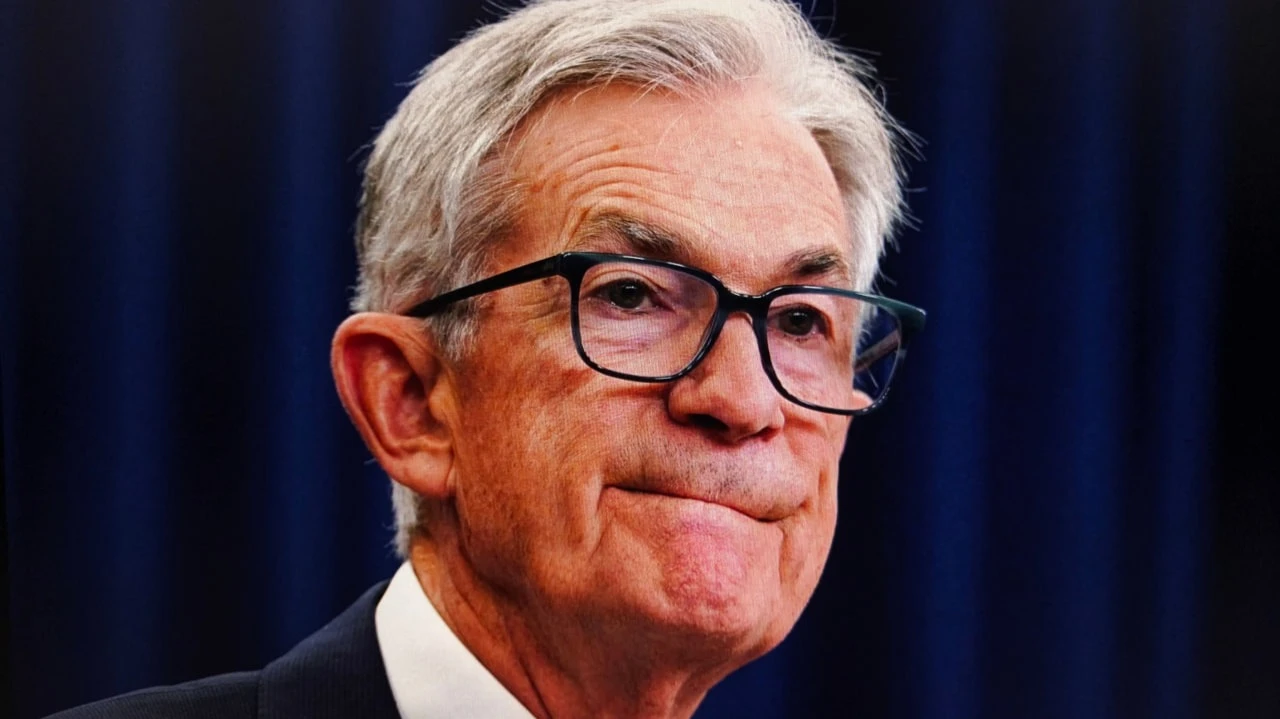
On Sunday, Federal Reserve Chairman Jerome Powell said the Justice Department has opened an investigation into him over the $2.5 billion renovation of the Fed building in Washington, D.C. Powell linked it to continued pressure from the White House. Trump has stated that he is unaware of this investigation.
Details
- The broad market index S&P 500 added 0.16% on January 12 and ended Monday trading at a new record, reaching 6,977.27 points. During the day, it went down by 0.5%, but turned around thanks to the growth of some technology securities and Walmart.
- The blue-chip index Dow Jones Industrial Average rose 0.17%, rebounding from a daily drop of nearly 500 points (about 1%). It was its biggest intraday reversal since Oct. 14, according to Dow Jones Market Data, MarketWatch reports. The index also hit an all-time high of 49,590 points.
- The Nasdaq Composite Technology Sector Index rose 0.26% after falling in the morning.
- The Russell 2000 index of small-cap stocks added 0.44% to reach a record of 2,635.7 points, indicating that the market's focus has expanded beyond the largest companies, CNBC noted .
- The yield on 10-year U.S. Treasuries rose two basis points to 4.18%, while the dollar index fell 0.2%.
- Gold futures, which are seen as a hedge against the Fed easing its independence, jumped more than 2%, hitting an all-time high. The metal rose to $4603 an ounce.
Although the Fed resumed cutting interest rates in September, the yield on 10-year Treasuries - the benchmark for mortgage, corporate and other borrowing rates - is holding steady at around 4.2%, about the same level it was at the end of 2024, before Trump took office, Bloomberg notes . That has become a source of irritation for the president, the agency writes. Last week, he instructed officials to start buying mortgage bonds, and on Monday, Jan. 12, he called for a one-year cap on credit card interest rates. This led to a fall in shares of the largest U.S. banks - JPMorgan Chase, Bank of America, Citigroup and others, as well as payment systems American Express, Visa and Mastercard.
How analysts explain the reversal
In his statement, Powell made it clear that he will continue to act without regard to White House pressure during his term as chairman, which expires in May, notes Bloomberg. This stance was welcomed by investors, as they consider the Fed's independence a key factor in the stability of the U.S. financial system. This has probably softened the effect on markets, the agency said.
- Evercore vice chairman Krishna Guha admits that the reversal of indices can be interpreted in two ways. "One: it (the Powell investigation - Oninvest) doesn't matter to the markets at all," he told Bloomberg. - The second: it matters a lot, but that's partly why investors believe this story is going nowhere and the administration will look to de-escalate. We are firmly committed to the second option." At the same time, he described what is happening in the market as, "It's definitely risk aversion."
- Monday's market reaction shows confidence that the law and the political process are strong enough to protect the Fed from pressure, agreed Daniel Ivascin, chief investment officer at bond management firm Pimco. Still, he pointed out the risks: "Markets love certainty, they love predictability and they love the key elements of the Fed's mandate - above all independence. So anything that threatens that independence (...) could have unintended consequences. To put it simply, you could end up with higher rates."
What's next?
- "Powell has always avoided making direct comments about political interference - this time he spoke off-the-cuff," Elias Haddad, global head of markets strategy at Brown Brothers Harriman, pointed out. The DOJ's actions threaten the Fed's credibility in fighting inflation and could accelerate the decline of the dollar's role as the main reserve currency, he told Bloomberg.
- The Powell investigation probably won't change the picture, suggests Tobin Marcus of Wolfe Research, as quoted by CNBC. He believes that the situation looks alarming, but it is "not necessarily enough" to trigger a major sell-off in the markets.
- JPMorgan Securities warns of implications for the US stock market in the short term. "Risks to Fed independence are likely to lead to a short-term lag in U.S. markets," the analysts said.
- A defining feature of the current market is how little its participants are paying attention to an increasingly noisy backdrop that includes geopolitics, political risk and macroeconomic uncertainty, said Nationwide's Mark Hackett.
- Economic fundamentals look strong for early 2026, and that could be enough for markets to continue rising, Jason Draho, head of Americas asset allocation at UBS Global Wealth Management, predicts, as quoted by MarketWatch. "The new year has gotten off to a resounding start - both for markets and for economic and political news. Strong gains in risk assets suggest that there is now far more noise than signals in the news flow, and investors are increasingly confident betting on accelerating cyclical growth in the economy," the analyst wrote. He noted that Trump's moves to lower interest rates could benefit investors, even if the goal of the measures is to make credit more affordable for ordinary consumers. Markets are "unlikely to quietly wind down after such a bright start to the year," Draho said.
This article was AI-translated and verified by a human editor