The Steve Jobs of the AI World: What Wall Street Is Saying About Huang's Return to Nvidia

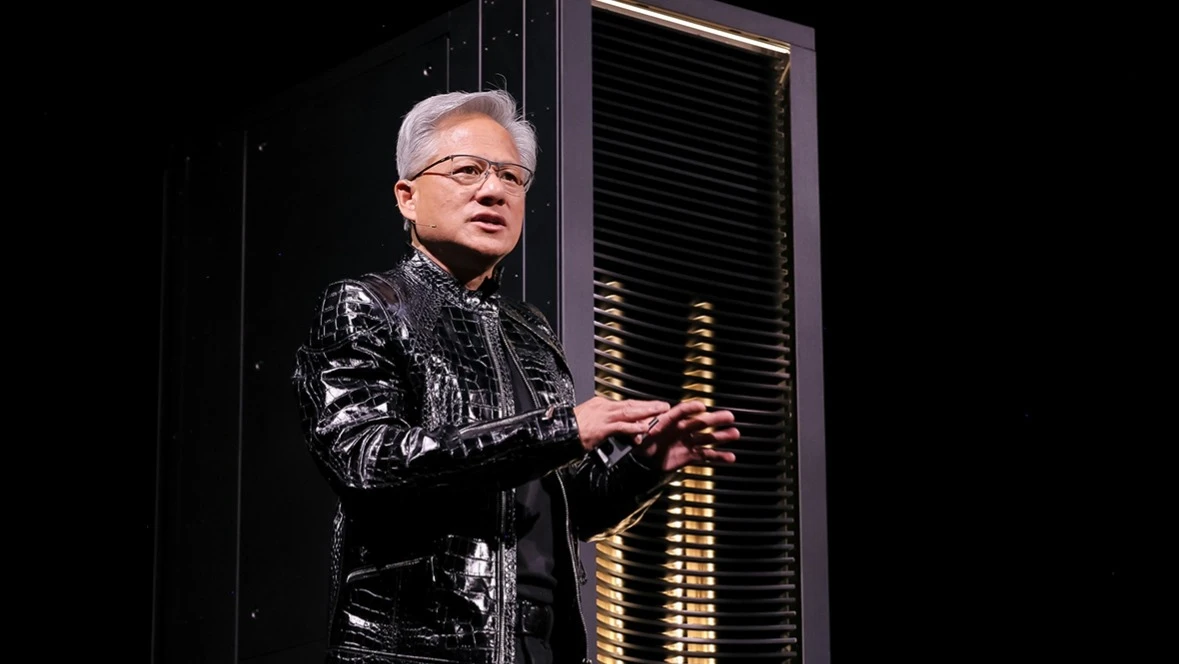
Photo: nvidia.com
Nvidia shares soared 33% during trading on November 23, reaching $169.56 per share, after the company announced the immediate reinstatement of Jensen Huang as CEO. The rebound followed a 38% plunge in the chipmaker’s stock since early November, when Huang found himself at the center of a scandal over a series of, as reported by The New York Times and Reuters, extramarital affairs—including one with a woman suspected in the U.S. of having ties to Chinese intelligence. Wall Street analysts assessed what Huang’s return to Nvidia means for the market and whether investors should buy the chipmaker’s stock.
Despite the rebound on November 23, they are still trading well below their all-time high in October—when their price exceeded $243.
What Analysts Are Saying
— “Investors were prepared for this reaction,” said Keith Lerner, chief market strategist at Truist Advisory Services, in an interview with Bloomberg: “On Friday, the market closed in a state of extreme oversold conditions, and the tech sector and semiconductors were even more so. When positions are so heavily skewed to the downside, even a little bit of good news can have a very strong effect.” “It’s like a rubber band: the more you stretch it, the more sharply it snaps back,” the analyst noted.
“People see Jensen Huang as the face of AI, as someone who has actively promoted the industry and innovation within it. So it’s almost the same as saying, ‘We have another Steve Jobs’—in a sense, and for now,” Lerner explained, referring to the market’s reaction.
— “I certainly didn’t expect this! It’s definitely a positive for Nvidia, for the AI sector, and for the markets as a whole,” Joe Gilbert, a portfolio manager at Integrity Asset Management, told Bloomberg. — “It looks like Nvidia’s stock has already bottomed out. This shows once again that it’s not worth getting too pessimistic. Now sentiment can turn constructive again. Note that the market was already signaling an uptrend even before this news, meaning we’ve reached levels where buyers were expected to step in. This creates ideal conditions for a strong rally.”
— The White House’s involvement in the decision to reinstate Huang is “unprecedented,” Gil Luria, head of technology research at DA Davidson, said on Bloomberg Television. “It’s not great when the executive branch expresses opinions about who should run private companies… But I’m not sure this is a sign that this kind of thing will continue to happen,” he said.
— “Certainly, many [in the market] wanted him [Huang] to return. It will be impossible to know to what extent the [U.S. President Donald Trump] administration intervened and to what extent shareholders did... But this tells us, to some extent, that Jensen Huang is too big a figure to be fired,” Reuters quotes Steve Sosnik, chief strategist at Interactive Brokers , as saying.
He added that he wouldn’t rush to buy Nvidia stock right now. “Clearly, the board of directors doesn’t see fit to punish Huang for his misconduct in his dealings with subordinates. Many top executives have been fired for that very reason. But the markets have decided that different rules apply to him,” he added. As for the espionage issue, the strategist believes it’s not going away. “It will keep coming up again and again for a very long time,” he said.
— “Huang’s return as CEO of Nvidia could boost sentiment across the entire AI ecosystem and restore confidence in the company’s leadership and strategy, which underpin the development of AI infrastructure,” — says Robert Schiffman, a senior credit analyst at Bloomberg Intelligence . In his view, improved sentiment could strengthen Nvidia’s ability to raise capital alongside hyperscalers, suppliers, and financial partners. This would help finance computing power, network infrastructure, power supply, and the construction of data centers for AI development, he added. “Ultimately, this should support investment in the ecosystem and alleviate one of the main constraints on the deployment of AI infrastructure.” However, skeptics are likely to remain cautious: Nvidia is still under investigation for a foreign intelligence operation targeting Huang, and broader government probes are not yet complete.”
— “The black jacket is making a comeback,” noted Kim Forrest, chief investment officer at Bokeh Capital Partners, referring to the leather jacket—a staple of Huang’s look. “For the most part, this is justified, and we’re not turning a blind eye to any of the issues that have come to light.” Her comments were published by Bloomberg. “There was that whole Sam Altman situation,” she added (in 2023, OpenAI’s board of directors fired Altman, stating that he had not “always been candid” with them and that this had hindered the board’s ability to oversee the company). “It seems the AI sector isn’t cold and dispassionate at all: there are plenty of personal conflicts, and both investors and industry employees themselves contribute to them.”
Context
Trump has personally insisted on several occasions that Huang return to lead Nvidia— stating on his social media platform, Truth Social, that this would be the best solution not only for the company but also for the country. U.S. Treasury Secretary Scott Bessent took a softer stance on Huang’s possible return to the company, MarketWatch notes. When asked on CBS News’ “Meet the Press” about his own statement that Nvidia needed a leader from “outside the company,” Bassent replied, “Well, Jensen is now from the outside.” The official suggested that the former CEO might not personally be responsible for any potential violations of export control laws. “Did this happen at the lower levels? At the middle management level? Did it reach the very top? I am confident that Nvidia’s committees are promptly investigating the situation and will provide comprehensive and detailed answers,” the secretary said.
Huang was removed from his position as CEO of Nvidia two weeks ago—following reports by The New York Times and Reuters about his extramarital affairs with female employees of the company, as well as with a woman whom U.S. intelligence suspects of working for Chinese intelligence.
This article was AI-translated and verified by a human editor