The Market at a Crossroads: How Can We Tell When It Has Bottomed Out and Is Ready to Rebound?
Three Scenarios for Investors Through the End of the Year

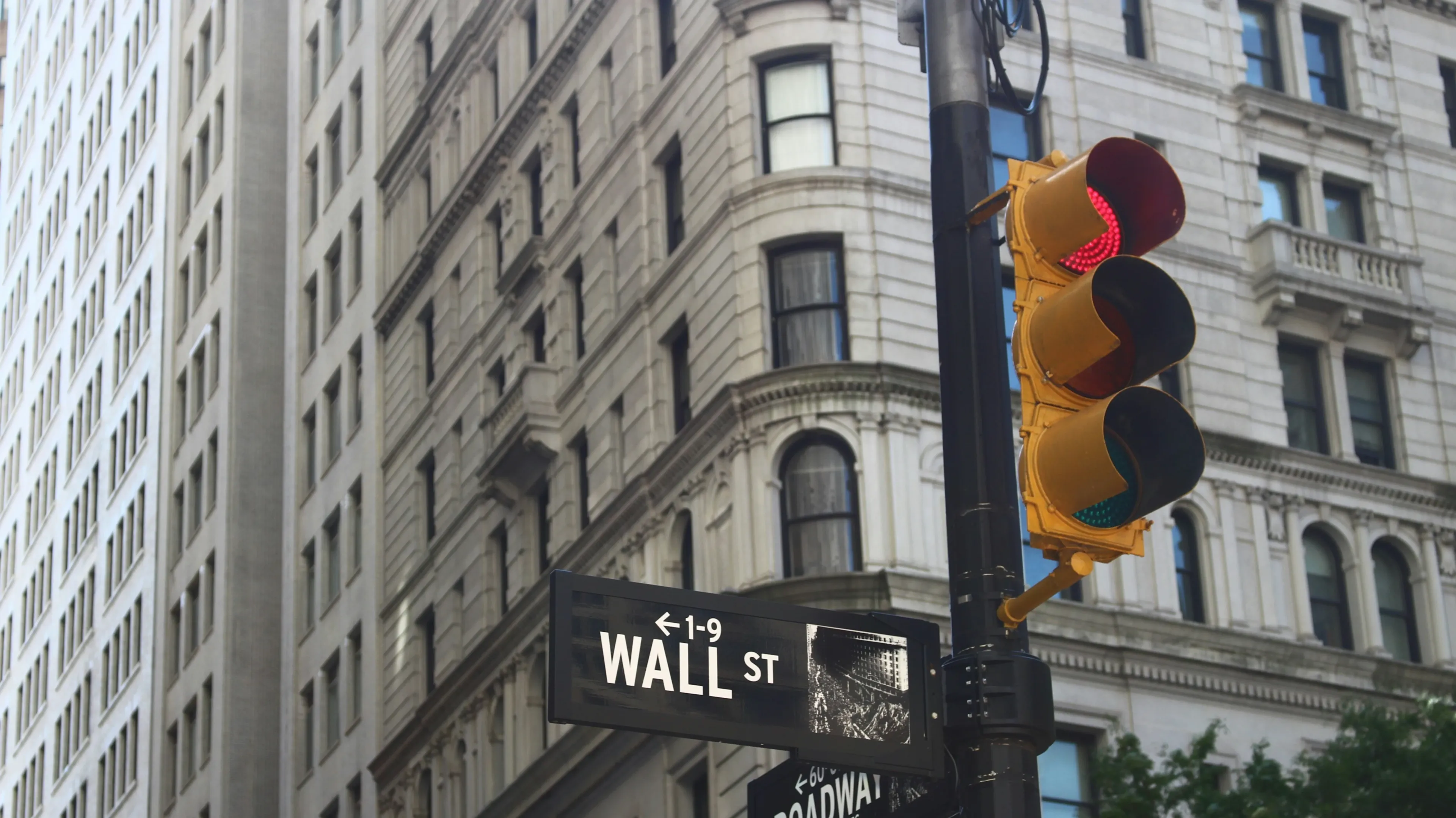
The market fell at the end of last week, but a technical rebound is possible this week. Photo: Roberto Júnior / Unsplash
Following last week’s plunge in major indices, analysts have resumed their discussions with renewed vigor about whether the market has entered a “bear” phase or if this is merely a technical correction. What events will shape stock market trends through the end of the year, and is there a chance for a pre-New Year rally? Alexey Golubovich, an analyst at Arbat Capital Advisory Services Limited (UK), provides his insights.
What's Happening in the Market
A day after Anthropic's stock market debut, the market experienced a massive sell-off.
The company’s IPO did not serve as a catalyst for a further rally, but rather as a sort of “valuation test” for the AI sector. Demand for AI assets was confirmed (the offering was oversubscribed), but investors are not yet ready to reevaluate the entire sector based on a single successful IPO. The market’s focus is gradually shifting from the pace of AI development to the economics of computing—that is, the actual return on investment in infrastructure.
A Reuters report stating that the SEC is investigating Nvidia’s accounting practices heightened investors’ concerns. On Friday, November 20, its stock fell 14% to $125, and the pressure spread to other companies in the sector: AMD’s stock fell by more than 13%, and the PHLX Semiconductor Index plummeted by nearly 11%.
On top of that, the market expects that the Federal Reserve’s Open Market Committee may raise interest rates following its December 8–9 meeting. Yields on 10-year Treasury bonds are holding steady at around 5%.
How will things unfold from here?
Two Market Camps
Renowned investor Michael Burry wrote that the current situation shares one similarity with the market crashes of 1929 and 2000: the absence of obvious reasons for the market decline in corporate financial statements. He warns that during the market crashes of 1929–1932 and 2000–2002, “there were dozens of bear market rallies.” On average, each of them amounted to about 22%.
Two main approaches can be identified in assessments of the market outlook through the end of the year: a cautious one, which anticipates a continued correction, and a moderately optimistic one, which expects a recovery in the near future.
On November 20, Burry announced that, among other things, he had halved his positions in Nasdaq-100 put options and reduced his positions in Nvidia put options by half. It is noteworthy that earlier that morning, he had stated his intention to hold onto his Nasdaq-100 put options, but just a few hours later, amid a market crash, he changed his mind. But this should not be interpreted as a signal that the market has bottomed out: the investor still expects the AI hype to cool off.
Nevertheless, profit-taking on “bearish” positions following a significant market move suggests that even skeptics view further accumulation of short positions as less attractive in terms of risk-reward ratio. The closing of such positions, in turn, could serve as an additional source of technical rebounds.
— Conservative and “bearish” estimates
A number of analysts believe that the decline in technology stocks and stock indices is not yet over. Technical indicators do not yet confirm that a solid bottom has formed. The Stock Trader’s Almanac believes that a bottom will most likely be reached in mid- or late December, although this does not rule out a subsequent “Santa rally.”
BofA and a number of other market participants expect the market to bottom out no earlier than early 2027. Any periods of recovery prior to that will not necessarily indicate that the correction has ended.
— Moderately positive assessments
Fund managers surveyed by Reuters continue to believe in the long-term AI trend. For example, Lawrence Gillum, chief bond strategist at LPL Financial, described the current situation as a technical correction rather than the bursting of the AI bubble. Meanwhile, Michael Monaghan, a portfolio manager and partner at the investment firm Founder ETFs, believes the market is currently operating on a “sell first, ask questions later” basis.
Seasonality remains an additional argument in favor of a future recovery: historically, the fourth quarter is considered the strongest period for stocks—fund managers seek to improve their portfolio composition and report attractive year-end results, while investors close out some of their short positions. In December, market participants realize losses on stocks to reduce their taxable income, which puts additional pressure on securities that have already fallen in price. However, once these tax-related sales are complete, a recovery often begins.
This year, all hopes are pinned on the “Santa Claus rally,” which traditionally takes place from December 24 to January 5. During this period, the market may receive additional support following the completion of tax-related selling and the closing of short positions.
Three Scenarios for Investors
Base scenario: volatility with retests of lows.
The most likely scenario appears to be a combination of a short-term recovery followed by a decline. The market’s oversold condition (evidenced by a “fear index” level above 35 and seven consecutive sessions of decline), as well as profit-taking by investors who opened short positions, could trigger a technical rebound this week. This scenario is supported by the fact that Nasdaq-100 futures jumped in price on November 23.
However, pressure on the market is likely to return in the first half of December.
Among the reasons for this are the hearings on Nvidia held by three committees of the House of Representatives, featuring the company’s former CEO, Jensen Huang, and its general counsel, Tim Teter. The outcomes of these hearings could once again bring regulatory and other risks facing the AI sector to the forefront.
In addition, the Fed will announce its interest rate decision on December 9. Broadcom’s earnings report is expected on the same day, which will serve as an indicator of demand for AI infrastructure. The beginning of December also coincides with tax-loss selling. A local low may form in the middle of the month, after which a moderate “Santa rally” cannot be ruled out.
At the same time, it is important to note that the market crash will cause the Thanksgiving sales season to falter, which will slow economic growth and ease inflationary pressures; as a result, the Fed’s rate hike may turn out to be the last in this cycle. In other words, there will be a so-called “dovish hike,” which will trigger growth in stocks, gold, and government bonds (“positive scenario”).
Year-end targets under this scenario: S&P 500 — 6,700–7,150 points, Nasdaq Composite — 21,500–23,500 points (a brief close below the “bear market” threshold cannot be ruled out).
Negative scenario — a confirmed “bear” market.
I estimate the probability of this scenario at 20%. For this scenario to play out, macroeconomic conditions would need to deteriorate further and corporate risks would need to intensify. Higher-than-expected inflation figures (data to be released on November 25) could prompt the Fed to raise rates by 50 basis points at once or to send a strong signal that monetary policy tightening will continue in 2027.
At the same time, the SEC’s investigation into Nvidia could lead to more serious questions about the need to revise its financial statements. Additional negative factors will include funding problems for neo-cloud companies and difficulties in securing loans for AI projects. This could trigger forced position reductions.
In this case, the Nasdaq Composite could settle within the 19,800–21,500-point range, which represents a 22–28% decline from its peak.
The positive scenario: the pessimists give in, and the market rebounds in a V-shape.
I estimate his chances at 30%.
For this scenario to play out, it will require a combination of favorable macroeconomic data and a reduction in corporate risks. All of this assumes that U.S. inflation will come in lower than expected, the Fed will limit its rate hike to 25 basis points and signal a subsequent pause, and the Nvidia hearings will proceed without any significant negative consequences.
As a result, investors will begin to close out their short positions and return to the now-cheaper stocks of hyperscalers and semiconductor companies.
In that case, the S&P 500 could return to the 7,150–7,450-point range, while the Nasdaq Composite could rise to 23,500–24,800 points.
In all three scenarios, it is important to remember that risks within the technology sector are unevenly distributed, so the recovery will be uneven.
Semiconductor and memory manufacturers (Nvidia, AMD, Broadcom, Micron) represent the most volatile segment. Regulatory risks surrounding Nvidia are heightening uncertainty in this sector. A sustained reversal in this sector is unlikely ahead of the December 1–2 hearings and the Fed meeting.
Cloud-free companies and AI infrastructure providers (CoreWeave, Nebius, Oracle) remain vulnerable to high interest rates and a lack of funding. The risk that their stock prices will fall further persists.
Hyperscalers (Microsoft, Amazon, Alphabet, Meta), on the other hand, may benefit from a slowdown in data center investment thanks to their own infrastructure and financial resources.
The cybersecurity and software sectors appear to be relatively resilient. For example, Okta’s stock has risen by more than 120% since the beginning of the year, while Palo Alto Networks’ stock has risen by 86%.
What Should Investors Do?
The current correction does not yet provide sufficient grounds to suggest that the AI cycle has ended, but it is forcing investors to reassess company valuations. Until the situation with Nvidia, the Fed’s decisions, and the outlook for data center financing become clearer, the most likely scenario remains one of high volatility with prices retesting their lows.
Therefore, in the coming weeks, the priority should not be chasing a rebound, but rather managing risks and taking a selective approach to specific segments of the technology market.
To assess future trends, it is important to monitor not only stock index levels but also the overall picture of market and macroeconomic signals.
Here are a few signs that the market has bottomed out:
— a drop in the fear index below 30 following a spike above 40,
— a decrease in the percentage of Nasdaq-100 stocks in "bear" territory (currently about 70%),
— the lack of a negative market reaction to the Nvidia hearings and the steady decline in 10-year Treasury yields below 4.9%.
Conversely, a close below 22,080–22,180 points for the Nasdaq Composite and below 6,700 for the S&P 500 would signal further escalation, news of a possible restatement of Nvidia’s financial statements and refinancing problems among tech companies. Other factors include an increased likelihood of a 50-basis-point Fed rate hike and a return of the 10-year Treasury yield above 5%.
This is not an investment recommendation.
This article was AI-translated and verified by a human editor