AI requires 1,000 times more energy. Which nuclear power companies want to profit from this?

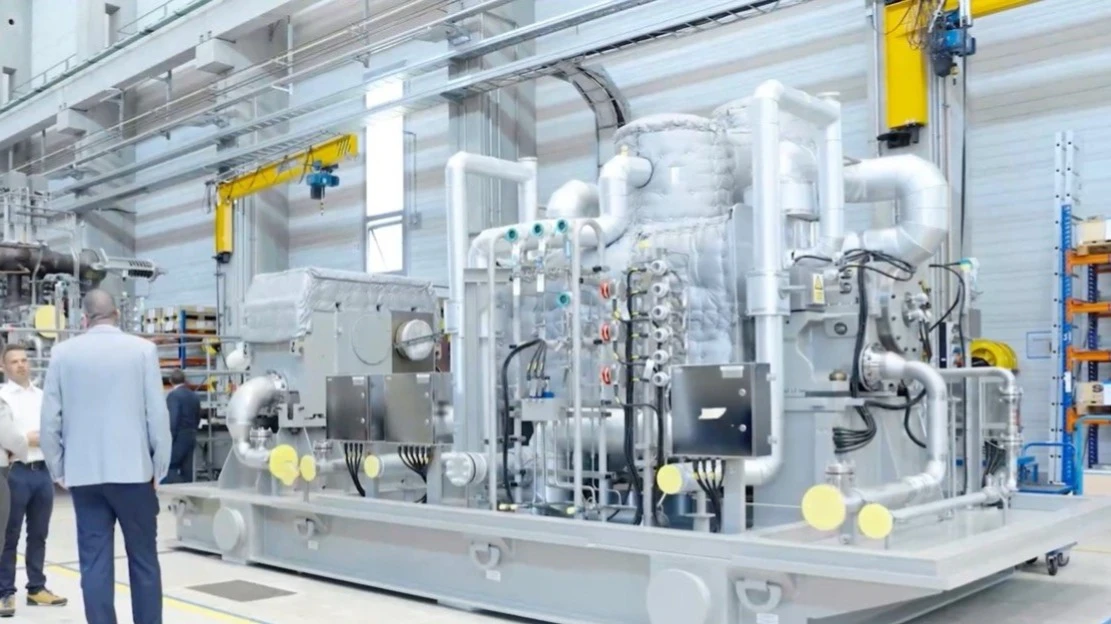
Oklo is building compact nuclear power plants; among the company's first major investors is OpenAI CEO Sam Altman / Photo: X / Oklo
Artificial intelligence will require 1,000 times more electricity than is currently available, according to former Nvidia CEO Jensen Huang. This demand for power is fueling investor interest in the stocks of nuclear energy companies. Ryan Vanzo, a contributing analyst at The Motley Fool, names two of them: Oklo and NuScale Power.
How much power does AI need?
Analysts at Goldman Sachs Research estimate that actual investment in artificial intelligence is underestimated by about a quarter. The widely cited figure of $800 billion for 2026 is based on capital expenditures by U.S. big tech companies but does not account for investments by private players and companies outside the U.S. Updated data from Goldman Sachs shows that global investment in AI this year will total $1 trillion.
A more widespread adoption of AI technologies will require more data centers. By 2030, global spending on their construction will reach $7 trillion, according to McKinsey & Co. That is a massive amount of money, but there are real constraints on growth: existing players cannot meet the demand for electricity, the firm’s analysts warn. Artificial intelligence will likely require 1,000 times more electricity for computing than is currently available, Huang said.
This is fueling enthusiasm for the stocks of companies involved in the construction of nuclear power plants, including Oklo and NuScale Power, according to Ryan Vanzo, a contributing analyst at The Motley Fool. These companies are developing small modular reactors (SMRs), which have lower output capacity than traditional large reactors but can be rapidly deployed depending on energy demand.
However, investors should keep in mind that, despite the hype in the industry, Bank of America estimates that the actual deployment of MMR on a significant scale will not begin until the 2030s, and this poses a problem for both companies, the article states. NuScale and Oklo remain unprofitable, and full commercialization of their technologies could take several more years. All of this comes amid concerns that companies involved in artificial intelligence will scale back their support for MMR developers, given the availability of cheaper and less risky alternatives, such as solar power, natural gas, and wind.
Oklo
Oklo, whose early investors included OpenAI CEO Sam Altman, has nine active projects in five states, according to its website. The company plans to launch its first commercial Aurora power plant in 2028–2029 and, in 2030, to commission the first phase of a large-scale campus for tech giant Meta, the owner of Facebook and Instagram.
In November, Oklo announced that it had received final approval from the U.S. Department of Energy (DOE) to operate its Groves-1 test reactor. This is a small test reactor that the company will use to train operators and validate engineering models.
This important step transforms the test reactor into a “living laboratory” capable of providing critical data on the human-machine interface and system reliability, which directly reduces the risks associated with the construction and approval of larger Aurora power plants, according to a Wedbush investment note.
Oklo has shown that it can follow the same regulatory path that awaits Aurora, according to a report by William Blair.
In addition, the experience gained from Groves-1 will be applied to the development of Groves-2 Forge, which is designed to produce isotopes for radiopharmaceuticals, Wedbush notes.
But there are also risks: the company has very few binding agreements, as well as high capital expenditures, which analysts expect Oklo to finance primarily through the issuance of new shares.
In total, Oklo’s stock has 12 “buy” ratings from Wall Street analysts, eight “hold” ratings, and one “sell” rating. The average price target is $48, which implies 140% upside potential relative to the closing price on November 20.
NuScale Power
NuScale Power is the world’s only developer of a modular nuclear reactor (MMR) to have received design approval from the U.S. Nuclear Regulatory Commission (NRC). The Motley Fool notes that the reactor components are already in commercial production.
The problem is that the company has not yet signed a single binding commercial agreement to purchase electricity for a full-scale power plant, wrote Motley Fool analyst Cathie Hogan. In September 2025, NuScale and two energy companies—ENTRA1 Energy and TVA (Tennessee Valley Authority)— announced a major project to deploy the MMR. But this has not yet resulted in an actual contract.
At the end of the third quarter, the company’s revenue plummeted by more than 96% year-over-year to $281,000, triggering a sell-off of its shares. NuScale did not comment on the timeline for finalizing a power purchase agreement with TVA, which is also advancing its own project in this area—with a competitor of NuScale, Wedbush noted in an investment report following the release of these results. Another risk highlighted by analysts relates to the potential collapse of the deal with RoPower in Romania—the companies had planned to launch a pilot SMR in 2033 and are now facing allegations of various violations. Wedbush recommends selling the company’s stock.
Investment bank Craig-Hallum, which reaffirmed its “buy” recommendation following the release of the quarterly earnings report, takes a completely different stance. Analysts believe the market misunderstands what is happening with the company and bases its perceptions on the lack of high-profile PR announcements and government contracts. The company has already begun purchasing expensive components and has expanded its manufacturing agreement with South Korean industrial giant Doosan Enerbility, which suggests that it considers the contract to supply MMR to be inevitable, the report states. The company itself has also emphasized that it has a substantial financial cushion—approximately $1.9 billion as of September 30.
Six analysts recommend buying NuScale shares, and the same number recommend holding them. Another five advise selling them. The average price target is $7.6, which implies 127% upside potential relative to the closing price on November 20.