"The Swift Effect" and Sidney Sweeney: 5 unusual factors influencing the market in 2025


In 2025, the markets were repeatedly reminded that stock dynamics can be influenced not only by Fed decisions and reports, but also by mass culture, streaming and viral advertising. The public lives of celebrities, late-night TV series premieres and viral campaigns for jeans were all triggers for stock prices in the past year. Below are a few examples of how seemingly "non-systemic" events changed company values and investor expectations.
1. "The Swift Effect."
What was affected? Shares of luxury brands, fashion retail, jewelry sector
The popular American singer Taylor Swift, whose concerts caused mini-earthquakes and who was recognized by Time magazine as the person of the year a couple of years ago, has shaken not only her fans but also the world markets in 2025.
- In August, the singer announced her engagement to American soccer player, member of the Kansas City Chiefs Travis Kelsey and posted several photos of them together on Instagram. In the pictures, Swift and Kelsey were wearing luxury clothes from Ralph Lauren, and on the singer's hand, subscribers noticed a Cartier watch. The dress, like Taylor's in the photo, was quickly sold out on the official website, and Ralph Lauren shares rose more than 2% in two days of trading on the "Swift effect" in August. Jefferies analysts interpreted this as "confirmation of the brand's strength and potential for further growth".
- The luxury segment generally reacted positively to the singer's engagement: the securities of Cartier and Louis Vuitton's parent companies, Richemont and LVMH, added about 3.4% and 3.2% on the day Swift announced her engagement in August.
- The same story also gave a boost to jewelry retailer Signet. Despite the fact that Swift's engagement ring itself was likely made in a private jewelry store - Artifex Fine Jewelry - the photo of the jewelry posted by the singer, as well as the subsequent surge in Google searches for "engagement ring" pushed up Signet's shares by about 3%. Against that backdrop, the jewelry retailer's securities at the close of trading on Aug. 26 hit their highest level since December 2024. The reason, as CNBC speculated, was a possible influx of "swifties" - Taylor Swift fans looking for unique rings to celebrate their weddings - into Signet.
- The engagement of Taylor Swift and Travis Kelsey could also have an indirect impact on the mass apparel segment. The day after the selebrities announced the wedding, American Eagle's stock rose about 8.5%. All because American Eagle announced at that time a collaboration with Tru Kolors, a brand founded by Swift's fiancé, Kelsey. The American soccer player became the face of the campaign, which will feature a limited-edition collection of more than 90 clothing items ranging from vintage T-shirts to cashmere sets.
- But it wasn't just the singer's engagement in 2025 that had fans and markets paying attention. "The Swift Effect" also manifested itself in the media space in mid-August after the singer appeared on the New Heights podcast and announced the release of her new album, The Life of a Showgirl. Against this backdrop, brands and sports teams tried to quickly pick up on the visual and semantic markers of the release - particularly the orange palette that Swift emphasized. Dozens of sports clubs and companies - from United Airlines to Olive Garden - posted themed content in an effort to build into the already gaining momentum around the then-unreleased album, the Associated Press noted. Google also responded to the growing interest in the singer's work by adding animated effects and visual references to the album announcement in searches for the query "Taylor Swift".
2. Night premieres on streaming services
Affected by what? On trader underperformance and lower returns in the broad market for U.S. equities
Another unexpected explanation for market dynamics was a study by a group of scientists from the University of Hong Kong Business School. They found out that late premieres of TV series on streaming services influence investor behavior.
Researchers hand-collected release data for more than 6,000 shows over 10 years and identified the 108 most popular late-night premieres on Netflix, Hulu and Amazon that aired between midnight and 5 a.m.. These dates were then compared to the returns of various portfolios across the S&P 500. According to the researchers' findings, on the day after these releases, S&P 500 returns lagged about 0.25 percentage points behind the hypothetical on average. If you take into account about 10 major premieres a year, the cumulative decline in returns can reach 2.3%, the researchers calculated.
According to their findings, the effect was strongest in stocks with larger capitalization, a high share of institutional investors and a higher security price - that is, where the role of professional participants is prominent.
The authors attributed the observed results to the peculiarities of market participants' behavior: traders and investors, who watch new seasons of popular shows at night, are tired the next day due to lack of sleep and are less ready for analytical decisions on buying shares. It is easier to sell existing securities than to buy new ones, experts believe, because it requires less cognitive effort. As a result, the market is more inclined to sell, which is reflected in profitability.
3. Denim commercial with Sidney Sweeney
What was affected? American Eagle meme rally
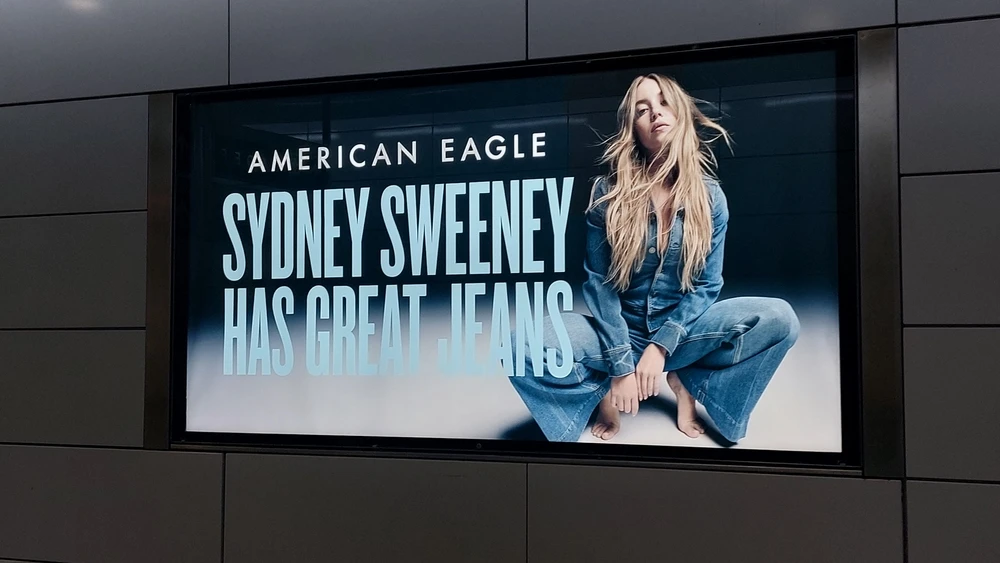
Casual apparel company American Eagle Outfitters found itself in the investor spotlight in July when it launched an ad with the ironic tagline "Sydney Sweeney has great jeans." The ad campaign with 3D banners, Snapchat lenses and a virtual fitting room, which became one of the most expensive and high-profile in American Eagle's history, caused a stir on social media and investor forums like WallStreetBets. Some liked the campaign, while others saw the slogan "Sydney Sweeney has great jeans" as a reference to racial superiority and beauty standards because of the consonance of the word "jeans" and "genes". As a result, American Eagle was among the trending tickers on the Stocktwits platform. And American Eagle shares rose after the campaign launch by 6% in the main session and another 22% in extended trading in July.
Against this backdrop, the company's securities have come to be seen as a potential participant in a new meme rally - a sharp rise in quotations that arises due to the hype on the Internet and massive purchases by retail investors of stocks whose results are rarely backed by financial results. This dynamic was already seen in 2021 with video game retailer GameStop and major movie theater chain AMC, and was seen again in 2025 as market participants began to unwind small-cap stocks. For American Eagle, the factors also coincided: weak reporting, low expectations and a colorful marketing trigger. As a result, American Eagle shares have gained almost 66% since the beginning of the year.
4. Viral denim and young audience: the case of Gap
Impacted by what? On demand for apparel, engagement with a younger audience and growth in Gap stock
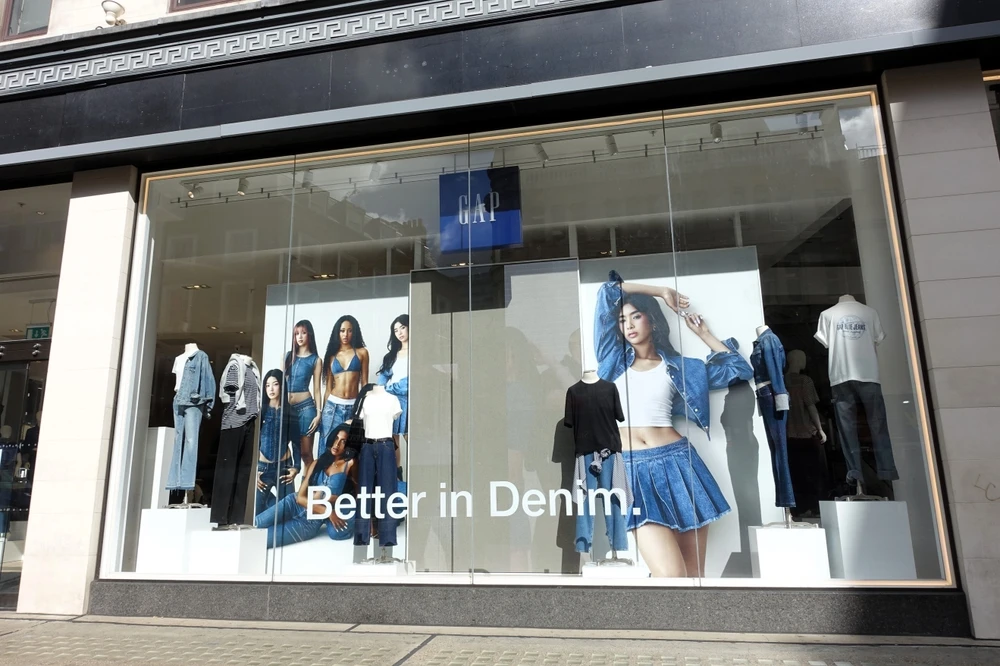
The 2025 advertising campaign was a key growth driver for another apparel player, Gap. In August 2025, the retailer, which in addition to its namesake brand owns the Old Navy, Banana Republic and Athleta Marks, launched a viral Better in Denim campaign featuring female k-pop band Katseye. According to Gap CEO Richard Dixon, the ad became a global cultural phenomenon, garnering more than 8 billion impressions and 500 million views, driving traffic growth and double-digit growth in denim sales. The ad, according to Gap, has also helped attract Generation Z, described as "highly engaged," to the company's products. And the company retains more affluent shoppers through its position "between premium and mass-market," Gap noted.
As a result, at the end of the campaign with Katseye, the retailer reported a better-than-expected November and raised its full-year forecast. Gap's comparable sales rose 5% on the back of the viral advertising and its flagship brand grew 7%. Excluding the jump during the pandemic, this is the company's strongest comparable sales growth since the holiday quarter of 2017, Gap noted. On the back of the strong report and the Better in Denim campaign, the retailer's shares added nearly 10% on the day the financial results were released, reaching $25.3 a share - for Gap, the highest since Ma. Since the beginning of the year, the retailer's shares have gained almost 17%.
5. Daylight saving time
Affected what? The physical and moral condition of market participants, - and as a consequence caused a short-term decrease in quotations
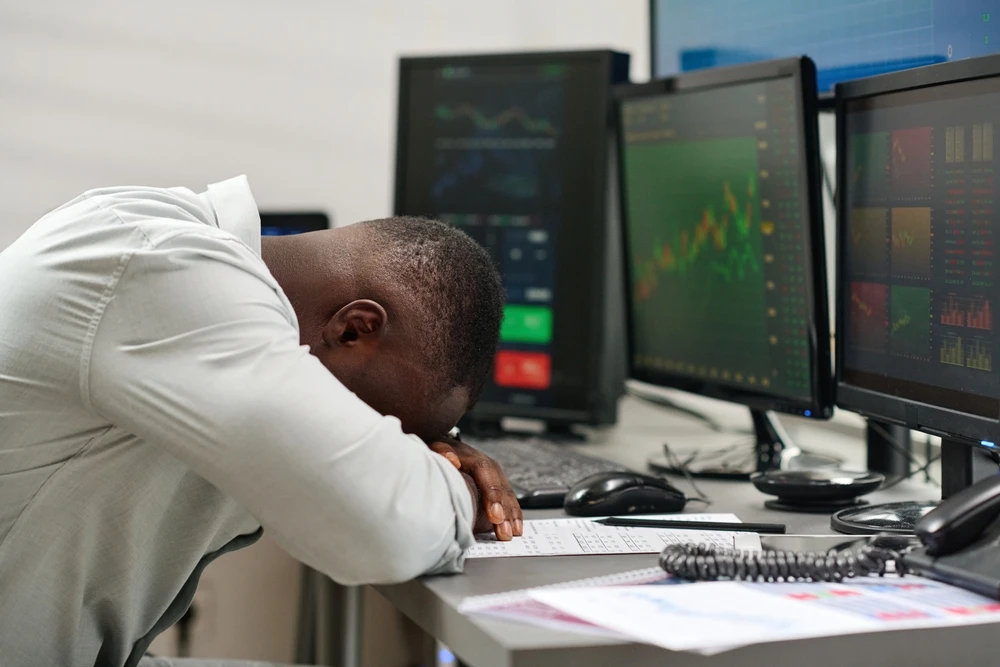
Another unusual factor affecting markets in 2025 was the switch to daylight saving time in the U.S., a little-noticed household shift that a number of studies have found consistently affects the performance of stock indexes, MarketWatch wrote.
As after watching the nightly premieres on streaming services, researchers attributed some of the market declines on the day after the clocks were turned, among other things, to reduced investor sleep time. A number of studies have shown that the stock market behaves markedly worse than average on such a Monday (clocks are usually turned over the weekend). After the 2005 U.S. time changeover date was moved to the second Sunday in March, the Dow Jones Industrial Average declined an average of 0.48% on the following Monday, while the average return of all trading sessions for the year was about +0.03%, MarketWatch noted.
And this, as the publication pointed out, has been going on for years: the so-called "summer time anomaly" was first described in 2000 in the American Economic Review. The authors estimated that in the late 1990s, the consequences of this effect corresponded to one-day losses on U.S. stock exchanges of $31 billion, which in today's prices is equivalent to more than $300 billion. The behavioral mechanism of this anomaly was later confirmed by the February 2025 publication of the U.S. National Bureau of Economic Research, "Trading at Dusk: Sleep, Mental Alertness, and Stock Trading". Its authors also concluded: the trades of investors whose sleep was less complete due to late sunset show lower returns compared to periods without sleep disturbance.
This article was AI-translated and verified by a human editor